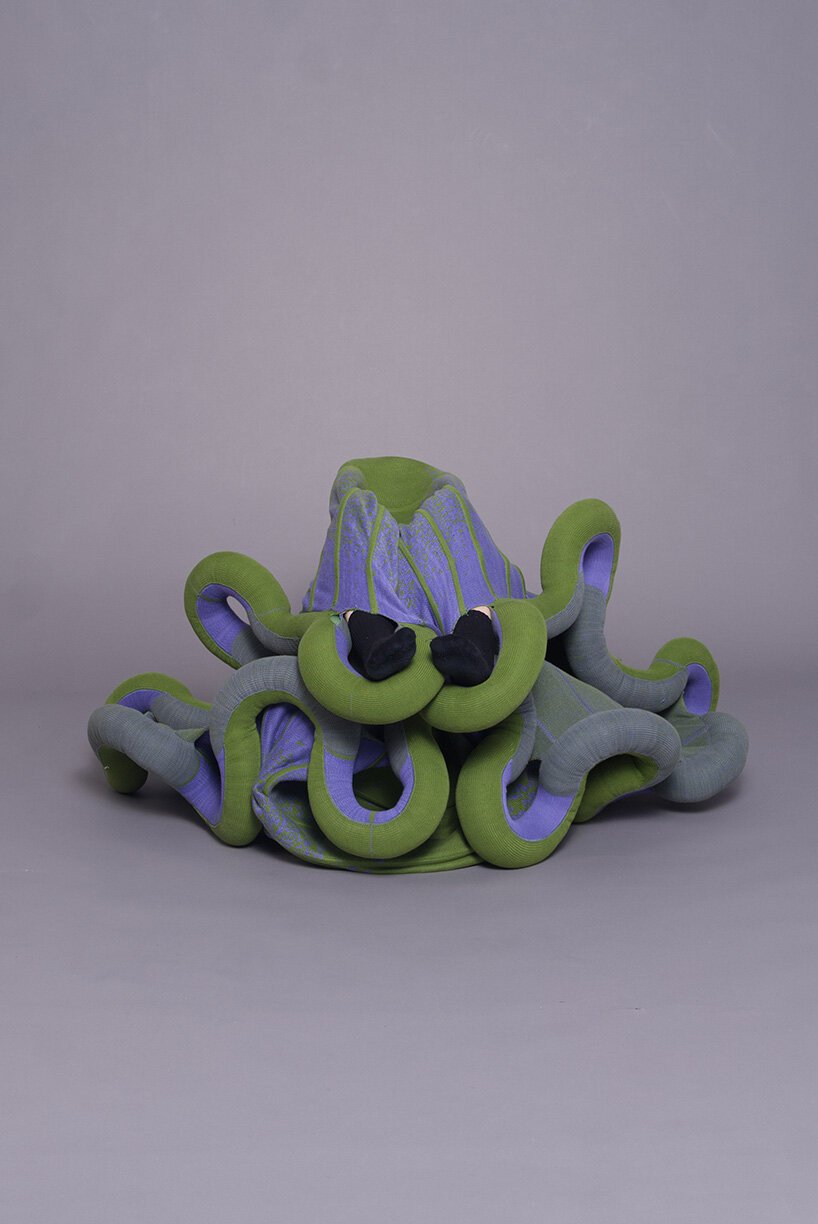
knitted sculptures by luna haverkorn only come to life when you use them

Tactile Architecture: Luna Haverkorn on Transforming Knitting Into Dynamic, Body-Responsive Structures
For Dutch textile designer Luna Haverkorn, knitting is far more than a traditional craft—it is a sophisticated structural framework capable of producing interactive, three-dimensional spaces. Currently pursuing her Master’s in Textile Interaction Design at the Swedish School of Textiles following her Product Design studies at the Willem de Kooning Academy, Haverkorn crafts body-scale knitted forms that challenge how we perceive furniture, sculpture, and human posture. Her creations invite open-ended physical engagement, allowing users to sit, recline, balance, or completely submerge themselves within flexible textile envelopes.
In an exclusive conversation with designboom, Haverkorn discusses her hands-on development process, the intuitive knowledge gained by working directly with machinery, and why manual craft remain a vital driver of innovation in an increasingly automated world.
Haverkorn’s creative cycle is grounded entirely in material exploration. Observation, hands-on experimentation, and iterative prototyping dictate the eventual shape of each work. “I love making things with my own hands; I design through making,” she shares. “By immersing myself deeply in a specific methodology like knitting, I begin to see where slight structural alterations can yield entirely unexpected behaviors. The more fluently I speak the language of the machine, the further I can push its parameters to discover new tectonic possibilities.”
Knitting as a Construction Method
To resolve complex questions of load-bearing capacity and flexibility, Haverkorn often studies botanical systems—observing how plants naturally merge rigid stems with pliable, soft membranes. Rather than relying solely on digital blueprints, she builds prototypes directly on the machine, letting the physical traits of the yarn guide her next steps. “My process almost always starts with close physical observation,” she notes. “When troubleshooting a connection or seeking a new geometric transition, I look closely at the structural systems around me.”
Technical precision is introduced only after these tactile discoveries are solidified. “Once I fully understand the physical behavior I want to capture, I precisely program the industrial flatbed knitting machine to translate those experimental forms into a continuous, resolved textile,” the designer explains.
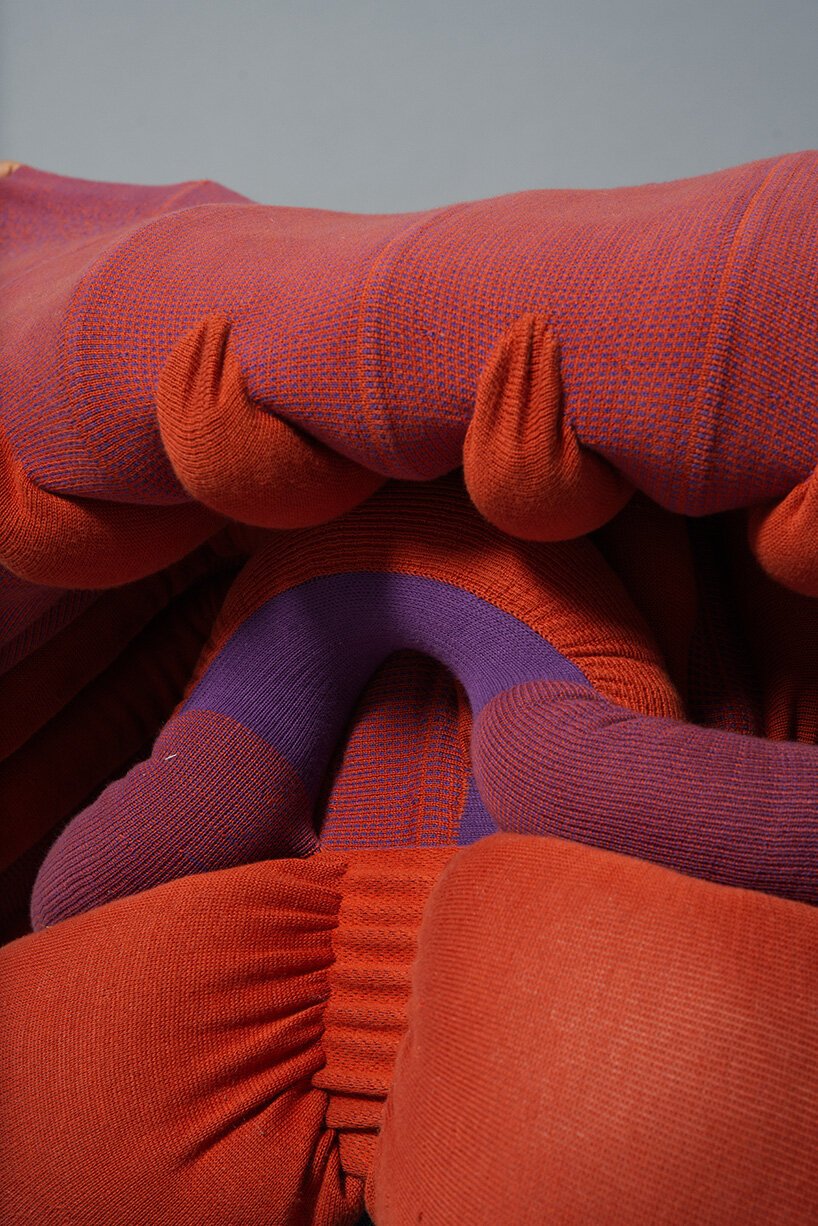
Looking forward, Haverkorn anticipates an era where ancient craft techniques and advanced computational fabrication become deeply intertwined. As digital screens claim more of our daily attention, she maintains that physical, tactile environments will carry unprecedented importance. “Craft provides a sensory feedback loop that a flat screen simply cannot replicate: resistance, weight, texture, and immediate physical response. I firmly believe these tangible qualities will become rarer and more sought after, making analog, materially engaging objects highly relevant to future spaces.”
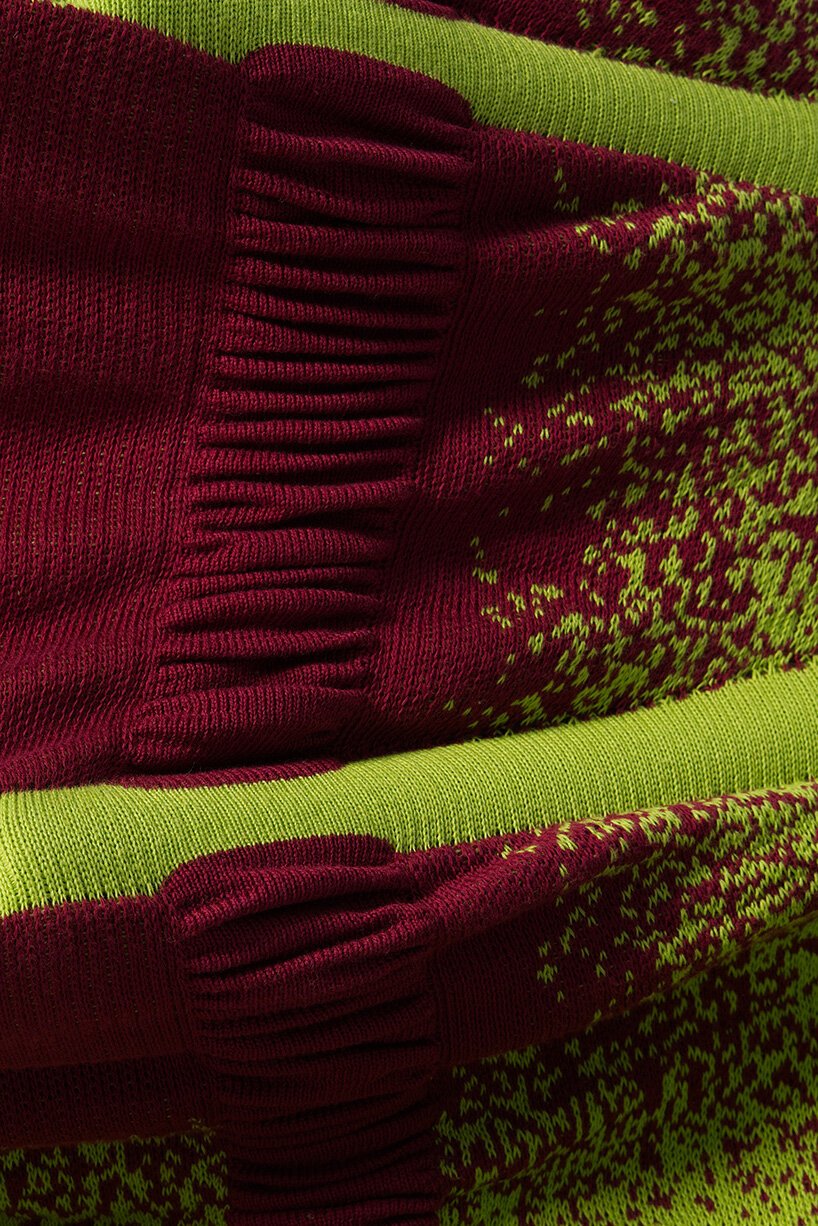
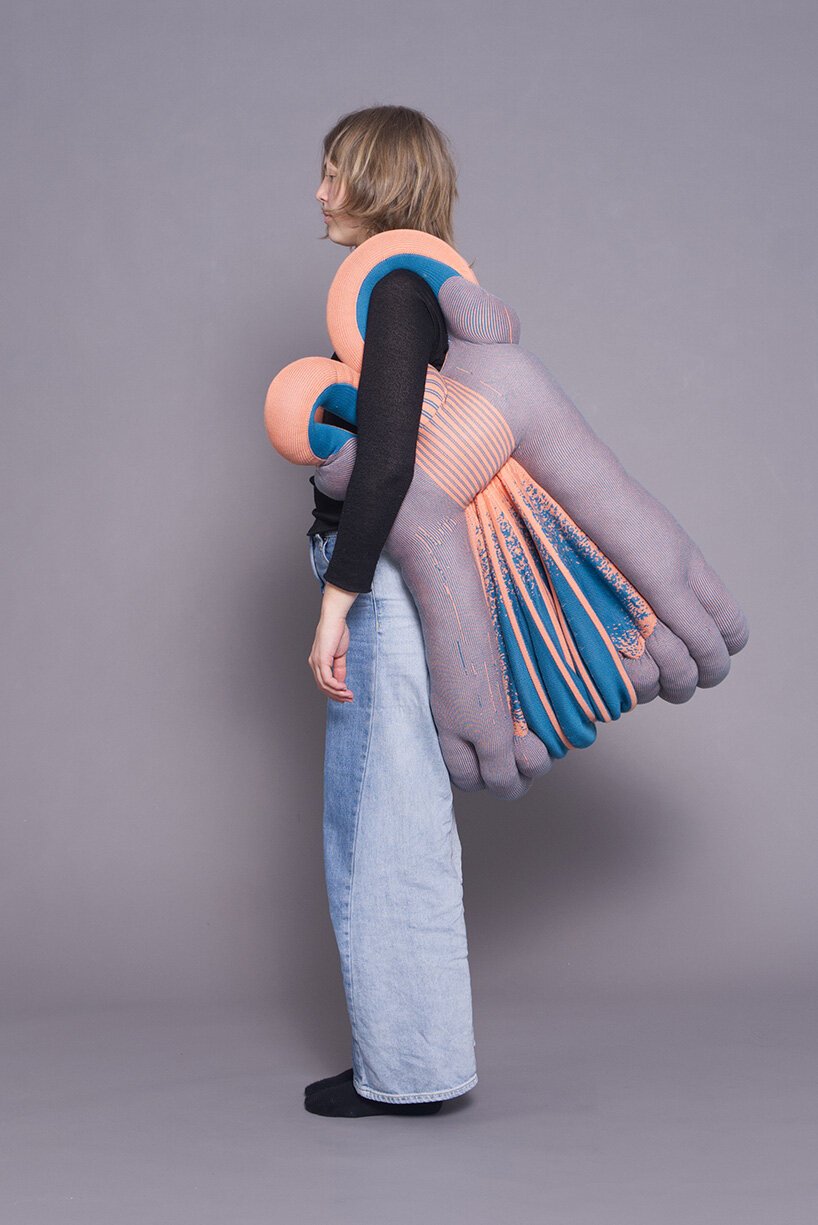
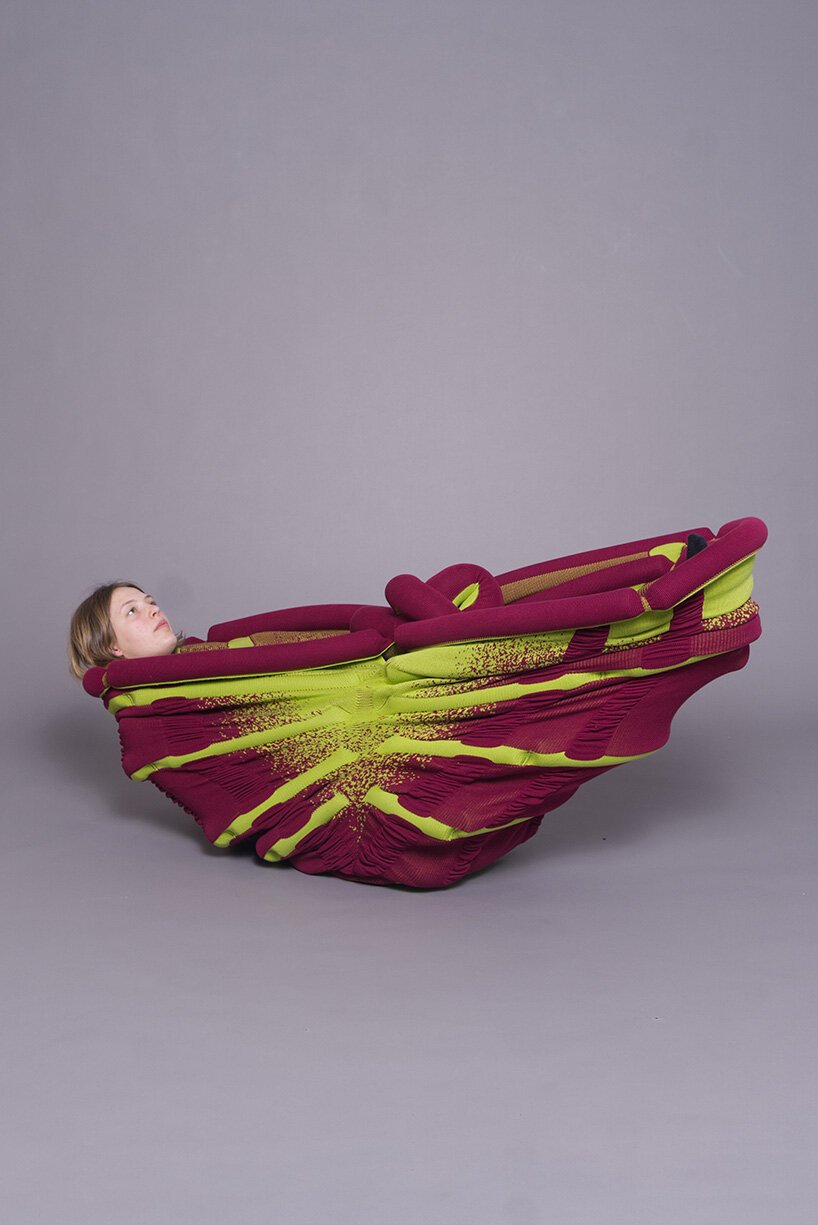
This interactive openness is front and center in her recent large-scale textile structures. Devoid of clear user instructions or traditional seating markers, guests are left to experiment. Depending on how a body positions itself, a single piece can act as an energetic balance beam, a supportive hammock, or a completely enclosed sanctuary. “The architecture doesn’t dictate human behavior,” she emphasizes. “It simply offers an open invitation to explore space.”
Can Craft Remain a Source of Innovation?
While mainstream industries often define innovation purely through digital software breakthroughs, Haverkorn argues that master craftsmanship offers its own distinct path to invention. “True innovation doesn’t require an entirely new technology,” she notes. “It can come from interrogating an established, historic craft with contemporary questions, or applying a familiar production method in an entirely unprecedented context. Innovation lives just as vividly in material composition, geometric forms, and bodily experiences as it does in digital code.”
This perspective also informs her view of generative artificial intelligence. While AI tools excel at synthesizing visual possibilities from a text prompt, she believes that groundbreaking physical discoveries happen exclusively within the real world. “Many of my most successful concepts happen while I am physically setting up the machine—through calibration errors, physical material resistance, or noticing an unprogrammed behavior in the yarn. That type of tacit knowledge can only be gained by working with your hands.”
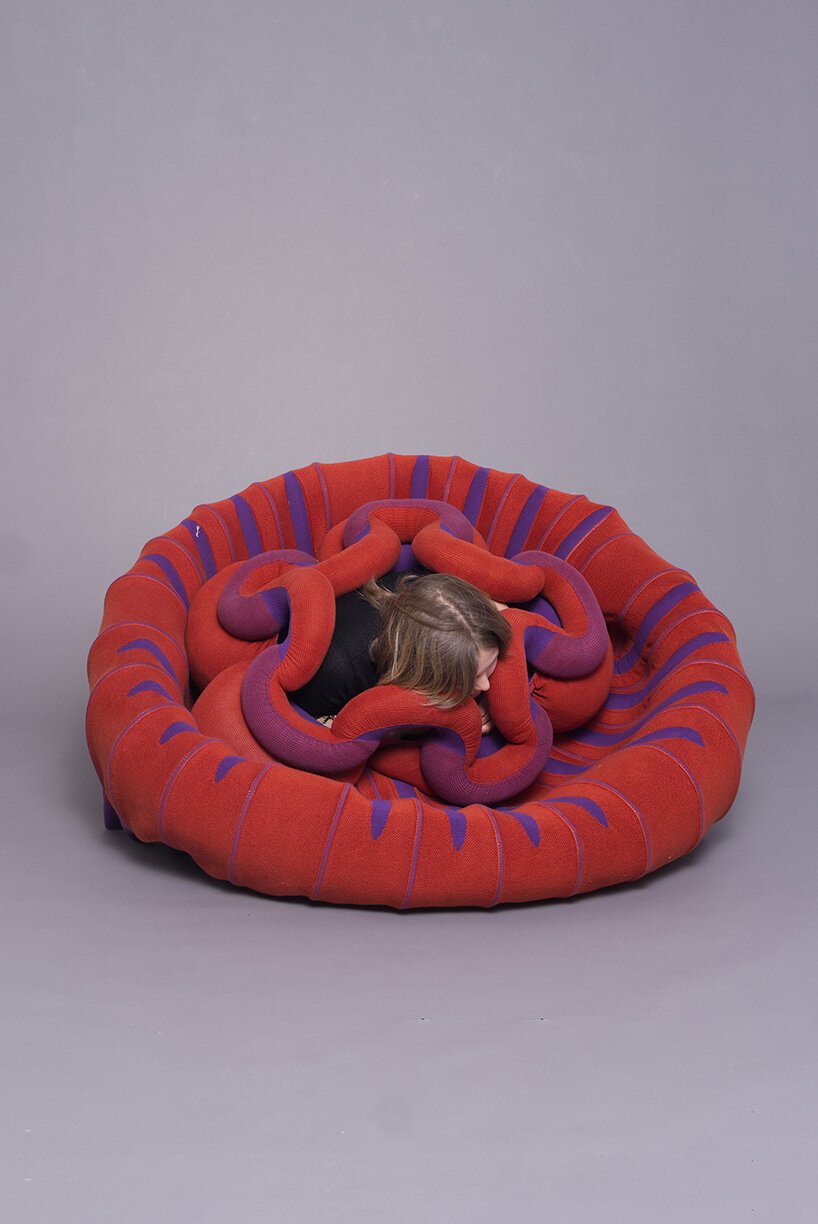
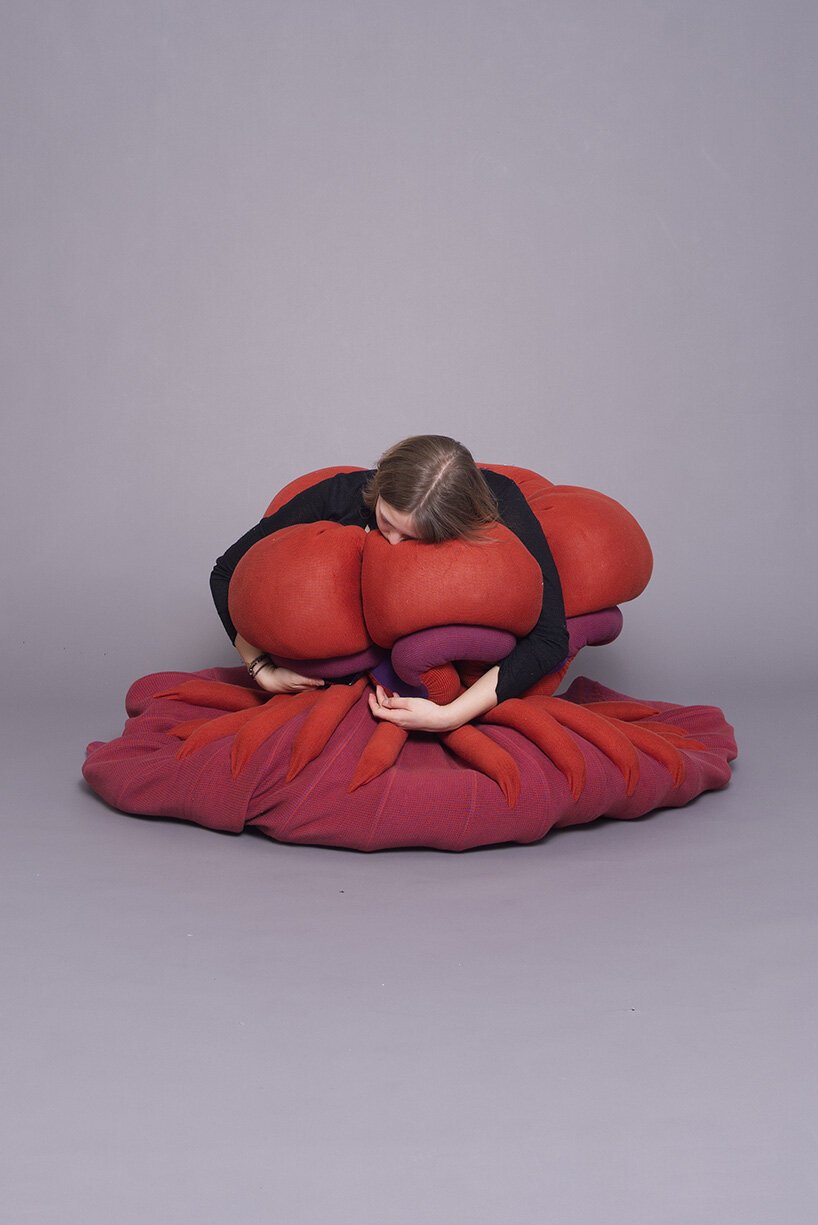
Haverkorn treats industrial knitting as a method for fabricating jointless, three-dimensional architectures. Her pieces are often knit monolithically, featuring zero seams; a single continuous strand of yarn forms intricate, multi-layered chambers that are later filled to establish their final supportive volumes. “I enjoy challenging the preconceptions of what knitwear can achieve,” she tells designboom. “Most people associate the craft with apparel or soft domestic items, but I see it as a viable way to engineer transformable spatial elements.”
Her technical mastery of programming industrial flatbed Stoll knitting machines underpins this spatial mindset, forcing her to consider how entire forms expand from a single thread. “Because of this background, I am always calculating how yarn moves through space and how a hollow, three-dimensional volume can grow from one line. Working directly with the hardware teaches you material nuances that cannot be simulated. Spending thousands of hours with a machine builds an intuitive sense of how a tiny tension shift will alter the final form.”
Designing Objects That Move With the Body
Haverkorn’s installations remain intentionally incomplete until they are occupied, leaving the final configuration entirely up to the user. “I don’t view the objects I build as static installations,” she remarks. “I am constantly analyzing how they can flex, mutate, or respond to weight.” For the designer, this structural fluidity shifts agency back to the audience: “When a textile responds dynamically, it disrupts expected behaviors, generating moments of playful discovery. By removing a singular, intended configuration, the user becomes an active participant in completing the design.”