
Ennead’s Terrace-Wrapped Tower in Shenzhen Helps its Occupants Connect and Collaborate
In January, the Chinese social media company ByteDance sold a majority stake of its United States subsidiary, which operates the popular TikTok app, to a group of American investors to avoid an outright ban in this country. That may seem like a setback, but, at its new offices in central Shenzhen, designed by Ennead Architects, the company’s spectacular growth is on full display.
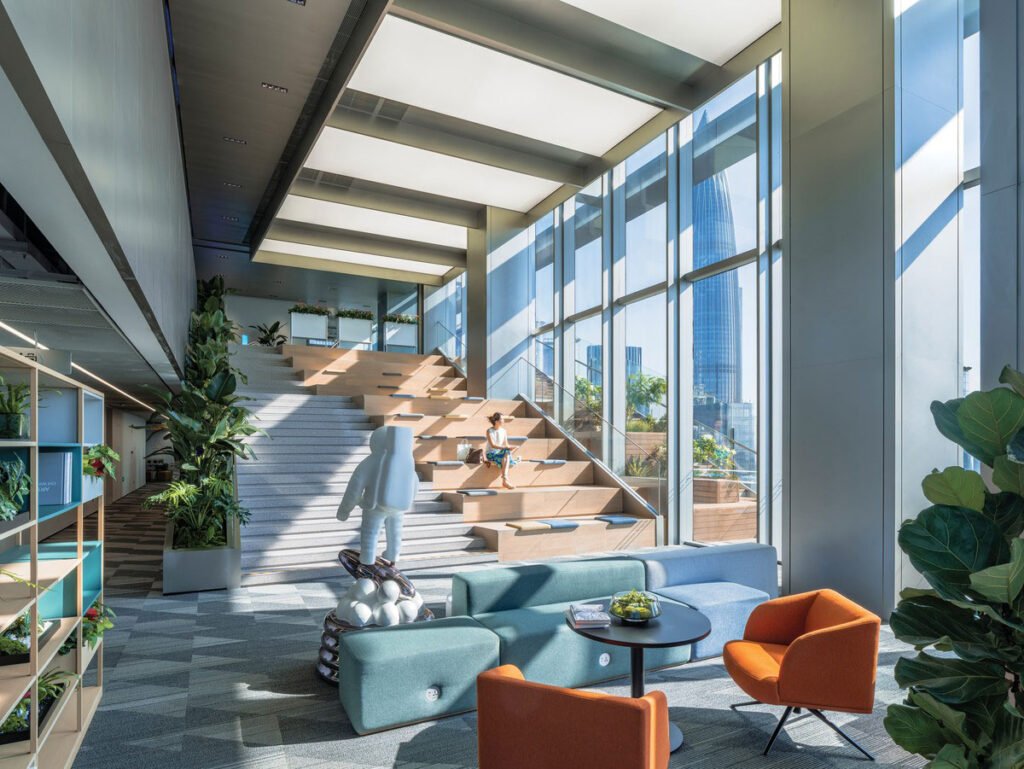
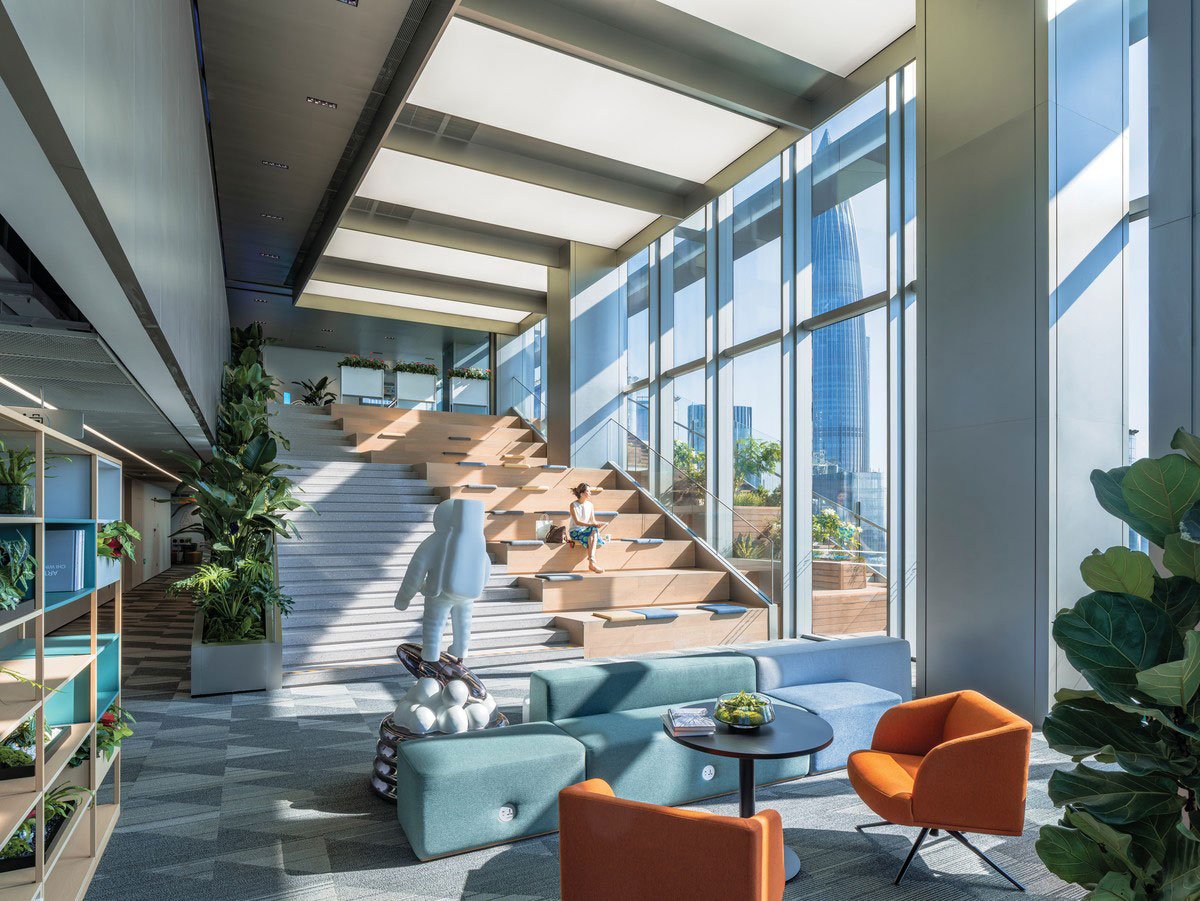
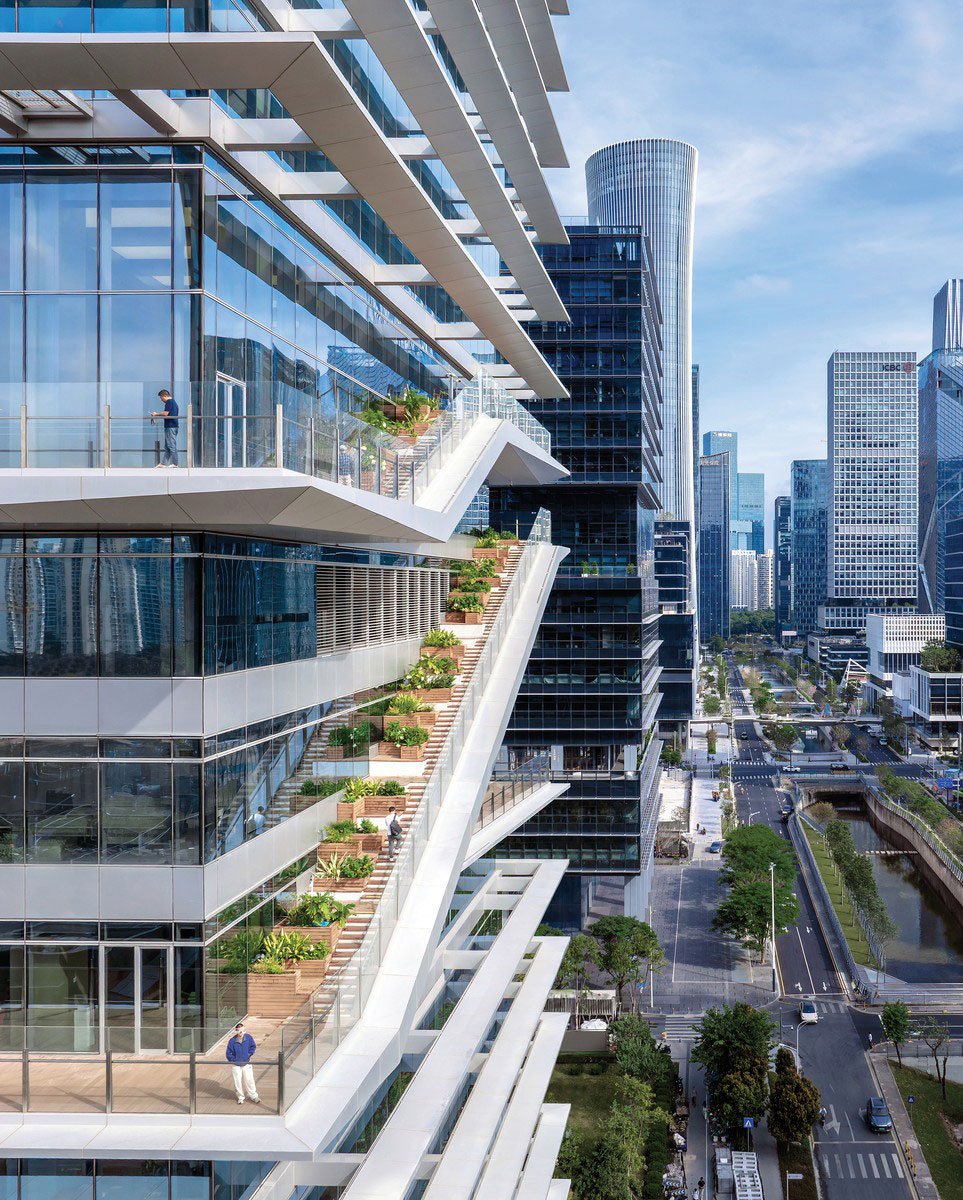
Strikingly for such a dense location—as well as for technology clients, who generally prize privacy—the tower’s first 13 floors include a series of outdoor terraces that wrap around the glazed curtain wall. A prominent horizontal brise-soleil, cantilevered from the building’s primary structure with individually expressed outriggers, provides shading and, at night, with integrated LEDs, lights up the building. On some floors, such as the ninth, the terraces extend diagonally up the north and south side of the building to link to multiple levels above. The 12th floor includes a double-height interior space that features oversized stepped seating up to the 13th floor, mirroring a similar condition on its exterior diagonal terrace.
Peter Schubert, Ennead’s design partner for the project, says the client particularly appreciated the scheme’s approach to outdoor access without relying on an elevator to exit the building. This allows staff to stay more connected throughout the day. “Connectivity for collaboration is what drives innovation,” says Schubert. The architects ensured that these outdoor spaces would be enlivened, by compressing a series of multipurpose spaces into the first nine stories of the 32-story, 674,000-square-foot building. This move directly engages staff with the life of the street, framing the program within a dynamic envelope that becomes more conventional as the building rises to the office floor plates above.
1
Interior stadium seating (1) mirrors a similar condition on the exterior where terraces extend diagonally, linking multiple levels (2). Photos © Yihuai Photography Studio, click to enlarge.
2
These lower floors include retail areas, conference and event spaces, dry-technology labs, a commercial kitchen, a gym, and three floors of communal staff dining, all of which visually activate the building’s presence within an otherwise restrained business district. “The massive canteens are used by everyone at lunch,” Schubert says, which is common for technology companies. The built project closely reflects Ennead’s competition-winning concept from 2020, he says.
Schubert led the project team from New York City in collaboration with project director Grace Chen, a partner who leads Ennead’s business in Asia from its Shanghai office. Chen says the outdoor terraces have proved popular. “The client told us staff enjoy the terraces even during heavy rain because the overhangs keep them from getting wet,” Chen says. Lab D+H landscape architects designed a series of planters, finished in timber like the terrace decks, which contain ferns and other greenery appropriate for Shenzhen’s subtropical climate and serve to soften the outdoor spaces.
Structurally, the tower includes four sub-grade floors, for parking and building services, that sit on 165 piles, which extend as much as 230 feet down to a solid layer of granite. The structure is a hybrid of steel-reinforced concrete columns supporting steel beams that tie into a conventional concrete core, with concrete floors poured on steel decking. Structural and reinforcing steel were sourced from recycled materials, one of several features that helped the project achieve LEED Gold precertification, with full certification pending, and a two-star certification in China’s Three Star green-building rating system. The building also features operable windows for the office floor plates, providing natural ventilation when appropriate and driving energy-efficiency savings.
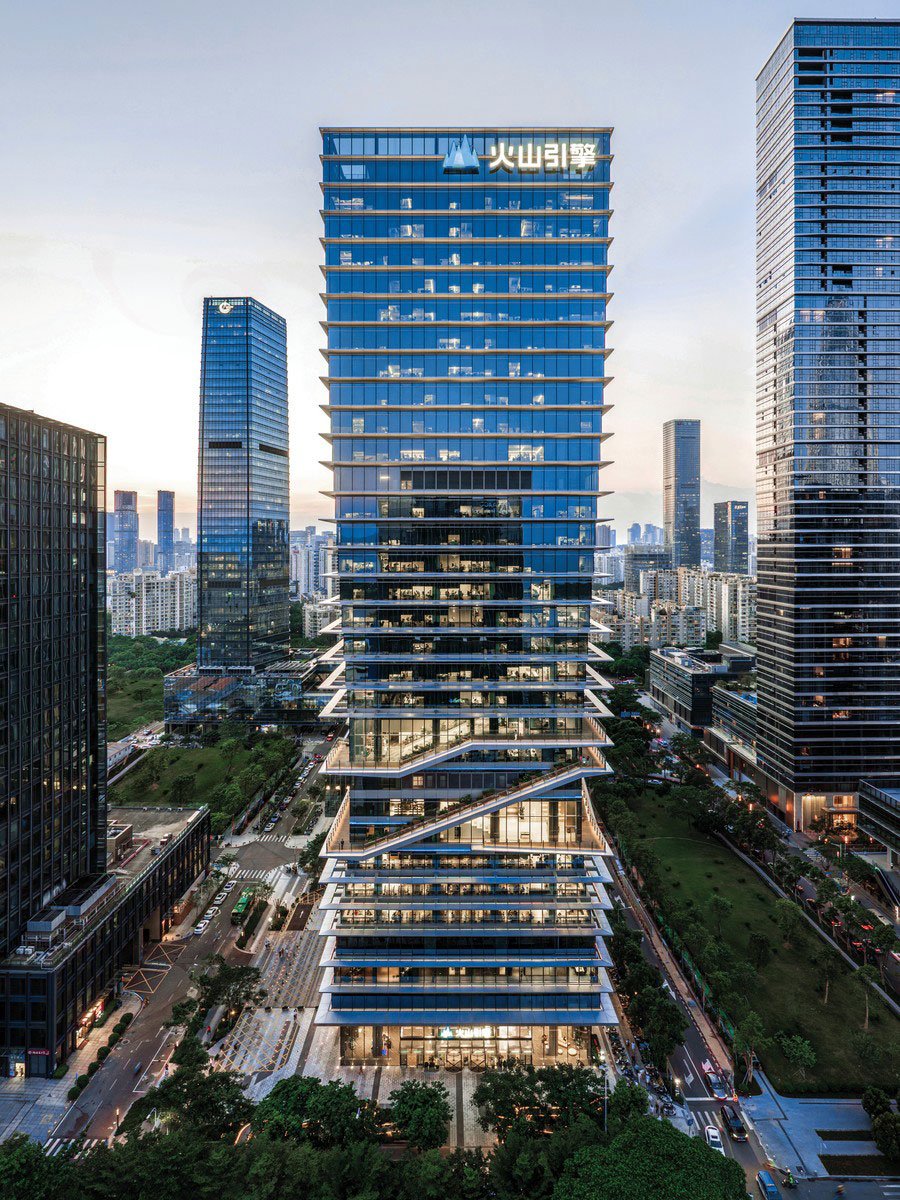
The tower has a cinch point where the program transitions vertically. Photo © Yihuai Photography Studio
Schubert describes the tower as a “reverse taper,” with the building’s glass envelope cinched in at the point the program transitions vertically from the collaboration spaces to the standard open office levels above. At this cinch point, the line of glazing begins to cantilever floor by floor as the building stacks. The tower is always the same dimension in plan since the brise-soleil’s outside edge remains fixed—approximately 49 feet from the core wall in the north and south directions, and between 14 and 47 feet from the core on the west and east, respectively. However, the line of glazing varies—from a recess of approximately 13 feet from the shade’s outer edge at level 13, tapering to only 2 feet at level 32—but the distance from the glass to the centerline of the sloping columns along the perimeter is constant.
The tapering affords the tower some surface texture, but it also results in having the largest floor plate, at 24,000 square feet, on the top level. Though the office floors vary in size, they all have a floor-to-floor dimension of 14 feet 8 inches enclosed by a curtain wall system combining low-E glazing and a 3-foot aluminum-spandrel panel. Chen says floor-to-ceiling glazing gives staff unobstructed views of the city, particularly Houhai Bay. It’s the kind of view that would make a great background for a TikTok video.
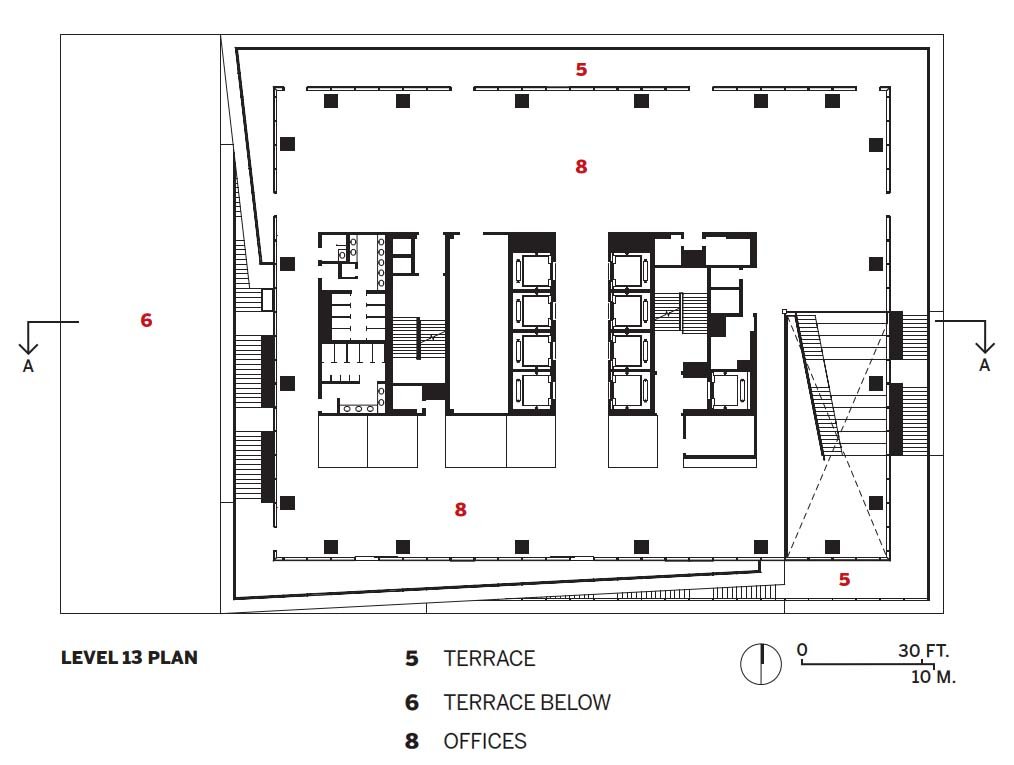
Image courtesy Ennead Architects
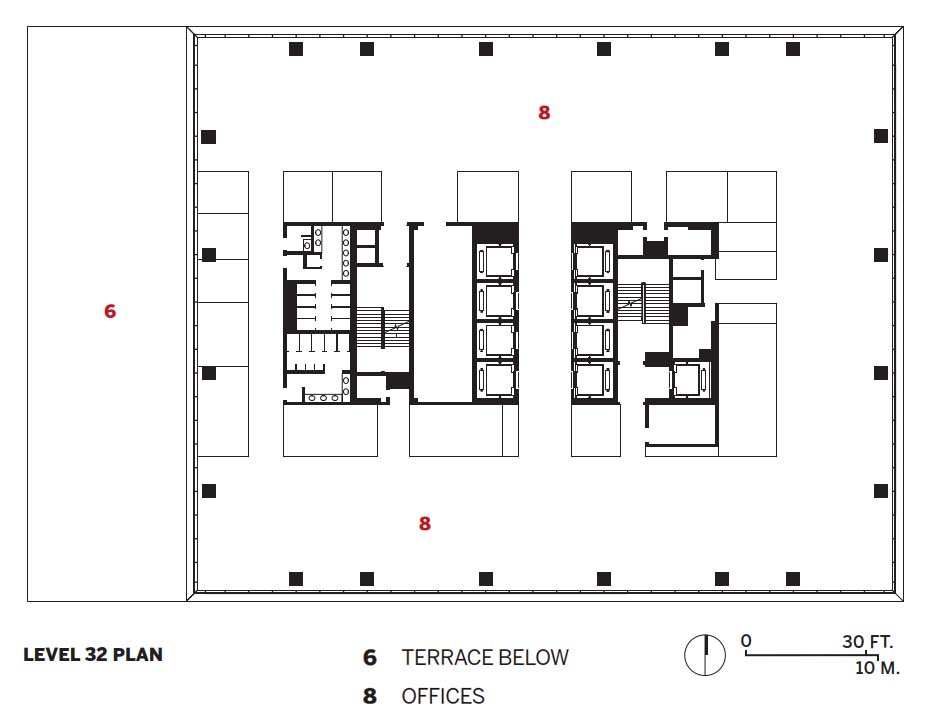
Image courtesy Ennead Architects
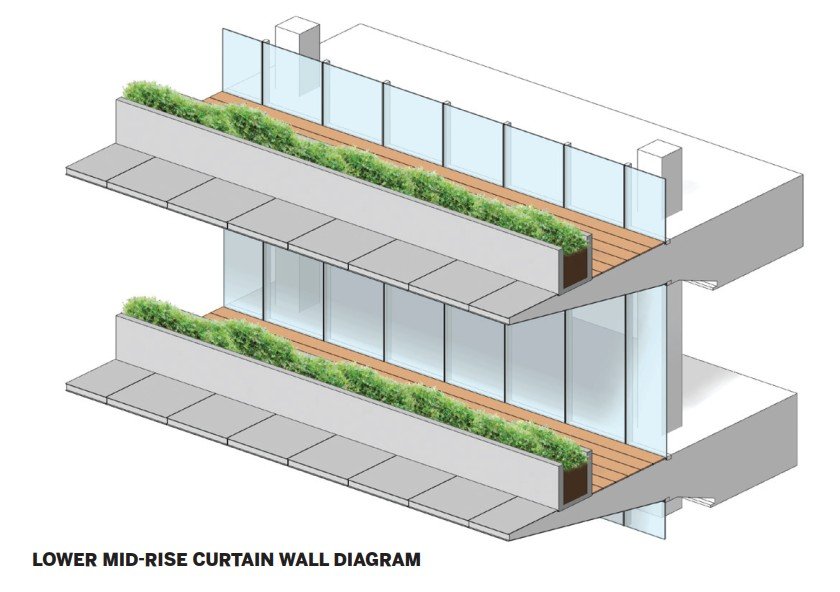
Image courtesy Ennead Architects
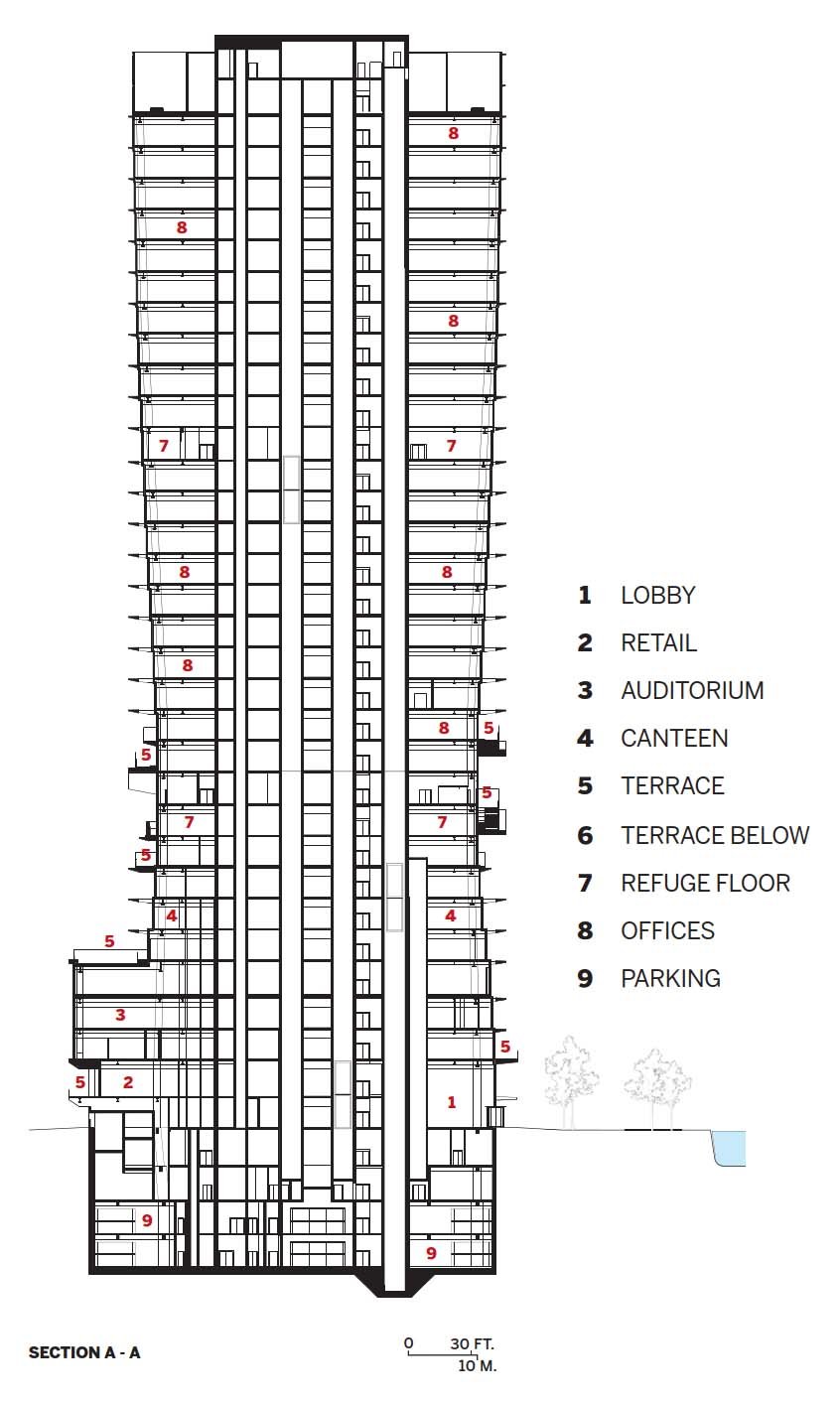
Image courtesy Ennead Architects
Credits
Architect:
Ennead Architects — Peter Schubert, design partner; Kevin McClurkan, Grace Chen, management partners; Matthew Ostrow, senior project designer; Regina Jiang, Kevin Seymour, project managers; Catherine Chen, Huishan He, Jing Ou, project architects, Brian Hopkins, Angela Chi, Alan Cation, Nicholas Schmidt, Ethan Shaw, Jessica Gunraj, BIM managers; Winslow Kosior, Ayelet Gezow, Andri Putri, curtain wall team; Zachary Hinchliffe, Callie Fleetwood, Viviana Wang, Rachel Anne Finkelstein, Nell El Souri, Furui Sun, Dongxu Cai, Junxin Chen, Oliver Li, Chenxue Wang, Xinya Li, project designers
Local Design Institute:
Shenzhen AUBE Architectural Engineering Design Company
Consultants:
AECOM (structure, MEP); Shenzhen CBS Technology Curtain Wall Design Consulting Company, WSP (curtain wall); Shenzhen Light Horizon Design Consultants (lighting); Lab D+H (landscape); Shenzhen Cheng Chung Design (interiors)
General Contractor:
China Construction First Group Corporation
Client:
Shenzhen Toutiao Technology Company
Size:
674,000 square feet
Cost:
Withheld
Completion:
July 2025
Sources
Curtain Wall:
Fangda
Glazing:
Yaopi
Lighting:
Osram, WAC Lighting, Hoventa
Project Data
- Architect
- Ennead Architects — Peter Schubert, design partner; Kevin McClurkan, Grace Chen, management partners; Matthew Ostrow, senior project designer; Regina Jiang, Kev
- Year / Completion
- July 2025
- Client
- Shenzhen Toutiao Technology Company