
Betye Saar’s Birthday Present
Daily Newsletter
The assemblage artist donates her doll collection to the New York Historical, and we walk you through strong performance art at the Venice Biennale.
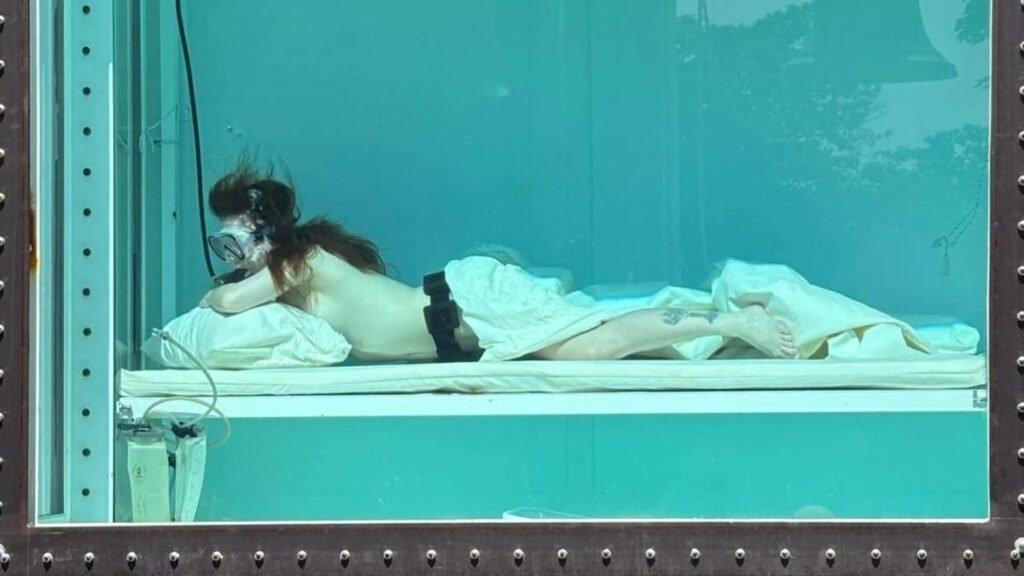
A nude performer dangling upside-down from a giant bell, clanging it on the hour. Another rolling perilously down bleachers, wearing a crumbling plaster skirt. And that isn’t even to mention the porta-potties, which you’re supposed to pee in to feed a massive tank in which a performer is submerged (the urine is filtered).
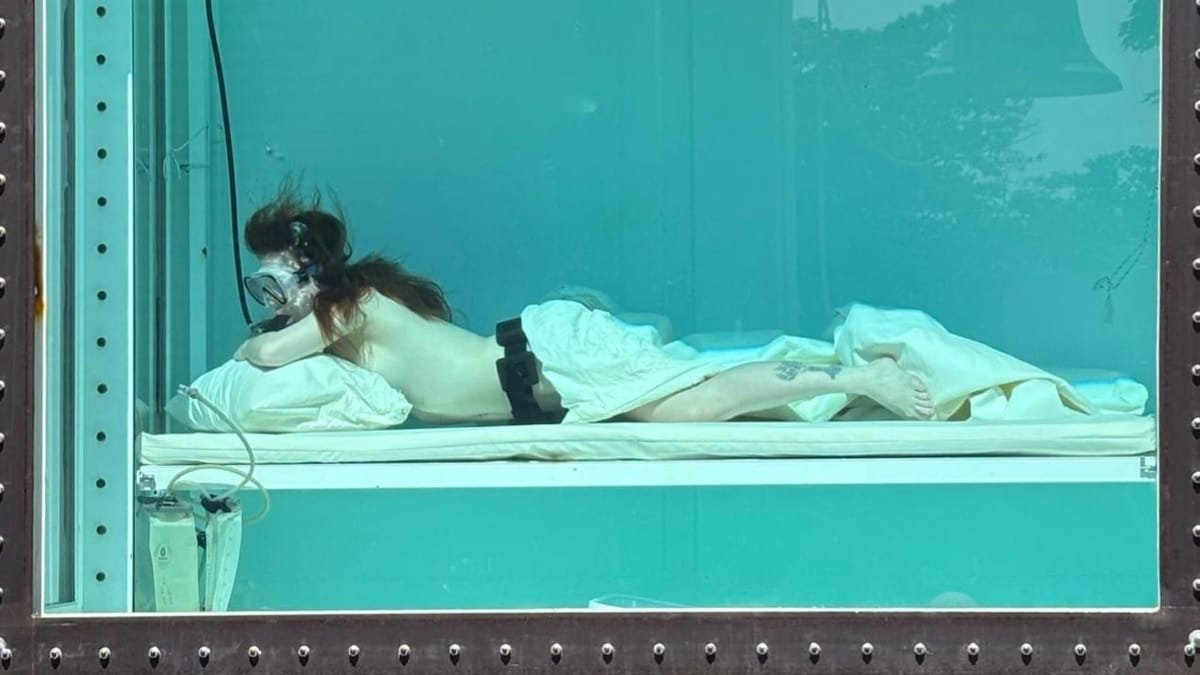
These are scenes you might witness at this year’s Venice Biennale. Performance is one of the strongest veins, and today, critic Eurídice Arratia walks you through Florentina Holzinger and Miet Warlop’s displays at the Austrian and Belgian pavilions.
On this side of the Atlantic, meet iconic assemblage artist Betye Saar’s “family” — a collection of Black dolls she’s promising to the New York Historical on the occasion of turning 100(!). Of course, Saar would be the one giving a gift on her own birthday.
—Lisa Yin Zhang, associate editor
Performance Cuts Through the Noise at the Venice Biennale
Unless you were attending a silent retreat the past few weeks, you already know that no other Venice Biennale in recent history has gotten off to a more fraught start than this year’s. In May 2025, its artistic director, Koyo Kouoh, passed away. Then there were canceled pavilions, boycotts protesting Israel and Russia’s participation, and the jury’s resignation. Kouoh’s summons to take a deep breath and exhale was, to say the least, a challenging request.
In the midst of this upheaval, two national pavilions in the Giardini — the Austrian and the Belgian — slice straight through the outside rumbling with boldly experimental and imaginative performances that demanded sustained attention. | Eurídice Arratia
Read More
Feature

How Betye Saar Set Black Dolls Free
Betye Saar has been accumulating ephemera — taxidermied animals, cages, computer parts, and more — throughout her life. Since the 1970s, she has crafted these found objects into assemblage artworks that often subvert racist artifacts and images, beginning with her famed sculpture “The Liberation of Aunt Jemima” (1972). “I knew I could not avoid the pain, so it became part of my art,” she said in 1973, as quoted in the monograph Black Doll Blues. | Jasmine Weber
Read More
From Our Critics

For Ceija Stojka, Memory Is Survival
In an untitled landscape Ceija Stojka made in 1995, the sunset lights up an Austrian lake. Her family’s traveling wagon is on the water and her kin is around the perimeter gazing at the scenery and fishing. Thick brushstrokes of acrylic on paper emphasize the immediacy of the idyllic memory. Throughout her memoirs, including The Memoirs of Ceija Stojka, Child Survivor of the Romani Holocaust, posthumously translated in 2022, Stojka equates the Romani tradition of living in horse-drawn wagons with natural splendor — sleeping outside, enjoying vistas, and hearing birds chirp — manifesting the culture’s spirit of independence. Wagons themselves are a key symbol of sovereignty; the wheel even appears on the Romani flag.
On view at the Drawing Center, Ceija Stojka: Making Visible showcases her self-taught practice and outsider perspective, both in the art world and as a Romani woman in Europe, through over 50 paintings and drawings. | Bryan Martin
Read More
The Invincible Spirit of Edmonia Lewis
“Sometimes the times were dark and the outlook was lonesome, but where there is a will, there is a way,” the Black and Indigenous sculptor Edmonia Lewis once said. The quotation, now printed and spotlit on a dark blue wall in the exhibition Edmonia Lewis: Said in Stone, continues, “That is what I tell my people whenever I meet them, that they must not be discouraged, but work ahead until the world is bound to respect them for what they have accomplished.” Lewis — who was born in Greenbush, New York, in 1844 and died in London in 1907 — is paid such respect in her first major retrospective at the Peabody Essex Museum, held over a century after the artist’s death. | Sháńdíín Brown
Read More

ArtPhilly Presents “What Now: 2026”
The five-week city-wide festival will feature over 30 newly-commissioned works created by Philadelphia artists to spark important conversations about the future of the United States.
Learn more
“This offers such a powerful insight into the focus of a movement–that is, the movement itself, not any one individual, is important to the history of the movement and the context in history for this movement. Thank you, Elizabeth Ferrer, for so eloquently reminding us of this.”
C Joanne Grabinski on Elizabeth Ferrer’s I’m a Chicana Curator. This Is Why I Removed Cesar Chavez From My Show
ICYMI

From the Archive
