A studio class at University of Texas at Arlington puts forth ideas for future of Dallas City Hall and its surrounding downtown area
The City of Dallas’s public call for input on the future of Dallas City Hall received more than 400 submissions. One proposal that showed promise while preserving the distinctive building designed by I. M. Pei is City South, came from studio work at the University of Texas at Arlington (UTA) College of Architecture, Planning and Public Affairs (CAPPA) with pragmatic input from the 10 Presidents, a group of individuals who have served in leadership roles in local organizations like AIA Dallas.
The CAPPA studio retains Dallas City Hall in its broader strategy of reorientation for Downtown Dallas. Circulated widely in recent weeks, City South is ambitious. The proposal includes a new arena for the Dallas Mavericks as well as myriad mixed-use programming with an emphasis on housing. Its renderings convey a big statement about the potential future of this North Texas city. But the plan and process are where the CAPPA studio makes the most compelling case to date for the future of Dallas’s civic core, let alone the Downtown as a whole.
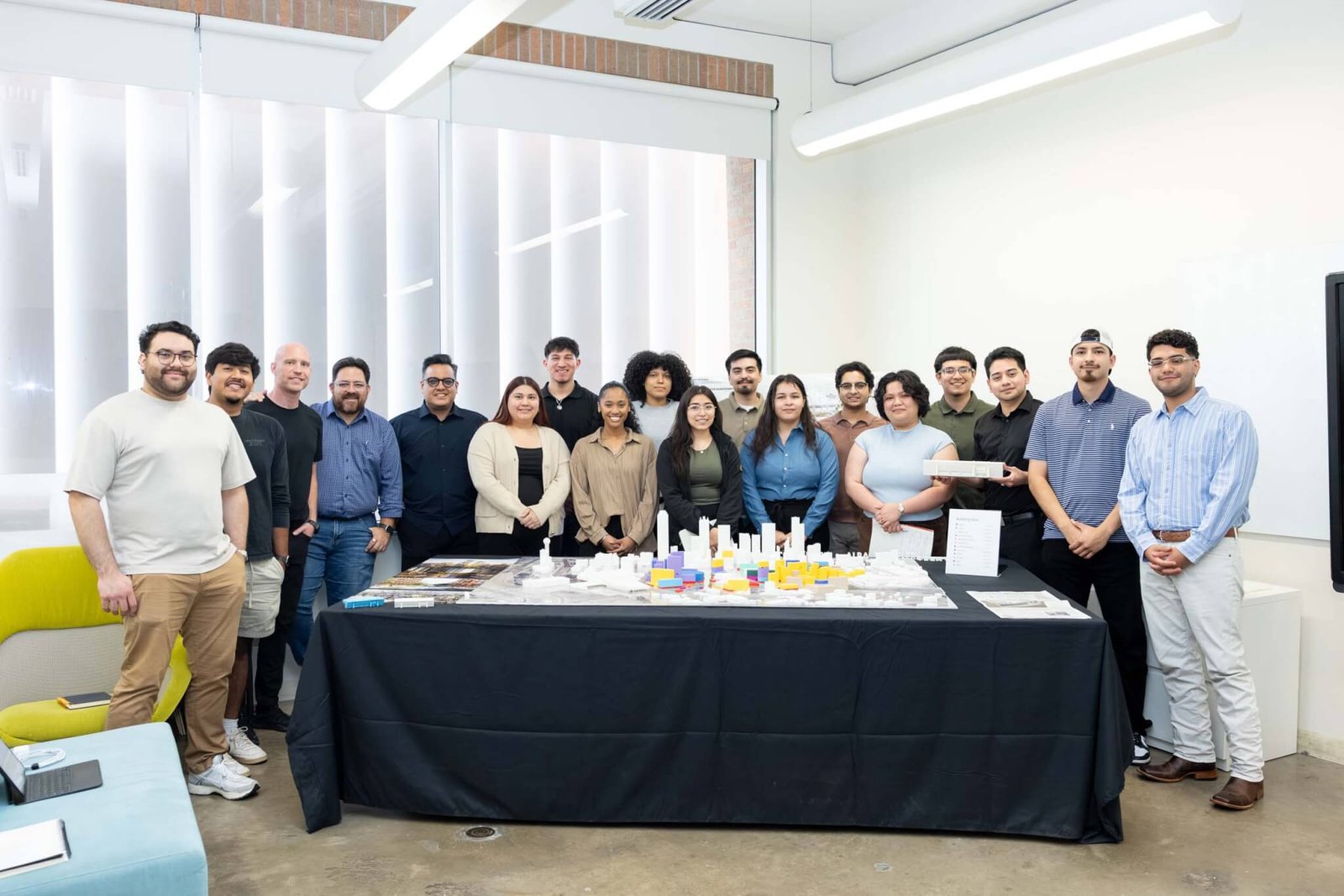
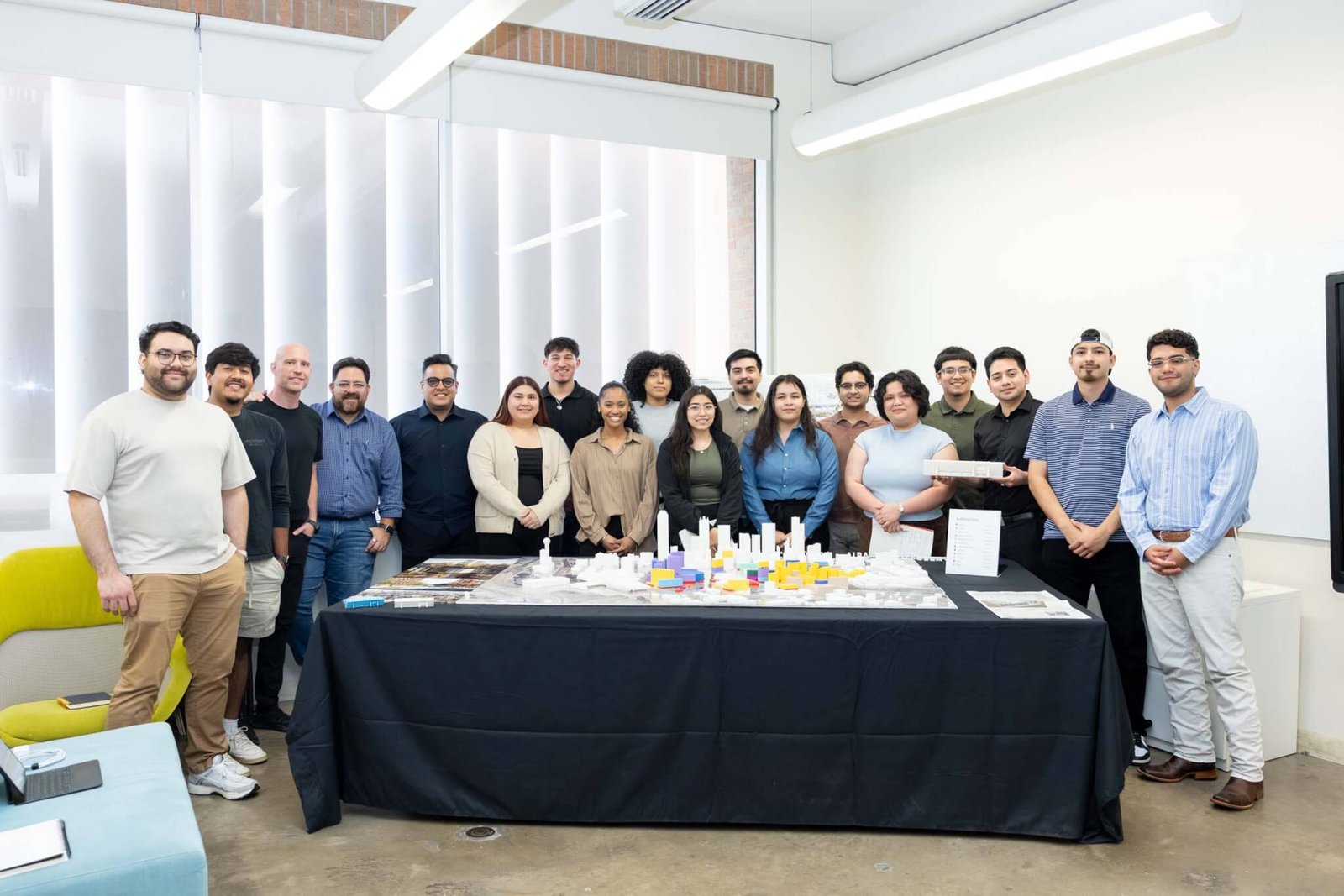 The capstone design studio comprised of 15 students, all fourth-year undergraduates in the architecture program. (Courtesy UT Arlington CAPPA)
Led by adjunct professors and practitioners Carlos Alba, Eduardo Castaneda, and Jason Wheeler, the capstone design studio comprised of 15 students, all fourth-year undergraduates in the architecture program. Its area of interest stretches across three neighborhoods as defined by the Downtown Dallas 360 plan: the Dallas Civic Center, South Side, and the Cedars. The studio’s approach is framed by straightforward, vital questions considered alongside the economic and contextual realities underlying a portion of Downtown Dallas historically bypassed by growth and investment:
What makes a city work for people?
What makes a city comfortable?
What type of city would we like to live in?
What would drive us to live/work/play in Downtown Dallas?
Today, Dallas’s central civic area embodies a vibrancy of cultural and economic anchors, including City Hall and its plaza as well as the historic Dallas Memorial Auditorium, Dallas Black Dance Theater, Pioneer Plaza, and the under-construction Kay Bailey Hutchison Convention Center replacement, designed by Perkins&Will and Populous. Ninety-one acres of land within this area is owned by the City of Dallas. While the area is important, the studio attributes a historical lack of development due in large part to barriers within the urban fabric, such as the shift in the urban grid, the Interstate 30 trench to the south, and an abundance of streets and parking lots that result in large dead zones. Environmental analysis performed by the students further proved the issues at hand.
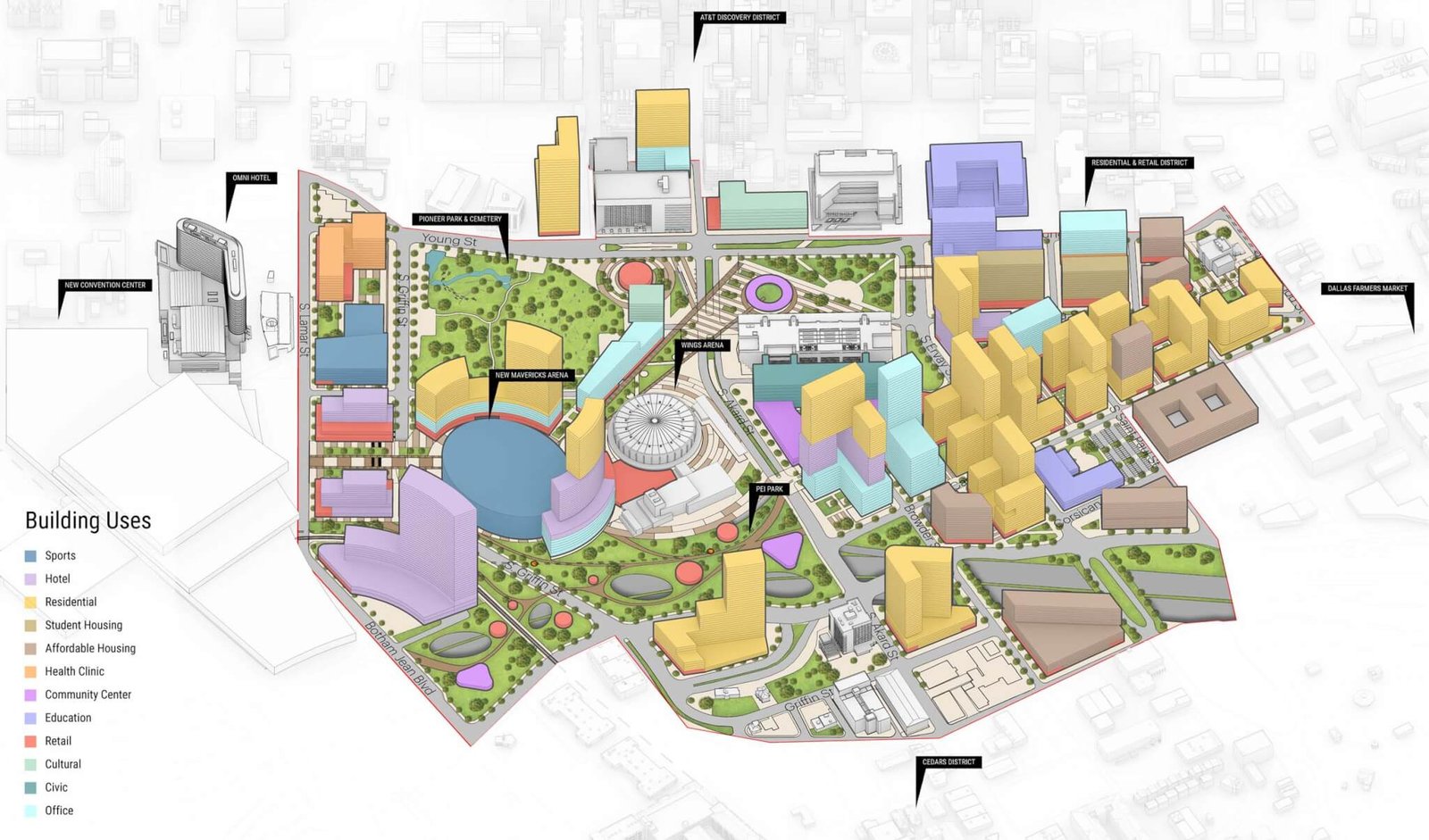 Aerial of masterplan (Courtesy UT Arlington CAPPA)
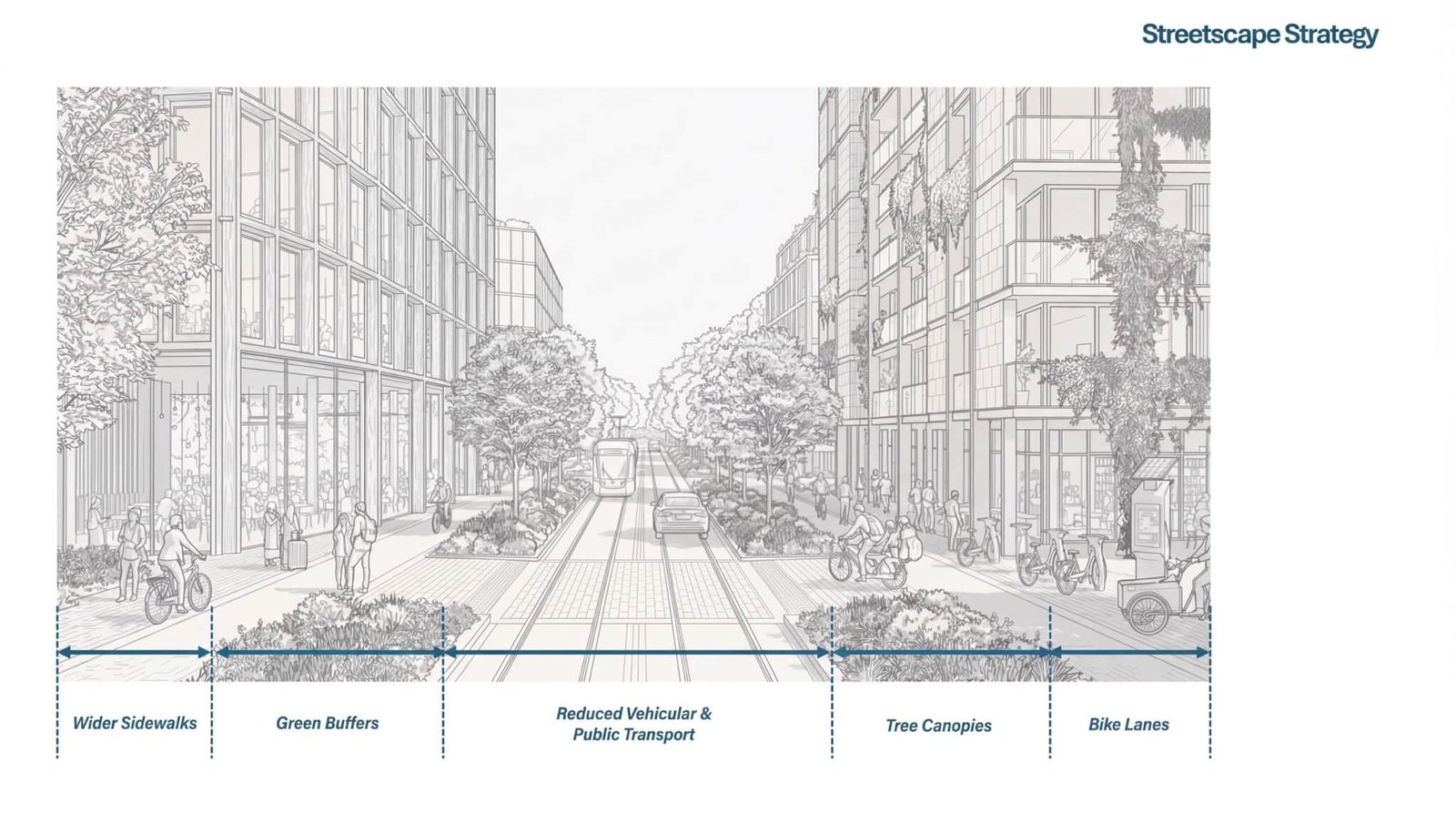 Designing a dense, green, and pedestrian-centric core was a priority.(Courtesy UT Arlington CAPPA)
Considering challenges together at a surface-level, findings could inform that a clean slate of land is present upon which development could fill in and take advantage of civic adjacencies. Singular approaches without overall concern for the future of the city can be an explanation for proposals such as the removal of City Hall. City South, however, encourages a more holistic, generational urbanism approach where historical context and present connectivity within the area informs the studio’s 15-minute-city approach to Downtown, thus stitching together the city rather than developing in a fragmented manner. A potential deck park over Interstate 30 and an integrated, new Dallas Mavericks arena are critical elements that can be studied in more detail. The city’s own Klyde Warren Park and the new cap park in Oak Cliff by HKS and SWA prove the latter is within reach.
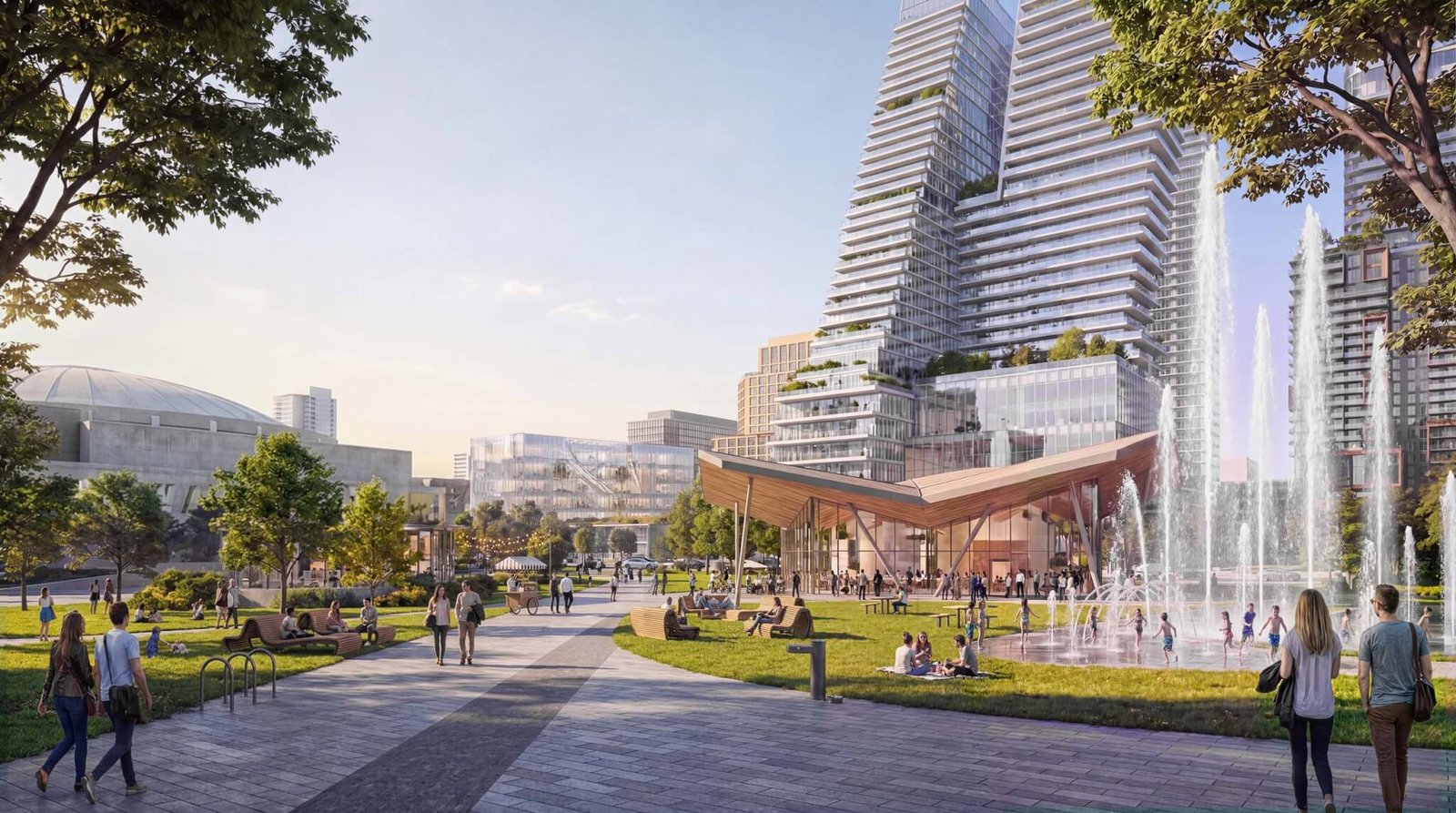 The area of interest stretches across three neighborhoods: the Dallas Civic Center, South Side, and the Cedars. (Courtesy UT Arlington CAPPA)
Over 10 million square feet of new program, within three districts layered from east to west, link together with a proposed green loop. Streets are given a more hierarchy of use diversified with multi-modal options. Parking is integrated and right-sized into buildings and below-grade where possible. Parks and green spaces will account for 10 percent of the plan.
The Entertainment District ties the new Kay Bailey Hutchison Convention Center’s north/south orientation and historic auditorium and civic spaces together with a proposed arena for the Dallas Mavericks supported by a competitive 11-acre mixed-use proposal, which is in-line with peer districts across the country. A new arena for the Dallas Mavericks and WNBA Dallas Wings future home within a renovated Dallas Memorial Auditorium means the teams will be adjacent in the same district for the first time. In contrast to the original master plan for the convention center revealed in 2022, the studio addresses scale and adjacency issues while prompting new questions about whether places outside of the boundary, such as the Convention Center, are doing enough to integrate into a bigger picture.
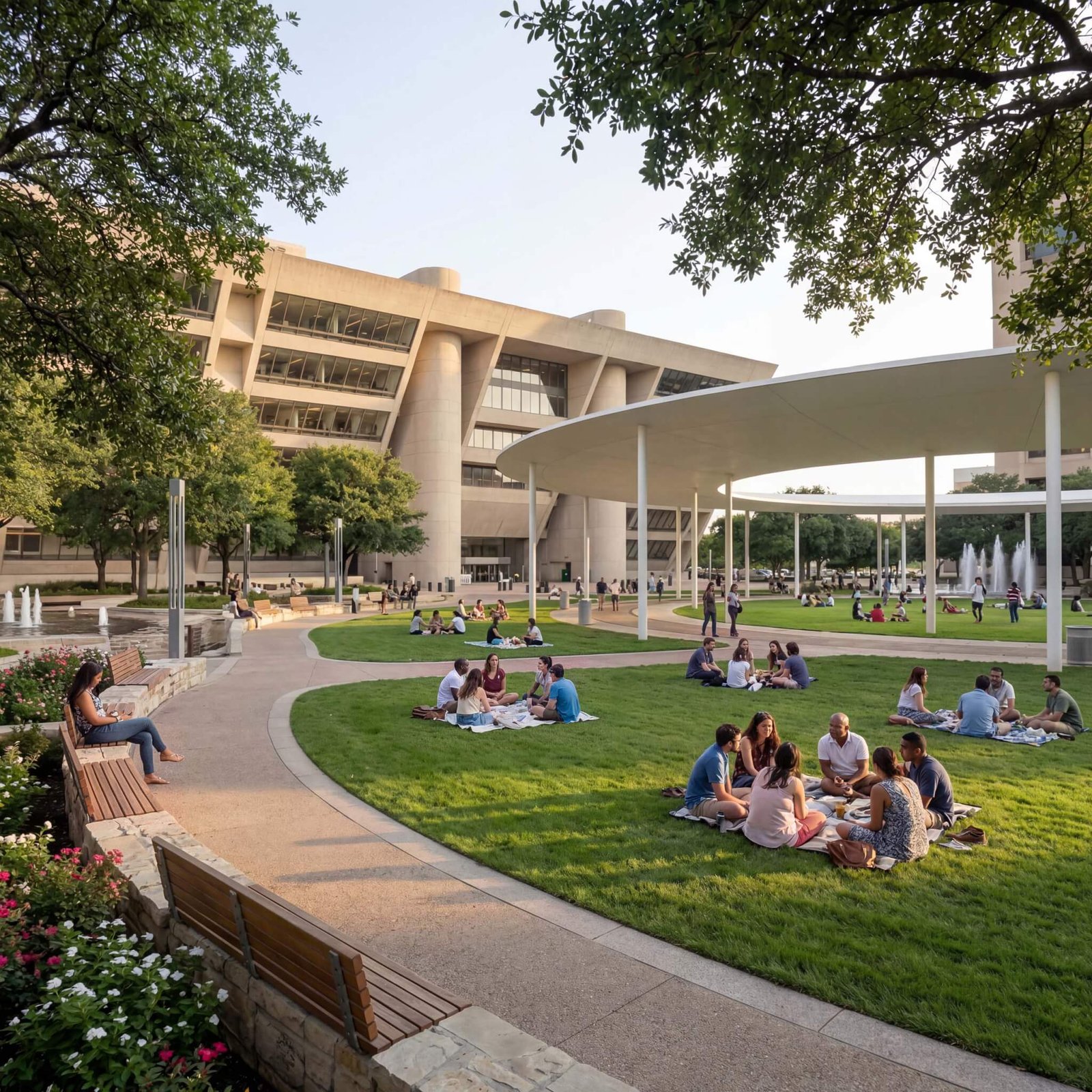 Community centers book end City Hall and anchor a reimagined park plaza. (Courtesy UT Arlington CAPPA)
A Residential and Education District on the plan’s east end integrates 2.3 million square feet of new residential program with direct access to the Dallas Farmers Market and East Quarter District. A focus on education ties together with the existing CityLab High School and Central Library. A pedestrian-centric High Street gives Canton Street a reinvigorated purpose that encourages multimodal transit options woven together with a comfortable pedestrian realm.
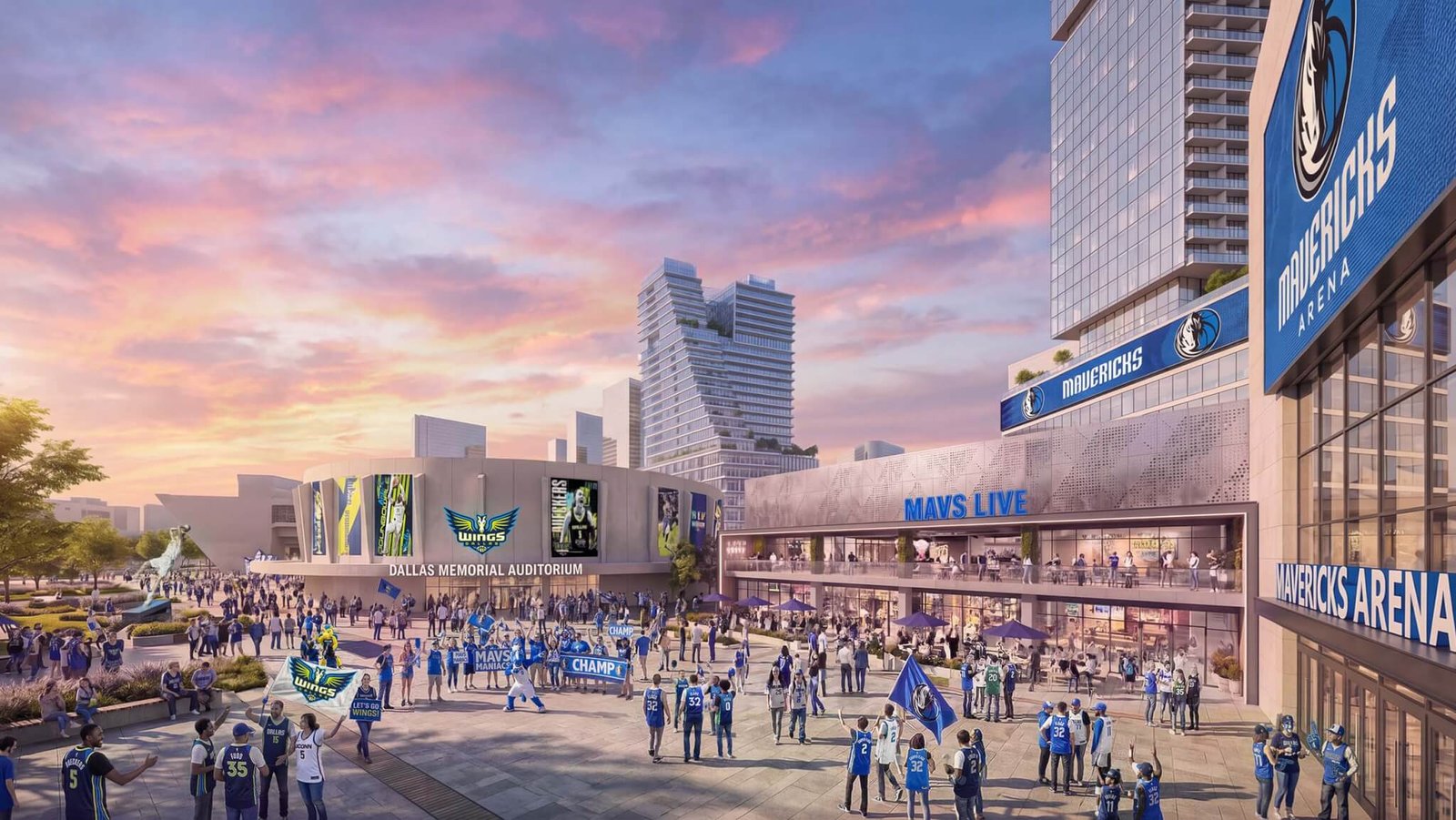 The proposal calls for a new Dallas Mavericks arena. (Courtesy UT Arlington CAPPA)
Both districts support a new civic and cultural core that fulfills City Hall’s vision as a greater municipal center. Perhaps controversially, the proposal suggests a 360,000-square-foot expansion on the south side of City Hall, maintaining the city’s offices in the historic building, adding additional space for community uses such as a daycare and fitness center, and creating space to consolidate services from around greater Dallas for better operational efficiency. Once complete, an enlarged City Hall would better serve its residents. Community centers book end City Hall and anchor a reimagined park plaza. “By creating a dense, green, and pedestrian-centric core,” the studio explained, “we aren’t just saving a building—we are building a resilient, livable downtown that serves every citizen within a 15-minute walk.”
City South joins a growing trend of sports-anchored developments across the country that prompt a reorientation of their respective cities in planning as well as civic and public priority. The 1901 Project in Chicago and the proposed relocation of the Kansas City Royals into Crown Center are noted examples.
The next step will be a review of the hundreds of proposals however, the city’s path forward on how the submittals will be evaluated or used remains unclear. As indicated by Mark Lamster’s recent Pulitzer Prize in Criticism, the future of Dallas is worth fighting—and designing—for.
Michael Friebele is an associate principal and design leader with Perkins Eastman who lives in Minneapolis.