
Theo Bosboom Takes a Bug’s-Eye View in His Perspective-Shifting ‘Flowerscapes’

Sustainability in Artistic Practice
The endless diversity and resilience displayed by wild flowers proved to be an extraordinary source of inspiration for the photographer, who notes: “The endlessly surprising perspectives completely captivated me, and I found myself constantly marvelling at their beauty, elegance, and strength.” Driven by this conviction, Bosboom committed to reducing the carbon footprint of his artistic practice by focusing locally, restricting himself to nearby environmental destinations that he could reach on foot, by bicycle, or through very short car drives.
Sustainability in Artistic Practice
The endless diversity and resilience displayed by wild flowers proved to be an extraordinary source of inspiration for the photographer, who notes: “The endlessly surprising perspectives completely captivated me, and I found myself constantly marvelling at their beauty, elegance, and strength.” Driven by this conviction, Bosboom committed to reducing the carbon footprint of his artistic practice by focusing locally, restricting himself to nearby environmental destinations that he could reach on foot, by bicycle, or through very short car drives.


Climate Crisis and Local Ecological Awareness
This rapid decline in insect biodiversity stems from several human and climate factors, most notably aggressive agricultural expansion, intensive chemical pesticide usage, urban sprawl, habitat destruction, and escalating temperatures driven by the global climate crisis. Despite these challenges, Bosboom finds reasons for hope; he has recently observed authorities in the Netherlands adopting more sustainable policies in managing roadsides and green spaces, along with growing community awareness regarding the importance of native wildflowers in supporting entire ecosystems.
Sustainability in Artistic Practice
The endless diversity and resilience displayed by wild flowers proved to be an extraordinary source of inspiration for the photographer, who notes: “The endlessly surprising perspectives completely captivated me, and I found myself constantly marvelling at their beauty, elegance, and strength.” Driven by this conviction, Bosboom committed to reducing the carbon footprint of his artistic practice by focusing locally, restricting himself to nearby environmental destinations that he could reach on foot, by bicycle, or through very short car drives.
Climate Crisis and Local Ecological Awareness
This rapid decline in insect biodiversity stems from several human and climate factors, most notably aggressive agricultural expansion, intensive chemical pesticide usage, urban sprawl, habitat destruction, and escalating temperatures driven by the global climate crisis. Despite these challenges, Bosboom finds reasons for hope; he has recently observed authorities in the Netherlands adopting more sustainable policies in managing roadsides and green spaces, along with growing community awareness regarding the importance of native wildflowers in supporting entire ecosystems.
Sustainability in Artistic Practice
The endless diversity and resilience displayed by wild flowers proved to be an extraordinary source of inspiration for the photographer, who notes: “The endlessly surprising perspectives completely captivated me, and I found myself constantly marvelling at their beauty, elegance, and strength.” Driven by this conviction, Bosboom committed to reducing the carbon footprint of his artistic practice by focusing locally, restricting himself to nearby environmental destinations that he could reach on foot, by bicycle, or through very short car drives.
Microscopic Forests: Photographer Theo Bosboom Documents Nature from an Insect’s Perspective in “Flowerscapes”
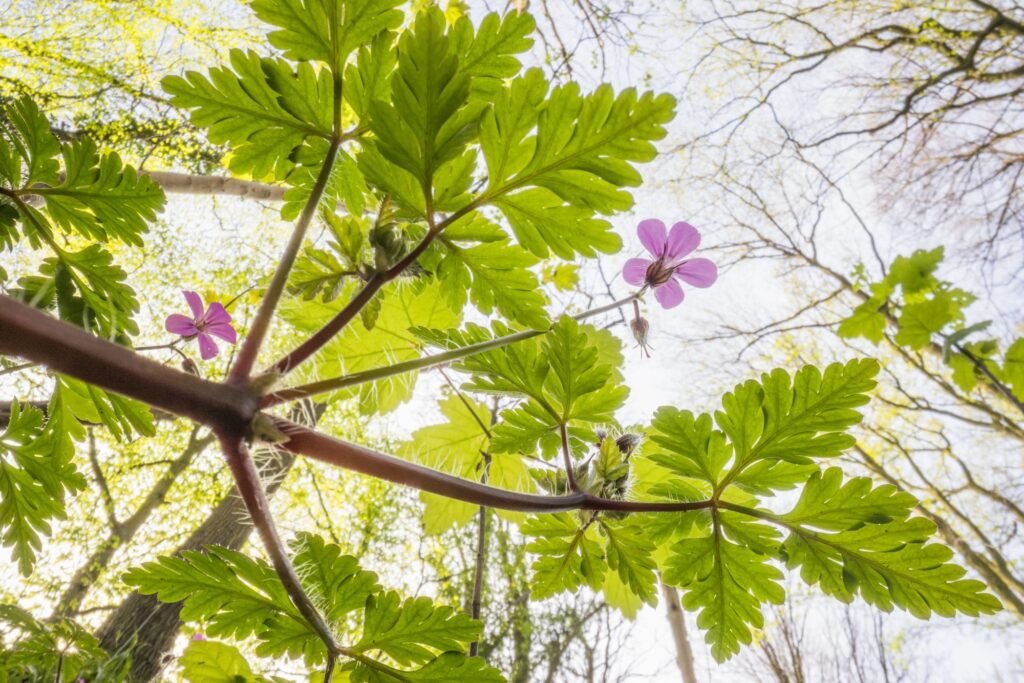
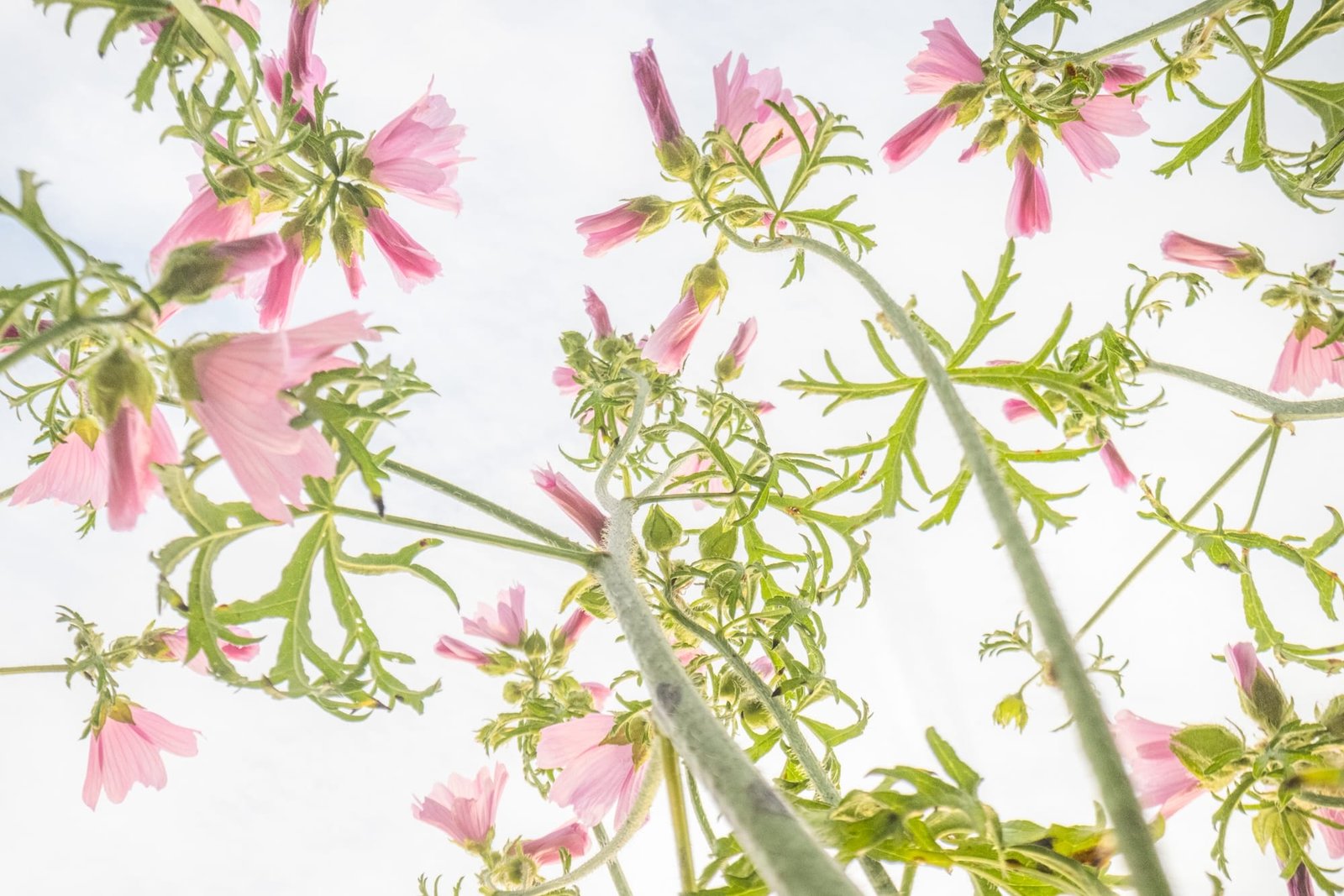
Standing in the depths of a dense forest and looking up, it is hard not to be mesmerized by the movement of towering trees dancing with the wind, casting shade onto the woodland floor. However, renowned Dutch photographer Theo Bosboom decided to challenge this traditional viewpoint, imagining himself as a microscopic organism—an ant or a beetle—looking up from ground level at the stems of wild geraniums, wild garlic, or buttercups. Through this low vantage point, he reimagined simple herbaceous plants to look through his lens like miniature, dense forests of ancient sequoia trees, boasting majestic structural and spatial dimensions.
This radical shift in studying spatial proportions and framing environmental elements perfectly reflects the design purity and visual inspiration we constantly strive to deliver at ArchCod. Here, we do not merely track rigid geometric lines; instead, we search for the deep connections that unite avant-garde art with living nature—an editorial direction we regularly explore on our About Us page.
The Search for Pollinators: An Eerie Quiet in the Wilderness
Bosboom traversed local landscapes surrounding his home in the Netherlands, occasionally crossing the borders into regions within Germany and Belgium, exploring forests, sand dunes, public parks, and even roadside verges. However, these field excursions sparked deep environmental anxiety due to a noticeable absence of pollinators and insects among the blooming flowers. In the preface of his new book titled “Flowerscapes, A Bug’s Eye View”, Bosboom describes those moments, sharing: “At times, it was eerily quiet, which matches recent studies showing that the numbers of flowers and insects have declined sharply across Western Europe over the past decades.”
Climate Crisis and Local Ecological Awareness
This rapid decline in insect biodiversity stems from several human and climate factors, most notably aggressive agricultural expansion, intensive chemical pesticide usage, urban sprawl, habitat destruction, and escalating temperatures driven by the global climate crisis. Despite these challenges, Bosboom finds reasons for hope; he has recently observed authorities in the Netherlands adopting more sustainable policies in managing roadsides and green spaces, along with growing community awareness regarding the importance of native wildflowers in supporting entire ecosystems.
Sustainability in Artistic Practice
The endless diversity and resilience displayed by wild flowers proved to be an extraordinary source of inspiration for the photographer, who notes: “The endlessly surprising perspectives completely captivated me, and I found myself constantly marvelling at their beauty, elegance, and strength.” Driven by this conviction, Bosboom committed to reducing the carbon footprint of his artistic practice by focusing locally, restricting himself to nearby environmental destinations that he could reach on foot, by bicycle, or through very short car drives.
Sustainability in Artistic Practice
The endless diversity and resilience displayed by wild flowers proved to be an extraordinary source of inspiration for the photographer, who notes: “The endlessly surprising perspectives completely captivated me, and I found myself constantly marvelling at their beauty, elegance, and strength.” Driven by this conviction, Bosboom committed to reducing the carbon footprint of his artistic practice by focusing locally, restricting himself to nearby environmental destinations that he could reach on foot, by bicycle, or through very short car drives.
Microscopic Forests: Photographer Theo Bosboom Documents Nature from an Insect’s Perspective in “Flowerscapes”
Standing in the depths of a dense forest and looking up, it is hard not to be mesmerized by the movement of towering trees dancing with the wind, casting shade onto the woodland floor. However, renowned Dutch photographer Theo Bosboom decided to challenge this traditional viewpoint, imagining himself as a microscopic organism—an ant or a beetle—looking up from ground level at the stems of wild geraniums, wild garlic, or buttercups. Through this low vantage point, he reimagined simple herbaceous plants to look through his lens like miniature, dense forests of ancient sequoia trees, boasting majestic structural and spatial dimensions.
This radical shift in studying spatial proportions and framing environmental elements perfectly reflects the design purity and visual inspiration we constantly strive to deliver at ArchCod. Here, we do not merely track rigid geometric lines; instead, we search for the deep connections that unite avant-garde art with living nature—an editorial direction we regularly explore on our About Us page.
The Search for Pollinators: An Eerie Quiet in the Wilderness
Bosboom traversed local landscapes surrounding his home in the Netherlands, occasionally crossing the borders into regions within Germany and Belgium, exploring forests, sand dunes, public parks, and even roadside verges. However, these field excursions sparked deep environmental anxiety due to a noticeable absence of pollinators and insects among the blooming flowers. In the preface of his new book titled “Flowerscapes, A Bug’s Eye View”, Bosboom describes those moments, sharing: “At times, it was eerily quiet, which matches recent studies showing that the numbers of flowers and insects have declined sharply across Western Europe over the past decades.”
Climate Crisis and Local Ecological Awareness
This rapid decline in insect biodiversity stems from several human and climate factors, most notably aggressive agricultural expansion, intensive chemical pesticide usage, urban sprawl, habitat destruction, and escalating temperatures driven by the global climate crisis. Despite these challenges, Bosboom finds reasons for hope; he has recently observed authorities in the Netherlands adopting more sustainable policies in managing roadsides and green spaces, along with growing community awareness regarding the importance of native wildflowers in supporting entire ecosystems.
Sustainability in Artistic Practice
The endless diversity and resilience displayed by wild flowers proved to be an extraordinary source of inspiration for the photographer, who notes: “The endlessly surprising perspectives completely captivated me, and I found myself constantly marvelling at their beauty, elegance, and strength.” Driven by this conviction, Bosboom committed to reducing the carbon footprint of his artistic practice by focusing locally, restricting himself to nearby environmental destinations that he could reach on foot, by bicycle, or through very short car drives.
Sustainability in Artistic Practice
The endless diversity and resilience displayed by wild flowers proved to be an extraordinary source of inspiration for the photographer, who notes: “The endlessly surprising perspectives completely captivated me, and I found myself constantly marvelling at their beauty, elegance, and strength.” Driven by this conviction, Bosboom committed to reducing the carbon footprint of his artistic practice by focusing locally, restricting himself to nearby environmental destinations that he could reach on foot, by bicycle, or through very short car drives.
Microscopic Forests: Photographer Theo Bosboom Documents Nature from an Insect’s Perspective in “Flowerscapes”
Standing in the depths of a dense forest and looking up, it is hard not to be mesmerized by the movement of towering trees dancing with the wind, casting shade onto the woodland floor. However, renowned Dutch photographer Theo Bosboom decided to challenge this traditional viewpoint, imagining himself as a microscopic organism—an ant or a beetle—looking up from ground level at the stems of wild geraniums, wild garlic, or buttercups. Through this low vantage point, he reimagined simple herbaceous plants to look through his lens like miniature, dense forests of ancient sequoia trees, boasting majestic structural and spatial dimensions.
This radical shift in studying spatial proportions and framing environmental elements perfectly reflects the design purity and visual inspiration we constantly strive to deliver at ArchCod. Here, we do not merely track rigid geometric lines; instead, we search for the deep connections that unite avant-garde art with living nature—an editorial direction we regularly explore on our About Us page.
The Search for Pollinators: An Eerie Quiet in the Wilderness
Bosboom traversed local landscapes surrounding his home in the Netherlands, occasionally crossing the borders into regions within Germany and Belgium, exploring forests, sand dunes, public parks, and even roadside verges. However, these field excursions sparked deep environmental anxiety due to a noticeable absence of pollinators and insects among the blooming flowers. In the preface of his new book titled “Flowerscapes, A Bug’s Eye View”, Bosboom describes those moments, sharing: “At times, it was eerily quiet, which matches recent studies showing that the numbers of flowers and insects have declined sharply across Western Europe over the past decades.”
Climate Crisis and Local Ecological Awareness
This rapid decline in insect biodiversity stems from several human and climate factors, most notably aggressive agricultural expansion, intensive chemical pesticide usage, urban sprawl, habitat destruction, and escalating temperatures driven by the global climate crisis. Despite these challenges, Bosboom finds reasons for hope; he has recently observed authorities in the Netherlands adopting more sustainable policies in managing roadsides and green spaces, along with growing community awareness regarding the importance of native wildflowers in supporting entire ecosystems.
Sustainability in Artistic Practice
The endless diversity and resilience displayed by wild flowers proved to be an extraordinary source of inspiration for the photographer, who notes: “The endlessly surprising perspectives completely captivated me, and I found myself constantly marvelling at their beauty, elegance, and strength.” Driven by this conviction, Bosboom committed to reducing the carbon footprint of his artistic practice by focusing locally, restricting himself to nearby environmental destinations that he could reach on foot, by bicycle, or through very short car drives.
Climate Crisis and Local Ecological Awareness
This rapid decline in insect biodiversity stems from several human and climate factors, most notably aggressive agricultural expansion, intensive chemical pesticide usage, urban sprawl, habitat destruction, and escalating temperatures driven by the global climate crisis. Despite these challenges, Bosboom finds reasons for hope; he has recently observed authorities in the Netherlands adopting more sustainable policies in managing roadsides and green spaces, along with growing community awareness regarding the importance of native wildflowers in supporting entire ecosystems.
Sustainability in Artistic Practice
The endless diversity and resilience displayed by wild flowers proved to be an extraordinary source of inspiration for the photographer, who notes: “The endlessly surprising perspectives completely captivated me, and I found myself constantly marvelling at their beauty, elegance, and strength.” Driven by this conviction, Bosboom committed to reducing the carbon footprint of his artistic practice by focusing locally, restricting himself to nearby environmental destinations that he could reach on foot, by bicycle, or through very short car drives.
Microscopic Forests: Photographer Theo Bosboom Documents Nature from an Insect’s Perspective in “Flowerscapes”
Standing in the depths of a dense forest and looking up, it is hard not to be mesmerized by the movement of towering trees dancing with the wind, casting shade onto the woodland floor. However, renowned Dutch photographer Theo Bosboom decided to challenge this traditional viewpoint, imagining himself as a microscopic organism—an ant or a beetle—looking up from ground level at the stems of wild geraniums, wild garlic, or buttercups. Through this low vantage point, he reimagined simple herbaceous plants to look through his lens like miniature, dense forests of ancient sequoia trees, boasting majestic structural and spatial dimensions.
This radical shift in studying spatial proportions and framing environmental elements perfectly reflects the design purity and visual inspiration we constantly strive to deliver at ArchCod. Here, we do not merely track rigid geometric lines; instead, we search for the deep connections that unite avant-garde art with living nature—an editorial direction we regularly explore on our About Us page.
The Search for Pollinators: An Eerie Quiet in the Wilderness
Bosboom traversed local landscapes surrounding his home in the Netherlands, occasionally crossing the borders into regions within Germany and Belgium, exploring forests, sand dunes, public parks, and even roadside verges. However, these field excursions sparked deep environmental anxiety due to a noticeable absence of pollinators and insects among the blooming flowers. In the preface of his new book titled “Flowerscapes, A Bug’s Eye View”, Bosboom describes those moments, sharing: “At times, it was eerily quiet, which matches recent studies showing that the numbers of flowers and insects have declined sharply across Western Europe over the past decades.”
Climate Crisis and Local Ecological Awareness
This rapid decline in insect biodiversity stems from several human and climate factors, most notably aggressive agricultural expansion, intensive chemical pesticide usage, urban sprawl, habitat destruction, and escalating temperatures driven by the global climate crisis. Despite these challenges, Bosboom finds reasons for hope; he has recently observed authorities in the Netherlands adopting more sustainable policies in managing roadsides and green spaces, along with growing community awareness regarding the importance of native wildflowers in supporting entire ecosystems.
Sustainability in Artistic Practice
The endless diversity and resilience displayed by wild flowers proved to be an extraordinary source of inspiration for the photographer, who notes: “The endlessly surprising perspectives completely captivated me, and I found myself constantly marvelling at their beauty, elegance, and strength.” Driven by this conviction, Bosboom committed to reducing the carbon footprint of his artistic practice by focusing locally, restricting himself to nearby environmental destinations that he could reach on foot, by bicycle, or through very short car drives.
Climate Crisis and Local Ecological Awareness
This rapid decline in insect biodiversity stems from several human and climate factors, most notably aggressive agricultural expansion, intensive chemical pesticide usage, urban sprawl, habitat destruction, and escalating temperatures driven by the global climate crisis. Despite these challenges, Bosboom finds reasons for hope; he has recently observed authorities in the Netherlands adopting more sustainable policies in managing roadsides and green spaces, along with growing community awareness regarding the importance of native wildflowers in supporting entire ecosystems.
Sustainability in Artistic Practice
The endless diversity and resilience displayed by wild flowers proved to be an extraordinary source of inspiration for the photographer, who notes: “The endlessly surprising perspectives completely captivated me, and I found myself constantly marvelling at their beauty, elegance, and strength.” Driven by this conviction, Bosboom committed to reducing the carbon footprint of his artistic practice by focusing locally, restricting himself to nearby environmental destinations that he could reach on foot, by bicycle, or through very short car drives.
Microscopic Forests: Photographer Theo Bosboom Documents Nature from an Insect’s Perspective in “Flowerscapes”
Standing in the depths of a dense forest and looking up, it is hard not to be mesmerized by the movement of towering trees dancing with the wind, casting shade onto the woodland floor. However, renowned Dutch photographer Theo Bosboom decided to challenge this traditional viewpoint, imagining himself as a microscopic organism—an ant or a beetle—looking up from ground level at the stems of wild geraniums, wild garlic, or buttercups. Through this low vantage point, he reimagined simple herbaceous plants to look through his lens like miniature, dense forests of ancient sequoia trees, boasting majestic structural and spatial dimensions.
This radical shift in studying spatial proportions and framing environmental elements perfectly reflects the design purity and visual inspiration we constantly strive to deliver at ArchCod. Here, we do not merely track rigid geometric lines; instead, we search for the deep connections that unite avant-garde art with living nature—an editorial direction we regularly explore on our About Us page.
The Search for Pollinators: An Eerie Quiet in the Wilderness
Bosboom traversed local landscapes surrounding his home in the Netherlands, occasionally crossing the borders into regions within Germany and Belgium, exploring forests, sand dunes, public parks, and even roadside verges. However, these field excursions sparked deep environmental anxiety due to a noticeable absence of pollinators and insects among the blooming flowers. In the preface of his new book titled “Flowerscapes, A Bug’s Eye View”, Bosboom describes those moments, sharing: “At times, it was eerily quiet, which matches recent studies showing that the numbers of flowers and insects have declined sharply across Western Europe over the past decades.”
Climate Crisis and Local Ecological Awareness
This rapid decline in insect biodiversity stems from several human and climate factors, most notably aggressive agricultural expansion, intensive chemical pesticide usage, urban sprawl, habitat destruction, and escalating temperatures driven by the global climate crisis. Despite these challenges, Bosboom finds reasons for hope; he has recently observed authorities in the Netherlands adopting more sustainable policies in managing roadsides and green spaces, along with growing community awareness regarding the importance of native wildflowers in supporting entire ecosystems.
Sustainability in Artistic Practice
The endless diversity and resilience displayed by wild flowers proved to be an extraordinary source of inspiration for the photographer, who notes: “The endlessly surprising perspectives completely captivated me, and I found myself constantly marvelling at their beauty, elegance, and strength.” Driven by this conviction, Bosboom committed to reducing the carbon footprint of his artistic practice by focusing locally, restricting himself to nearby environmental destinations that he could reach on foot, by bicycle, or through very short car drives.
Sustainability in Artistic Practice
The endless diversity and resilience displayed by wild flowers proved to be an extraordinary source of inspiration for the photographer, who notes: “The endlessly surprising perspectives completely captivated me, and I found myself constantly marvelling at their beauty, elegance, and strength.” Driven by this conviction, Bosboom committed to reducing the carbon footprint of his artistic practice by focusing locally, restricting himself to nearby environmental destinations that he could reach on foot, by bicycle, or through very short car drives.
Climate Crisis and Local Ecological Awareness
This rapid decline in insect biodiversity stems from several human and climate factors, most notably aggressive agricultural expansion, intensive chemical pesticide usage, urban sprawl, habitat destruction, and escalating temperatures driven by the global climate crisis. Despite these challenges, Bosboom finds reasons for hope; he has recently observed authorities in the Netherlands adopting more sustainable policies in managing roadsides and green spaces, along with growing community awareness regarding the importance of native wildflowers in supporting entire ecosystems.
Sustainability in Artistic Practice
The endless diversity and resilience displayed by wild flowers proved to be an extraordinary source of inspiration for the photographer, who notes: “The endlessly surprising perspectives completely captivated me, and I found myself constantly marvelling at their beauty, elegance, and strength.” Driven by this conviction, Bosboom committed to reducing the carbon footprint of his artistic practice by focusing locally, restricting himself to nearby environmental destinations that he could reach on foot, by bicycle, or through very short car drives.
Microscopic Forests: Photographer Theo Bosboom Documents Nature from an Insect’s Perspective in “Flowerscapes”
Standing in the depths of a dense forest and looking up, it is hard not to be mesmerized by the movement of towering trees dancing with the wind, casting shade onto the woodland floor. However, renowned Dutch photographer Theo Bosboom decided to challenge this traditional viewpoint, imagining himself as a microscopic organism—an ant or a beetle—looking up from ground level at the stems of wild geraniums, wild garlic, or buttercups. Through this low vantage point, he reimagined simple herbaceous plants to look through his lens like miniature, dense forests of ancient sequoia trees, boasting majestic structural and spatial dimensions.
This radical shift in studying spatial proportions and framing environmental elements perfectly reflects the design purity and visual inspiration we constantly strive to deliver at ArchCod. Here, we do not merely track rigid geometric lines; instead, we search for the deep connections that unite avant-garde art with living nature—an editorial direction we regularly explore on our About Us page.
The Search for Pollinators: An Eerie Quiet in the Wilderness
Bosboom traversed local landscapes surrounding his home in the Netherlands, occasionally crossing the borders into regions within Germany and Belgium, exploring forests, sand dunes, public parks, and even roadside verges. However, these field excursions sparked deep environmental anxiety due to a noticeable absence of pollinators and insects among the blooming flowers. In the preface of his new book titled “Flowerscapes, A Bug’s Eye View”, Bosboom describes those moments, sharing: “At times, it was eerily quiet, which matches recent studies showing that the numbers of flowers and insects have declined sharply across Western Europe over the past decades.”
Climate Crisis and Local Ecological Awareness
This rapid decline in insect biodiversity stems from several human and climate factors, most notably aggressive agricultural expansion, intensive chemical pesticide usage, urban sprawl, habitat destruction, and escalating temperatures driven by the global climate crisis. Despite these challenges, Bosboom finds reasons for hope; he has recently observed authorities in the Netherlands adopting more sustainable policies in managing roadsides and green spaces, along with growing community awareness regarding the importance of native wildflowers in supporting entire ecosystems.
Sustainability in Artistic Practice
The endless diversity and resilience displayed by wild flowers proved to be an extraordinary source of inspiration for the photographer, who notes: “The endlessly surprising perspectives completely captivated me, and I found myself constantly marvelling at their beauty, elegance, and strength.” Driven by this conviction, Bosboom committed to reducing the carbon footprint of his artistic practice by focusing locally, restricting himself to nearby environmental destinations that he could reach on foot, by bicycle, or through very short car drives.
Sustainability in Artistic Practice
The endless diversity and resilience displayed by wild flowers proved to be an extraordinary source of inspiration for the photographer, who notes: “The endlessly surprising perspectives completely captivated me, and I found myself constantly marvelling at their beauty, elegance, and strength.” Driven by this conviction, Bosboom committed to reducing the carbon footprint of his artistic practice by focusing locally, restricting himself to nearby environmental destinations that he could reach on foot, by bicycle, or through very short car drives.
Climate Crisis and Local Ecological Awareness
This rapid decline in insect biodiversity stems from several human and climate factors, most notably aggressive agricultural expansion, intensive chemical pesticide usage, urban sprawl, habitat destruction, and escalating temperatures driven by the global climate crisis. Despite these challenges, Bosboom finds reasons for hope; he has recently observed authorities in the Netherlands adopting more sustainable policies in managing roadsides and green spaces, along with growing community awareness regarding the importance of native wildflowers in supporting entire ecosystems.
Sustainability in Artistic Practice
The endless diversity and resilience displayed by wild flowers proved to be an extraordinary source of inspiration for the photographer, who notes: “The endlessly surprising perspectives completely captivated me, and I found myself constantly marvelling at their beauty, elegance, and strength.” Driven by this conviction, Bosboom committed to reducing the carbon footprint of his artistic practice by focusing locally, restricting himself to nearby environmental destinations that he could reach on foot, by bicycle, or through very short car drives.
Microscopic Forests: Photographer Theo Bosboom Documents Nature from an Insect’s Perspective in “Flowerscapes”
Standing in the depths of a dense forest and looking up, it is hard not to be mesmerized by the movement of towering trees dancing with the wind, casting shade onto the woodland floor. However, renowned Dutch photographer Theo Bosboom decided to challenge this traditional viewpoint, imagining himself as a microscopic organism—an ant or a beetle—looking up from ground level at the stems of wild geraniums, wild garlic, or buttercups. Through this low vantage point, he reimagined simple herbaceous plants to look through his lens like miniature, dense forests of ancient sequoia trees, boasting majestic structural and spatial dimensions.
This radical shift in studying spatial proportions and framing environmental elements perfectly reflects the design purity and visual inspiration we constantly strive to deliver at ArchCod. Here, we do not merely track rigid geometric lines; instead, we search for the deep connections that unite avant-garde art with living nature—an editorial direction we regularly explore on our About Us page.
The Search for Pollinators: An Eerie Quiet in the Wilderness
Bosboom traversed local landscapes surrounding his home in the Netherlands, occasionally crossing the borders into regions within Germany and Belgium, exploring forests, sand dunes, public parks, and even roadside verges. However, these field excursions sparked deep environmental anxiety due to a noticeable absence of pollinators and insects among the blooming flowers. In the preface of his new book titled “Flowerscapes, A Bug’s Eye View”, Bosboom describes those moments, sharing: “At times, it was eerily quiet, which matches recent studies showing that the numbers of flowers and insects have declined sharply across Western Europe over the past decades.”
Climate Crisis and Local Ecological Awareness
This rapid decline in insect biodiversity stems from several human and climate factors, most notably aggressive agricultural expansion, intensive chemical pesticide usage, urban sprawl, habitat destruction, and escalating temperatures driven by the global climate crisis. Despite these challenges, Bosboom finds reasons for hope; he has recently observed authorities in the Netherlands adopting more sustainable policies in managing roadsides and green spaces, along with growing community awareness regarding the importance of native wildflowers in supporting entire ecosystems.
Sustainability in Artistic Practice
The endless diversity and resilience displayed by wild flowers proved to be an extraordinary source of inspiration for the photographer, who notes: “The endlessly surprising perspectives completely captivated me, and I found myself constantly marvelling at their beauty, elegance, and strength.” Driven by this conviction, Bosboom committed to reducing the carbon footprint of his artistic practice by focusing locally, restricting himself to nearby environmental destinations that he could reach on foot, by bicycle, or through very short car drives.
Climate Crisis and Local Ecological Awareness
This rapid decline in insect biodiversity stems from several human and climate factors, most notably aggressive agricultural expansion, intensive chemical pesticide usage, urban sprawl, habitat destruction, and escalating temperatures driven by the global climate crisis. Despite these challenges, Bosboom finds reasons for hope; he has recently observed authorities in the Netherlands adopting more sustainable policies in managing roadsides and green spaces, along with growing community awareness regarding the importance of native wildflowers in supporting entire ecosystems.
Sustainability in Artistic Practice
The endless diversity and resilience displayed by wild flowers proved to be an extraordinary source of inspiration for the photographer, who notes: “The endlessly surprising perspectives completely captivated me, and I found myself constantly marvelling at their beauty, elegance, and strength.” Driven by this conviction, Bosboom committed to reducing the carbon footprint of his artistic practice by focusing locally, restricting himself to nearby environmental destinations that he could reach on foot, by bicycle, or through very short car drives.
Climate Crisis and Local Ecological Awareness
This rapid decline in insect biodiversity stems from several human and climate factors, most notably aggressive agricultural expansion, intensive chemical pesticide usage, urban sprawl, habitat destruction, and escalating temperatures driven by the global climate crisis. Despite these challenges, Bosboom finds reasons for hope; he has recently observed authorities in the Netherlands adopting more sustainable policies in managing roadsides and green spaces, along with growing community awareness regarding the importance of native wildflowers in supporting entire ecosystems.
Sustainability in Artistic Practice
The endless diversity and resilience displayed by wild flowers proved to be an extraordinary source of inspiration for the photographer, who notes: “The endlessly surprising perspectives completely captivated me, and I found myself constantly marvelling at their beauty, elegance, and strength.” Driven by this conviction, Bosboom committed to reducing the carbon footprint of his artistic practice by focusing locally, restricting himself to nearby environmental destinations that he could reach on foot, by bicycle, or through very short car drives.
Microscopic Forests: Photographer Theo Bosboom Documents Nature from an Insect’s Perspective in “Flowerscapes”
Standing in the depths of a dense forest and looking up, it is hard not to be mesmerized by the movement of towering trees dancing with the wind, casting shade onto the woodland floor. However, renowned Dutch photographer Theo Bosboom decided to challenge this traditional viewpoint, imagining himself as a microscopic organism—an ant or a beetle—looking up from ground level at the stems of wild geraniums, wild garlic, or buttercups. Through this low vantage point, he reimagined simple herbaceous plants to look through his lens like miniature, dense forests of ancient sequoia trees, boasting majestic structural and spatial dimensions.
This radical shift in studying spatial proportions and framing environmental elements perfectly reflects the design purity and visual inspiration we constantly strive to deliver at ArchCod. Here, we do not merely track rigid geometric lines; instead, we search for the deep connections that unite avant-garde art with living nature—an editorial direction we regularly explore on our About Us page.
The Search for Pollinators: An Eerie Quiet in the Wilderness
Bosboom traversed local landscapes surrounding his home in the Netherlands, occasionally crossing the borders into regions within Germany and Belgium, exploring forests, sand dunes, public parks, and even roadside verges. However, these field excursions sparked deep environmental anxiety due to a noticeable absence of pollinators and insects among the blooming flowers. In the preface of his new book titled “Flowerscapes, A Bug’s Eye View”, Bosboom describes those moments, sharing: “At times, it was eerily quiet, which matches recent studies showing that the numbers of flowers and insects have declined sharply across Western Europe over the past decades.”
Climate Crisis and Local Ecological Awareness
This rapid decline in insect biodiversity stems from several human and climate factors, most notably aggressive agricultural expansion, intensive chemical pesticide usage, urban sprawl, habitat destruction, and escalating temperatures driven by the global climate crisis. Despite these challenges, Bosboom finds reasons for hope; he has recently observed authorities in the Netherlands adopting more sustainable policies in managing roadsides and green spaces, along with growing community awareness regarding the importance of native wildflowers in supporting entire ecosystems.
Sustainability in Artistic Practice
The endless diversity and resilience displayed by wild flowers proved to be an extraordinary source of inspiration for the photographer, who notes: “The endlessly surprising perspectives completely captivated me, and I found myself constantly marvelling at their beauty, elegance, and strength.” Driven by this conviction, Bosboom committed to reducing the carbon footprint of his artistic practice by focusing locally, restricting himself to nearby environmental destinations that he could reach on foot, by bicycle, or through very short car drives.
Sustainability in Artistic Practice
The endless diversity and resilience displayed by wild flowers proved to be an extraordinary source of inspiration for the photographer, who notes: “The endlessly surprising perspectives completely captivated me, and I found myself constantly marvelling at their beauty, elegance, and strength.” Driven by this conviction, Bosboom committed to reducing the carbon footprint of his artistic practice by focusing locally, restricting himself to nearby environmental destinations that he could reach on foot, by bicycle, or through very short car drives.
Climate Crisis and Local Ecological Awareness
This rapid decline in insect biodiversity stems from several human and climate factors, most notably aggressive agricultural expansion, intensive chemical pesticide usage, urban sprawl, habitat destruction, and escalating temperatures driven by the global climate crisis. Despite these challenges, Bosboom finds reasons for hope; he has recently observed authorities in the Netherlands adopting more sustainable policies in managing roadsides and green spaces, along with growing community awareness regarding the importance of native wildflowers in supporting entire ecosystems.
Sustainability in Artistic Practice
The endless diversity and resilience displayed by wild flowers proved to be an extraordinary source of inspiration for the photographer, who notes: “The endlessly surprising perspectives completely captivated me, and I found myself constantly marvelling at their beauty, elegance, and strength.” Driven by this conviction, Bosboom committed to reducing the carbon footprint of his artistic practice by focusing locally, restricting himself to nearby environmental destinations that he could reach on foot, by bicycle, or through very short car drives.
Climate Crisis and Local Ecological Awareness
This rapid decline in insect biodiversity stems from several human and climate factors, most notably aggressive agricultural expansion, intensive chemical pesticide usage, urban sprawl, habitat destruction, and escalating temperatures driven by the global climate crisis. Despite these challenges, Bosboom finds reasons for hope; he has recently observed authorities in the Netherlands adopting more sustainable policies in managing roadsides and green spaces, along with growing community awareness regarding the importance of native wildflowers in supporting entire ecosystems.
Sustainability in Artistic Practice
The endless diversity and resilience displayed by wild flowers proved to be an extraordinary source of inspiration for the photographer, who notes: “The endlessly surprising perspectives completely captivated me, and I found myself constantly marvelling at their beauty, elegance, and strength.” Driven by this conviction, Bosboom committed to reducing the carbon footprint of his artistic practice by focusing locally, restricting himself to nearby environmental destinations that he could reach on foot, by bicycle, or through very short car drives.
Microscopic Forests: Photographer Theo Bosboom Documents Nature from an Insect’s Perspective in “Flowerscapes”
Standing in the depths of a dense forest and looking up, it is hard not to be mesmerized by the movement of towering trees dancing with the wind, casting shade onto the woodland floor. However, renowned Dutch photographer Theo Bosboom decided to challenge this traditional viewpoint, imagining himself as a microscopic organism—an ant or a beetle—looking up from ground level at the stems of wild geraniums, wild garlic, or buttercups. Through this low vantage point, he reimagined simple herbaceous plants to look through his lens like miniature, dense forests of ancient sequoia trees, boasting majestic structural and spatial dimensions.
This radical shift in studying spatial proportions and framing environmental elements perfectly reflects the design purity and visual inspiration we constantly strive to deliver at ArchCod. Here, we do not merely track rigid geometric lines; instead, we search for the deep connections that unite avant-garde art with living nature—an editorial direction we regularly explore on our About Us page.
The Search for Pollinators: An Eerie Quiet in the Wilderness
Bosboom traversed local landscapes surrounding his home in the Netherlands, occasionally crossing the borders into regions within Germany and Belgium, exploring forests, sand dunes, public parks, and even roadside verges. However, these field excursions sparked deep environmental anxiety due to a noticeable absence of pollinators and insects among the blooming flowers. In the preface of his new book titled “Flowerscapes, A Bug’s Eye View”, Bosboom describes those moments, sharing: “At times, it was eerily quiet, which matches recent studies showing that the numbers of flowers and insects have declined sharply across Western Europe over the past decades.”
Climate Crisis and Local Ecological Awareness
This rapid decline in insect biodiversity stems from several human and climate factors, most notably aggressive agricultural expansion, intensive chemical pesticide usage, urban sprawl, habitat destruction, and escalating temperatures driven by the global climate crisis. Despite these challenges, Bosboom finds reasons for hope; he has recently observed authorities in the Netherlands adopting more sustainable policies in managing roadsides and green spaces, along with growing community awareness regarding the importance of native wildflowers in supporting entire ecosystems.
Sustainability in Artistic Practice
The endless diversity and resilience displayed by wild flowers proved to be an extraordinary source of inspiration for the photographer, who notes: “The endlessly surprising perspectives completely captivated me, and I found myself constantly marvelling at their beauty, elegance, and strength.” Driven by this conviction, Bosboom committed to reducing the carbon footprint of his artistic practice by focusing locally, restricting himself to nearby environmental destinations that he could reach on foot, by bicycle, or through very short car drives.
Sustainability in Artistic Practice
The endless diversity and resilience displayed by wild flowers proved to be an extraordinary source of inspiration for the photographer, who notes: “The endlessly surprising perspectives completely captivated me, and I found myself constantly marvelling at their beauty, elegance, and strength.” Driven by this conviction, Bosboom committed to reducing the carbon footprint of his artistic practice by focusing locally, restricting himself to nearby environmental destinations that he could reach on foot, by bicycle, or through very short car drives.
Climate Crisis and Local Ecological Awareness
This rapid decline in insect biodiversity stems from several human and climate factors, most notably aggressive agricultural expansion, intensive chemical pesticide usage, urban sprawl, habitat destruction, and escalating temperatures driven by the global climate crisis. Despite these challenges, Bosboom finds reasons for hope; he has recently observed authorities in the Netherlands adopting more sustainable policies in managing roadsides and green spaces, along with growing community awareness regarding the importance of native wildflowers in supporting entire ecosystems.
Sustainability in Artistic Practice
The endless diversity and resilience displayed by wild flowers proved to be an extraordinary source of inspiration for the photographer, who notes: “The endlessly surprising perspectives completely captivated me, and I found myself constantly marvelling at their beauty, elegance, and strength.” Driven by this conviction, Bosboom committed to reducing the carbon footprint of his artistic practice by focusing locally, restricting himself to nearby environmental destinations that he could reach on foot, by bicycle, or through very short car drives.
Climate Crisis and Local Ecological Awareness
This rapid decline in insect biodiversity stems from several human and climate factors, most notably aggressive agricultural expansion, intensive chemical pesticide usage, urban sprawl, habitat destruction, and escalating temperatures driven by the global climate crisis. Despite these challenges, Bosboom finds reasons for hope; he has recently observed authorities in the Netherlands adopting more sustainable policies in managing roadsides and green spaces, along with growing community awareness regarding the importance of native wildflowers in supporting entire ecosystems.
Sustainability in Artistic Practice
The endless diversity and resilience displayed by wild flowers proved to be an extraordinary source of inspiration for the photographer, who notes: “The endlessly surprising perspectives completely captivated me, and I found myself constantly marvelling at their beauty, elegance, and strength.” Driven by this conviction, Bosboom committed to reducing the carbon footprint of his artistic practice by focusing locally, restricting himself to nearby environmental destinations that he could reach on foot, by bicycle, or through very short car drives.
Microscopic Forests: Photographer Theo Bosboom Documents Nature from an Insect’s Perspective in “Flowerscapes”
Standing in the depths of a dense forest and looking up, it is hard not to be mesmerized by the movement of towering trees dancing with the wind, casting shade onto the woodland floor. However, renowned Dutch photographer Theo Bosboom decided to challenge this traditional viewpoint, imagining himself as a microscopic organism—an ant or a beetle—looking up from ground level at the stems of wild geraniums, wild garlic, or buttercups. Through this low vantage point, he reimagined simple herbaceous plants to look through his lens like miniature, dense forests of ancient sequoia trees, boasting majestic structural and spatial dimensions.
This radical shift in studying spatial proportions and framing environmental elements perfectly reflects the design purity and visual inspiration we constantly strive to deliver at ArchCod. Here, we do not merely track rigid geometric lines; instead, we search for the deep connections that unite avant-garde art with living nature—an editorial direction we regularly explore on our About Us page.
The Search for Pollinators: An Eerie Quiet in the Wilderness
Bosboom traversed local landscapes surrounding his home in the Netherlands, occasionally crossing the borders into regions within Germany and Belgium, exploring forests, sand dunes, public parks, and even roadside verges. However, these field excursions sparked deep environmental anxiety due to a noticeable absence of pollinators and insects among the blooming flowers. In the preface of his new book titled “Flowerscapes, A Bug’s Eye View”, Bosboom describes those moments, sharing: “At times, it was eerily quiet, which matches recent studies showing that the numbers of flowers and insects have declined sharply across Western Europe over the past decades.”
Climate Crisis and Local Ecological Awareness
This rapid decline in insect biodiversity stems from several human and climate factors, most notably aggressive agricultural expansion, intensive chemical pesticide usage, urban sprawl, habitat destruction, and escalating temperatures driven by the global climate crisis. Despite these challenges, Bosboom finds reasons for hope; he has recently observed authorities in the Netherlands adopting more sustainable policies in managing roadsides and green spaces, along with growing community awareness regarding the importance of native wildflowers in supporting entire ecosystems.
Sustainability in Artistic Practice
The endless diversity and resilience displayed by wild flowers proved to be an extraordinary source of inspiration for the photographer, who notes: “The endlessly surprising perspectives completely captivated me, and I found myself constantly marvelling at their beauty, elegance, and strength.” Driven by this conviction, Bosboom committed to reducing the carbon footprint of his artistic practice by focusing locally, restricting himself to nearby environmental destinations that he could reach on foot, by bicycle, or through very short car drives.
Sustainability in Artistic Practice
The endless diversity and resilience displayed by wild flowers proved to be an extraordinary source of inspiration for the photographer, who notes: “The endlessly surprising perspectives completely captivated me, and I found myself constantly marvelling at their beauty, elegance, and strength.” Driven by this conviction, Bosboom committed to reducing the carbon footprint of his artistic practice by focusing locally, restricting himself to nearby environmental destinations that he could reach on foot, by bicycle, or through very short car drives.
Sustainability in Artistic Practice
The endless diversity and resilience displayed by wild flowers proved to be an extraordinary source of inspiration for the photographer, who notes: “The endlessly surprising perspectives completely captivated me, and I found myself constantly marvelling at their beauty, elegance, and strength.” Driven by this conviction, Bosboom committed to reducing the carbon footprint of his artistic practice by focusing locally, restricting himself to nearby environmental destinations that he could reach on foot, by bicycle, or through very short car drives.
Climate Crisis and Local Ecological Awareness
This rapid decline in insect biodiversity stems from several human and climate factors, most notably aggressive agricultural expansion, intensive chemical pesticide usage, urban sprawl, habitat destruction, and escalating temperatures driven by the global climate crisis. Despite these challenges, Bosboom finds reasons for hope; he has recently observed authorities in the Netherlands adopting more sustainable policies in managing roadsides and green spaces, along with growing community awareness regarding the importance of native wildflowers in supporting entire ecosystems.
Sustainability in Artistic Practice
The endless diversity and resilience displayed by wild flowers proved to be an extraordinary source of inspiration for the photographer, who notes: “The endlessly surprising perspectives completely captivated me, and I found myself constantly marvelling at their beauty, elegance, and strength.” Driven by this conviction, Bosboom committed to reducing the carbon footprint of his artistic practice by focusing locally, restricting himself to nearby environmental destinations that he could reach on foot, by bicycle, or through very short car drives.
Climate Crisis and Local Ecological Awareness
This rapid decline in insect biodiversity stems from several human and climate factors, most notably aggressive agricultural expansion, intensive chemical pesticide usage, urban sprawl, habitat destruction, and escalating temperatures driven by the global climate crisis. Despite these challenges, Bosboom finds reasons for hope; he has recently observed authorities in the Netherlands adopting more sustainable policies in managing roadsides and green spaces, along with growing community awareness regarding the importance of native wildflowers in supporting entire ecosystems.
Sustainability in Artistic Practice
The endless diversity and resilience displayed by wild flowers proved to be an extraordinary source of inspiration for the photographer, who notes: “The endlessly surprising perspectives completely captivated me, and I found myself constantly marvelling at their beauty, elegance, and strength.” Driven by this conviction, Bosboom committed to reducing the carbon footprint of his artistic practice by focusing locally, restricting himself to nearby environmental destinations that he could reach on foot, by bicycle, or through very short car drives.
Microscopic Forests: Photographer Theo Bosboom Documents Nature from an Insect’s Perspective in “Flowerscapes”
Standing in the depths of a dense forest and looking up, it is hard not to be mesmerized by the movement of towering trees dancing with the wind, casting shade onto the woodland floor. However, renowned Dutch photographer Theo Bosboom decided to challenge this traditional viewpoint, imagining himself as a microscopic organism—an ant or a beetle—looking up from ground level at the stems of wild geraniums, wild garlic, or buttercups. Through this low vantage point, he reimagined simple herbaceous plants to look through his lens like miniature, dense forests of ancient sequoia trees, boasting majestic structural and spatial dimensions.
This radical shift in studying spatial proportions and framing environmental elements perfectly reflects the design purity and visual inspiration we constantly strive to deliver at ArchCod. Here, we do not merely track rigid geometric lines; instead, we search for the deep connections that unite avant-garde art with living nature—an editorial direction we regularly explore on our About Us page.
The Search for Pollinators: An Eerie Quiet in the Wilderness
Bosboom traversed local landscapes surrounding his home in the Netherlands, occasionally crossing the borders into regions within Germany and Belgium, exploring forests, sand dunes, public parks, and even roadside verges. However, these field excursions sparked deep environmental anxiety due to a noticeable absence of pollinators and insects among the blooming flowers. In the preface of his new book titled “Flowerscapes, A Bug’s Eye View”, Bosboom describes those moments, sharing: “At times, it was eerily quiet, which matches recent studies showing that the numbers of flowers and insects have declined sharply across Western Europe over the past decades.”
Climate Crisis and Local Ecological Awareness
This rapid decline in insect biodiversity stems from several human and climate factors, most notably aggressive agricultural expansion, intensive chemical pesticide usage, urban sprawl, habitat destruction, and escalating temperatures driven by the global climate crisis. Despite these challenges, Bosboom finds reasons for hope; he has recently observed authorities in the Netherlands adopting more sustainable policies in managing roadsides and green spaces, along with growing community awareness regarding the importance of native wildflowers in supporting entire ecosystems.
Sustainability in Artistic Practice
The endless diversity and resilience displayed by wild flowers proved to be an extraordinary source of inspiration for the photographer, who notes: “The endlessly surprising perspectives completely captivated me, and I found myself constantly marvelling at their beauty, elegance, and strength.” Driven by this conviction, Bosboom committed to reducing the carbon footprint of his artistic practice by focusing locally, restricting himself to nearby environmental destinations that he could reach on foot, by bicycle, or through very short car drives.