
Junior Architects Rethinks How Design Education Should Work
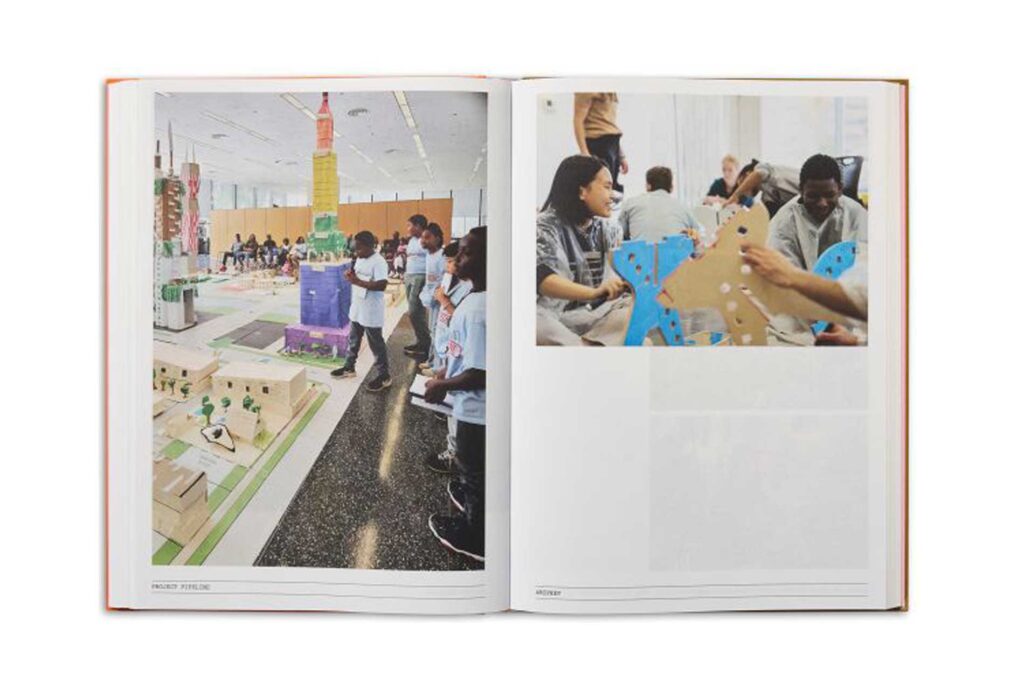
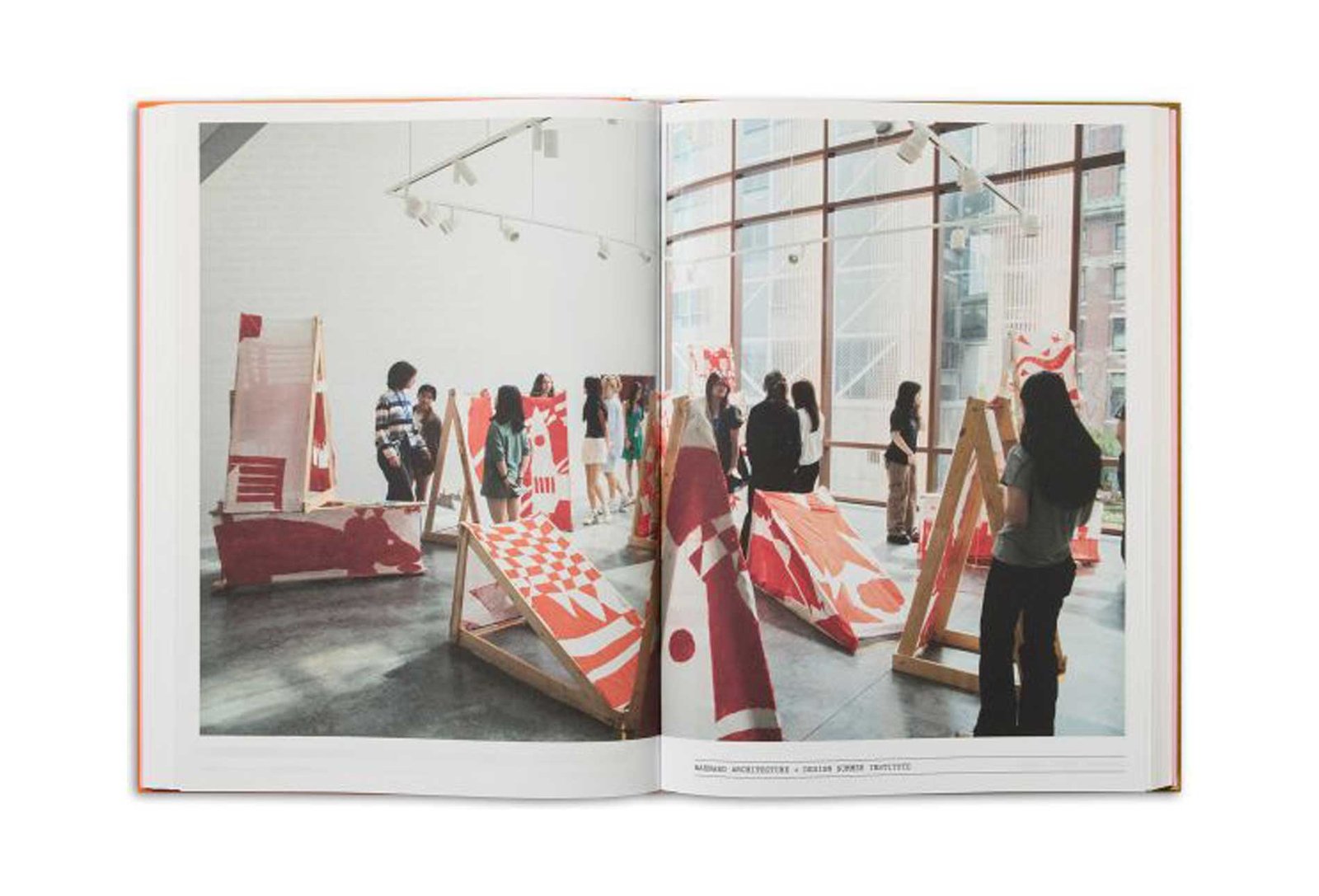
Junior Architects: New Paradigms in Design Education by Suzanne Lettieri and Anya Sirota | Park Books | $51.75
In 2018, the AIA lobbied the U.S. government to codify architecture as a discipline within the Science, Technology, Engineering, and Mathematics (STEM) field. This status, they hoped, would grant millions of dollars for design education in K-12 programs across the country, a worthy cause.
Any parent reading this will recognize that the sheer ubiquity of STEM in the classroom renders the term almost meaningless. So while architecture’s orientation to STEM funnels more funding to architecture, it carries the baggage of career path myopia, narrowing opportunities for thinking and imagination—something vital to early education.
Sharon Haar, a professor of Architecture at the University of Michigan’s Taubman College of Architecture and Urban Planning, asks what we lose by turning our backs on architecture’s “historical placement within the liberal arts, which puts natural science, social science, and the arts and humanities on equal footing.”
Her answer? Well, humans.
This is the premise of Junior Architects, a new book edited by educators and architects Suzanne Lettieri and Anya Sirota, that probes the many failures of design education in school, and by extension in the field.
Central to their argument is that inequities in education, compounded by socioeconomic barriers, and circumscribed paths for professional success, “mute curiosity and suppress expression, limiting pathways to civic engagement, design education, and ultimately, the professions that shape our cities.”
Through essays that explore alternative teaching pedagogies and imagined futures, alongside two dozen case studies on contemporary early education programs, Lettieri and Sirota make the case that rethinking design education with a human-centered focus, from the ground up, can lead to necessary structural changes in the profession.
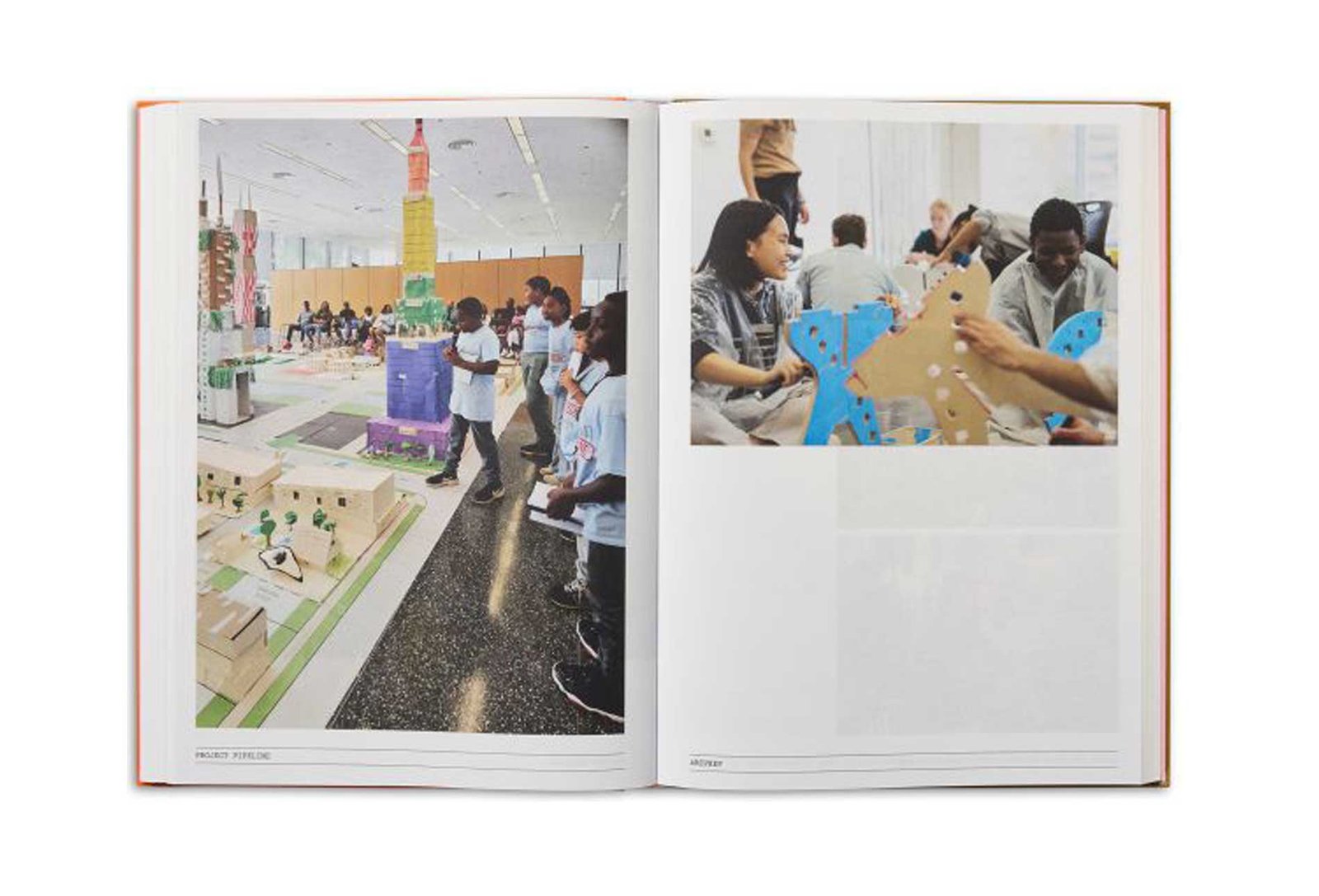 The editors draw from experiences in early education. (Courtesy Park Books)
A Pedagogy of “Community Civics”
As part of the design faculty at a school of architecture myself, Junior Architects reflects the evolving image of design education, both in its makeup and goals. Students seek clarity in the ways the curriculum’s pedagogy delivers meaning in the world, expecting social and moral convictions to be reflected across studio work as well as through institutional decision-making.
While the gender balance in the classroom is at parity, students of color, especially Black and Latino still fall very far behind. Harder still are the numbers of licensed architects, where women and people of color remain a small minority. How might schools reflect the diversity within the cities we practice? And how might schools prepare students for the problems they will encounter in the world?
A good place to start, the editors say, might be to reconsider design education less transactionally, and perhaps more relationally, between the studio and the brief, and amongst each other as well; this shift lies at the institutional level, rather than any single year’s syllabus. Two particular essays, “Architecture, Race, and Equity in the Academy” by Milton S.F. Curry and “Community Civics for the 21st Century,” by Haar, suggest strategies to re-widen the institutional lens and open the profession’s narrow field.
In Curry’s view, since architects play a role in the conception of the “city as a physical, spatial, civic, and social space of settlement and inhabitation” we can put forward a reimagining of the citizen as a subject. To do that, Curry advocates for a more diverse student body and ultimately, professional class, that is better prepared to take on the challenges of our cities.
Haar looks directly to early education and asks us to reinvest in what she calls a pedagogy of “community civics” that places an emphasis on the interconnectedness of the built environment and our well-being; a reminder that our relationship to the physical infrastructure of parks, transportation and institutions alongside housing creates a civic life.
In other words, design education cannot confront the systemic crises of our cities without the civic literacy to see them clearly. How then, might a design studio teach and explore that literacy?
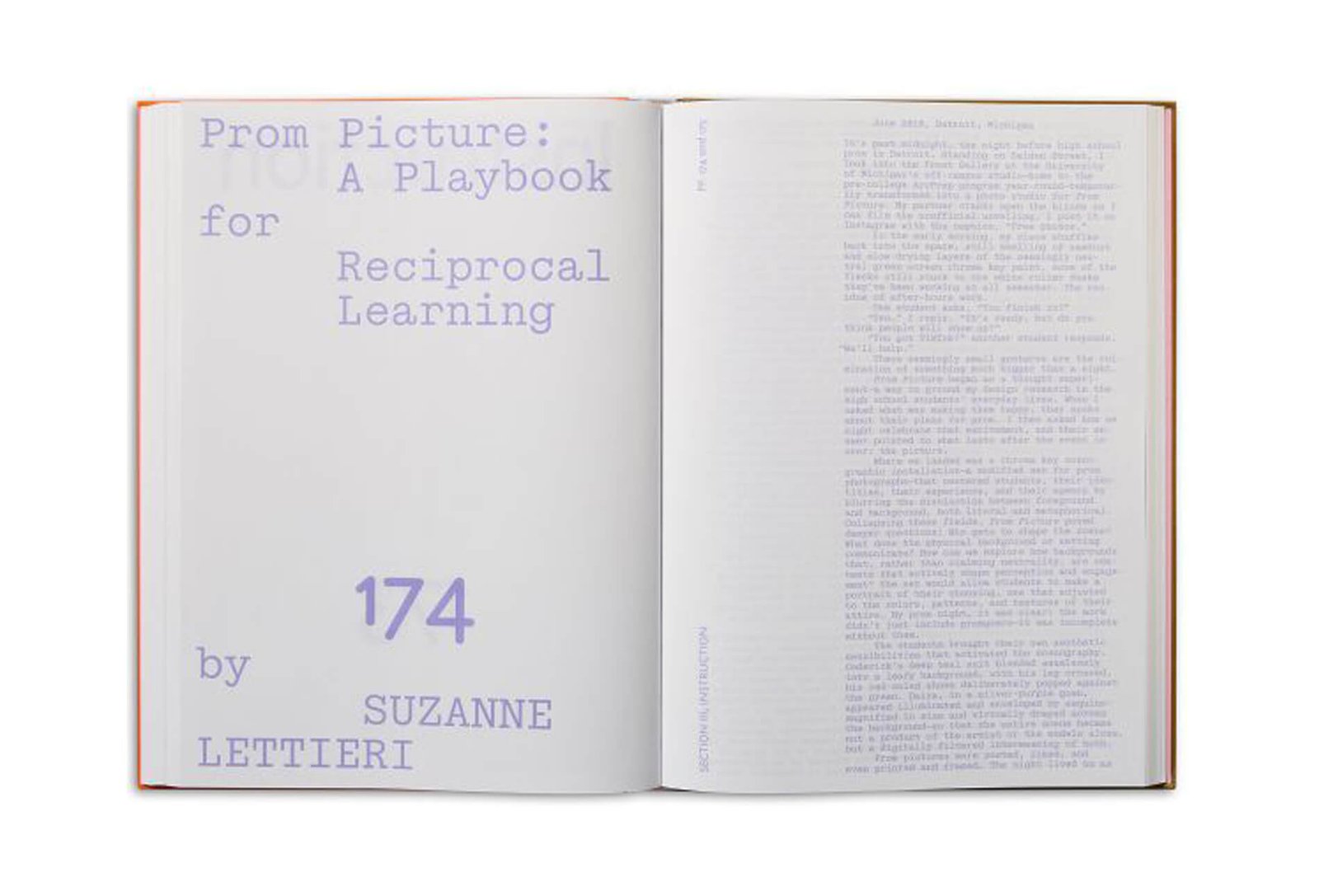
In “A Playbook for Reciprocal Learning” Lettieri emphasizes the effectiveness of progressive, relational learning models. (Courtesy Park Books)Toward Progressive, Relational Learning Models
Lettieri and Sirota have practical ideas in the strongest section of the book, “Instruction”. Their respective opinions were catalyzed by their involvement with Taubman’s ArcPrep program—a semester-long course pairing secondary school students with graduate-level educators. In a pair of essays, the editors emphasize reorganization of the studio away from its Beaux-Arts roots into a collaborative and less hierarchical workshop-model of learning.
In “A Playbook for Reciprocal Learning” Lettieri emphasizes the effectiveness of a progressive, relational learning model in the ArcPrep class and she cites Black Mountain College and Deep Springs College as precedents to her studio, where stakes are shared between students and teacher alike, and learning is embodied and social.
Sirota formalizes the approach in her essay, “Reassembling the Studio” in which she imagines the post-secondary studio setting as infrastructure rather than a stage and insists that this reframing shifts learning from what is taught, to how, with “classrooms that function as commons, or constellations of trust, where knowledge is co-produced rather than bestowed.” I appreciate that expertise is not abandoned altogether but guides and nurtures risk and experimentation.
The book’s most convincing ideas are not only speculative, but also tested, and remain close to the classroom. In this way, Junior Architects is an invaluable resource. Lettieri and Sirota survey private, public, and hybrid education programs, listing respective pedagogies, class sizes, durations, and budgets. Twenty-five case studies of American early design education programs, in addition to the editors’ deep-dive essays, provide a comprehensive playbook for anyone curious in initiating their own programs.
Yet, the book loses its sense of purpose the further it moves away from its on-the-ground research and speculations, and toward architectural practice. I understand the impulse, our profession has no shortage of crises, and the other essays rightly connect those crises back to education. But the ones raised here are bigger than this book.
Without the necessary space to mine through the complexities of the profession, the turn toward practice feels less like the promising investigation into design education with which the book begins and more like despair. This criticism is not to undermine the book, but rather a reminder of the book’s own early framing.
Case studies offer elucidating examples to learn from. (Courtesy Park Books)“A Compelling Case”
The problems in our field may not be that architecture is regarded as a STEM profession, but that education is increasingly asked to justify itself through deliverables like careers, skills, tests and credentials.
Junior Architects makes a compelling case for a different future: one where design education is valuable precisely because it can create spaces where curiosity and experimentation can search for answers to help us all.
Each fall, my faculty cohort revisits the curriculum, weighing the successes and failures of the prior year to question the effectiveness of our approach. Each year, I am inspired by the optimism and energy new students bring to the profession.
As practitioners, we recognize how the values we project into the profession start in the design studio. If we want leaders in the field who are prepared to face the problems of our society, perhaps it should be that our studios reflect the society to which we aspire.
Can Vu Bui is a partner and cofounder of New York architecture and design practice Office of Things, and a Critic at the Yale School of Architecture.