the laboratory of the future: what to expect at the venice architecture biennale 2023
THE 18TH INTERNATIONAL ARCHITECTURE EXHIBITION OPENS ITS DOORS
The 18th Venice Architecture Biennale will open its doors to the public from May 20 to November 26, 2023, under the title The Laboratory of the Future. Curated by Ghanaian-Scottish architect Lesley Lokko, this year’s international architecture exhibition is focused on combating climate change by promoting a more sustainable model for the design, installation, and operation of all its events, while reflecting on the themes of decolonization and decarbonization. At the same time, the Biennale shines a spotlight on Africa and the African Diaspora, with 89 participants, over half of whom are of African descent. The main show, on display at the Giardini pavilion and the Arsenale grounds, boasts renowned contributors such as Adjaye Associates, atelier masōmī, Hood Design Studio, Ibrahim Mahama, Kéré Architecture, MASS Design Group, Theaster Gates, Andres Jaque, Neri & Hu, while the list of special participations features Israeli filmmaker Amos Gitai, photographer James Morris from Wales and London-based multi-disciplinary artist Lionheartfelt.
Before the start of the event, it has been announced that Nigerian-born artist, designer, and architect, Demas Nwoko, is the recipient of the Golden Lion for Lifetime Achievement of the 18th International Architecture Exhibition of La Biennale di Venezia.
For a comprehensive overview of this year’s main exhibition, as well as collateral events and national pavilions on view, keep reading below, and make sure to follow @venice.architecture.biennale for LIVE coverage of the 18th Venice Architecture Biennale during its official opening.
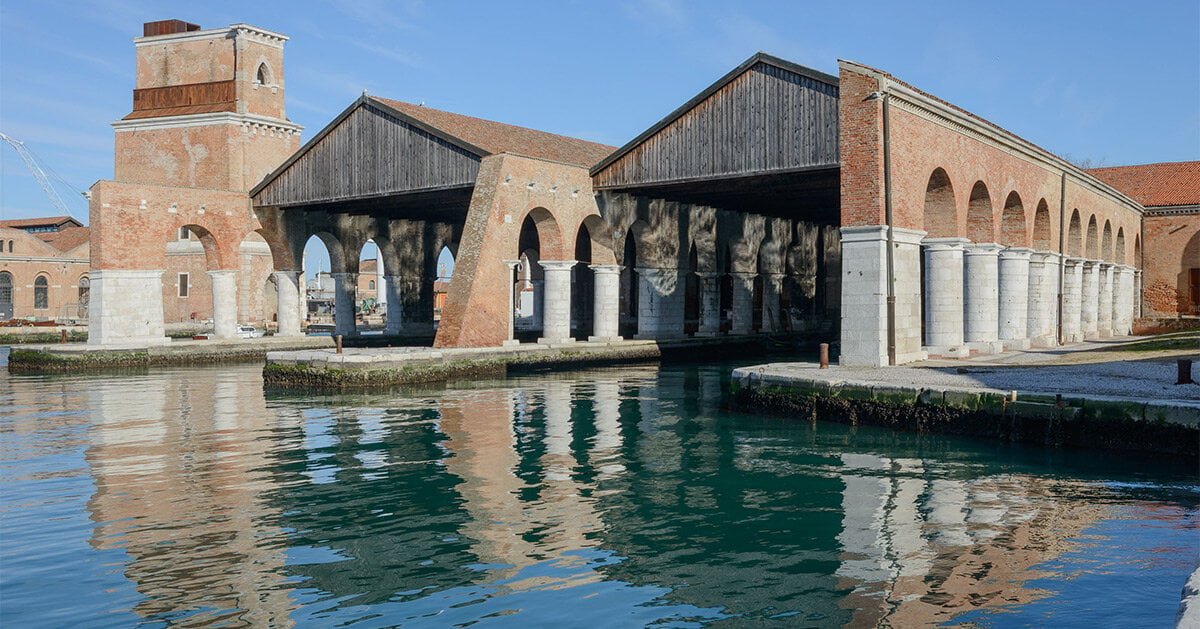
image courtesy of Fred Swart (head image by Andrea Avezzù, courtesy of La Biennale di Venezia)
THE LABORATORY OF THE FUTURE
The 2023 International Architecture Exhibition focuses on agents of change, introducing a new way of thinking. ‘What does it mean to be ‘an agent of change’? (…) In May last year, I referred to the exhibition several times as ‘a story’, a narrative unfolding in space.’ states Lesley Lokko.‘Today, my understanding has changed. An architecture exhibition is both a moment and a process. It borrows its structure and format from art exhibitions, but it differs from art in critical ways which often go unnoticed. Aside from the desire to tell a story, questions of production, resources, and representation are central to the way an architecture exhibition comes into the world, yet are rarely acknowledged or discussed. From the outset, it was clear that the essential gesture of The Laboratory of the Future would be ‘change’.’
The Laboratory of the Future is conceived as an exhibition separated into six parts and includes and 89 participants from across the globe. ‘Central to all the projects is the primacy and potency of one tool: the imagination’ explains the curator. ‘It is impossible to build a better world if one cannot first imagine it.’
The event is complemented by ‘Carnival,’ a six-month-long series of events, including lectures, panel discussions, films, and performances, that delve into this year’s themes. A diverse group of famed architects, including Sir David Adjaye OM OBE, Issa Diabaté, Mariam Issoufou Kamara, Walter Hood, Christian Benimana, and Felecia Davis, will participate in a thought-provoking meeting titled ‘Force Majeure: a Conversation.’ Lesley Lokko will join them on the stage of Teatro Piccolo Arsenale as they discuss their personal and professional interests and concerns that have influenced their practices and responses to architecture in general, as well as their contributions to the Exhibition.
In addition to the main venues of the Giardini and Arsenale, a series of collateral events are taking place around the city, including ‘A Fragile Correspondence – Scotland + Venice’, ‘Catalonia in Venice_ Following the Fish’, ‘Diachronic Apparatuses of Taiwan’, and more. Find the full list, here.
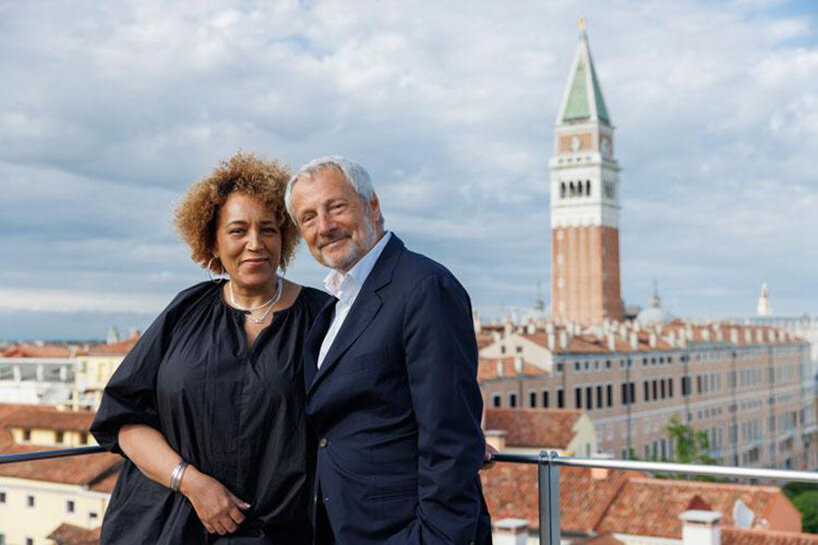
Lesley Lokko and Roberto Cicutto | image by Jacopo Salvi, courtesy of La Biennale di Venezia
national participations
As every year, the national pavilions at the Venice Architecture Biennale 2023, provide a diverse range of responses and exhibits that complement the main show. Set across the historic locations of Giardini and Arsenale, as well as in various venues throughout Venice, the program encourages visitors to embark on a journey of discovery, navigating the city’s intricate canals and streets in search of exhibitions.
Australian Pavilion – Unsettling Queenstown
At the Australia Pavilion, the Australian Institute of Architects presents the ‘Unsettling Queenstown’ exhibition. The show is curated by Creative Directors Anthony Coupe, Julian Worrall, Emily Paech, Ali Gumillya Baker, and Sarah Rhodes, who have designed a multi-sensory installation that explores the themes of decolonization and decarbonization, focusing on the construct of ‘Queenstown’. This name is used for several places across the former British Empire, including Australia, New Zealand, Asia, Africa, and both Americas, making it both a local and global place.
‘Unsettling Queenstown’ aims to highlight Australia’s colonial inheritance at the end of the second Elizabethan era, using Queenstown as a symbol of the worldwide struggle against decolonization. The exhibition examines and question the relationships between people and the environment under the influence of colonialism and resource extraction, through the lens of a place where these issues are particularly evident. The exhibition weaves between real and fictional Queenstowns, offering a thought-provoking exploration of this complex issue.
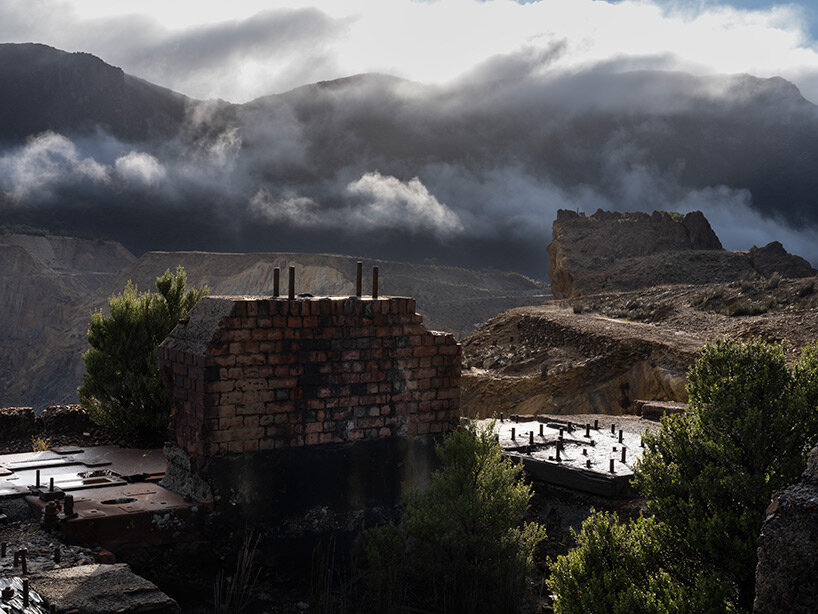
image courtesy of Sarah Rhodes
Austrian Pavilion – Partecipazione/Beteiligung
The Austrian contribution to this year’s Venice Biennale was originally planned to make one half of the pavilion freely accessible to the neighboring district of Sant’Elena, as a way to engage with the local community and reverse the spatial practice of exclusion. However, the Biennale and the Monuments Office rejected the idea, raising questions about the role of the exhibition in the future of Venice. The Austrian contribution showcases the exclusion of local residents and the constant expansion of the Biennale since its foundation.
Local residents and Venetian initiatives will organize events throughout the city to discuss the institution’s role in the city. The show and its accompanying catalog will present the findings of the Biennale’s growing demand for space and collateral events, contrasted with Venice’s urban reality of depopulation and economic exploitation. The exhibition raises the question of whether an organization can showcase references to social and environmental justice without specifically addressing these issues in its operations.
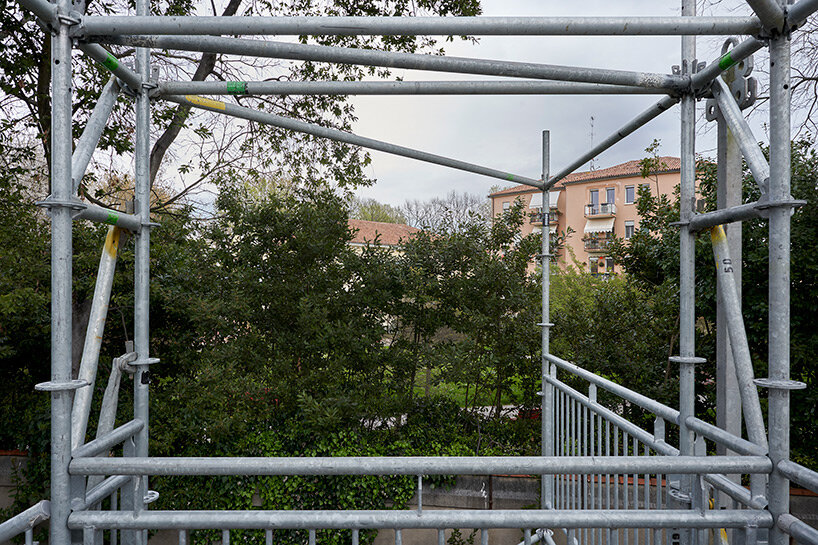
image by Clelia Cadamuro
Brazilian Pavilion – Terra
The Brazil Pavilion titled Terra [Earth], aims to reimagine the past to envision potential futures, highlighting the role of land in shaping our heritage and identity. Curated by Gabriela de Matos and Paulo Tavares, the presentation examines Brasília, Brazil’s political capital, and challenges the myth surrounding it, as it drove out its Indigenous and Quilombola populations during the colonial period.
The entire pavilion is filled with earth, emphasizing the Indigenous territories, Quilombola dwellings, and candomblé ceremonies, providing scientific proof that these lands are the best-preserved territories in Brazil. The exhibit also features socio-spatial projects and practices of Indigenous and Afro-Brazilian knowledge about land and territory. Various works are on display, including an audio-visual work by Brazilian filmmaker Juliana Vicente, archival photographs compiled by historian Ana Flávia Magalhães Pinto, the ethnohistorical map of Brazil by Curt Nimuendajú, and the Brasília Quilombola map commissioned specifically for the pavilion.
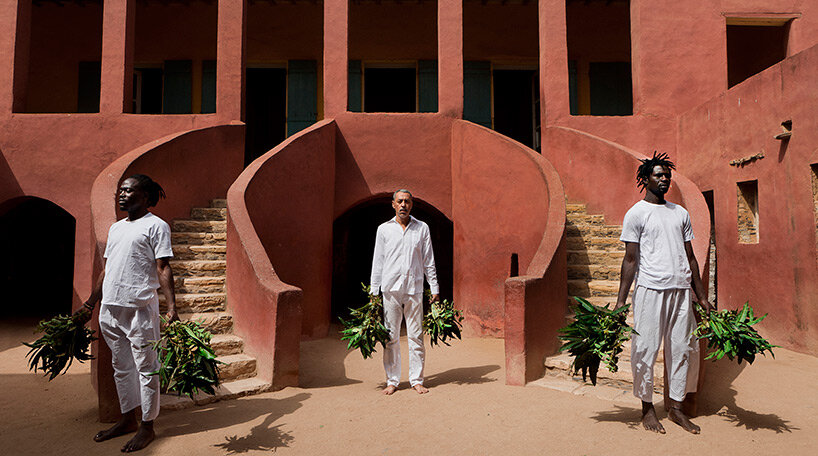
image courtesy of Ayrson Heráclito
Danish Pavilion – Coastal Imaginaries
Curated by Josephine Michau, the Danish Pavilion presents ‘Coastal Imaginaries’ – a collective exploration of tomorrow’s coastal landscapes that face challenges due to rising sea levels caused by climate change. The pavilion will showcase a variety of contributions from artists, architects, and researchers that provide insight into the many challenges faced.
Landscape architectural studio Schønherr will showcase their innovative proposal ‘Copenhagen Islands,’ which offers nature-based solutions for the Copenhagen metropolitan area. The pavilion will also feature research by the trans-disciplinary research group Mitigating Sea Level Rise, architect-designed solutions, and prototypes from the Master’s program Architecture and Extreme Environments at the Royal Danish Academy of Architecture. Visitors will be invited into an immersive experience of a dramatically-staged coastal landscape of the future created by set designer Christian Friedländer, allowing them to experience climate change on a 1:1 scale.
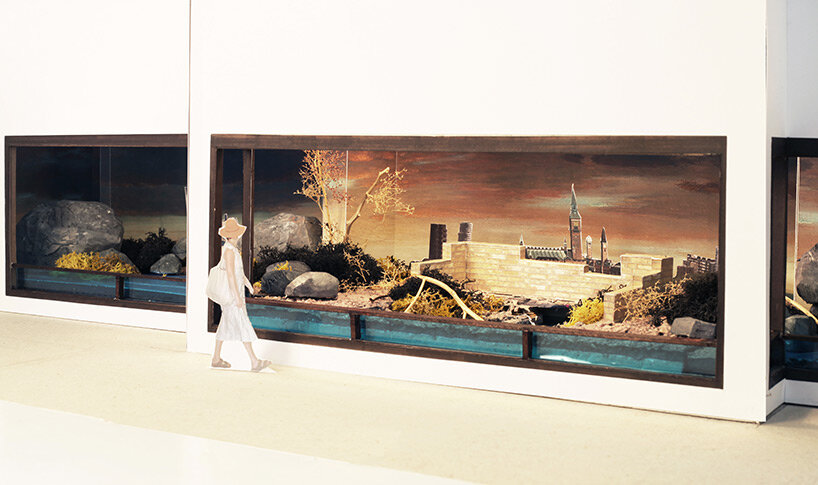
image by Christian Friedländer
Estonian Pavilion – Home Stage
The Estonian Centre for Architecture will showcase the ‘Home Stage’ exhibition at the Pavilion of Estonia, curated by Aet Ader, Arvi Anderson, and Mari Möldre from b210 Architects. Held in a rental apartment close to the rear exit of the Arsenale complex, the exhibition explores the dichotomy between a living place as a home and its value as an exchange commodity. Throughout the duration of the show, various Estonian performers will inhabit the apartment for a month each, transforming it into both a home and a stage.
‘The Estonian pavilion exists in the format of a durational performance, where ordinary domestic duties as well as fictional outbursts, both scripted and non-scripted, all take place in the public eye. One of the performers, Paula Veidenbauma, is intrigued by how issues of invisibility, such as care, aggression, and loneliness, contrast and accelerate in tandem with the vast visibility of real estate, which especially in Venice is driven by hyper-tourism and gentrification’ shares Mari Möldre, one of the curators.
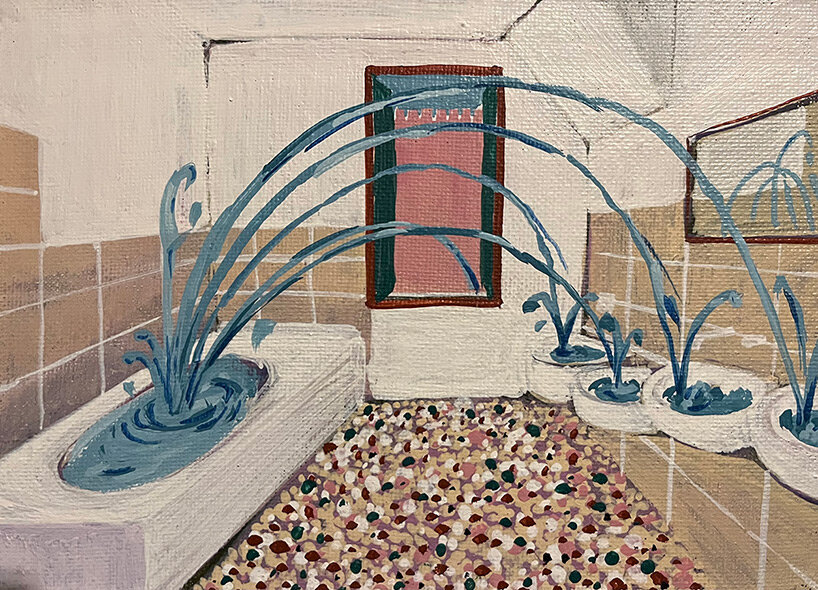
image courtesy of Arvi Anderson
french pavilion – ball theater
Led by architectural firm Muoto, France’s national pavilion presents ‘Ball Theater’ a reflective, hollow half-sphere that invites visitors to become active participants by engaging with the exhibit through movement, speech, and gesture. Muoto collaborated with scenographers Georgi Stanishev and Clémence La Sagna, associate curator Jos Auzende, and programmer Anna Tar-divel to create an experience that is akin to a disco ball-like echo chamber, offering a place for listening, meditation, and a laboratory of identities. The smooth hemispherical form gives an aura of a miniature world that shares a sense of calm with its occupants.
Above all, ‘Ball Theater’ celebrates the present: In a world where thoughts of the future overwhelm most with societal issues and climate anxiety, this theater allows us to appreciate being in the current moment. The pavilion will host different events, providing artists, researchers, and students with an opportunity to inhabit and transform the dynamic of the space.
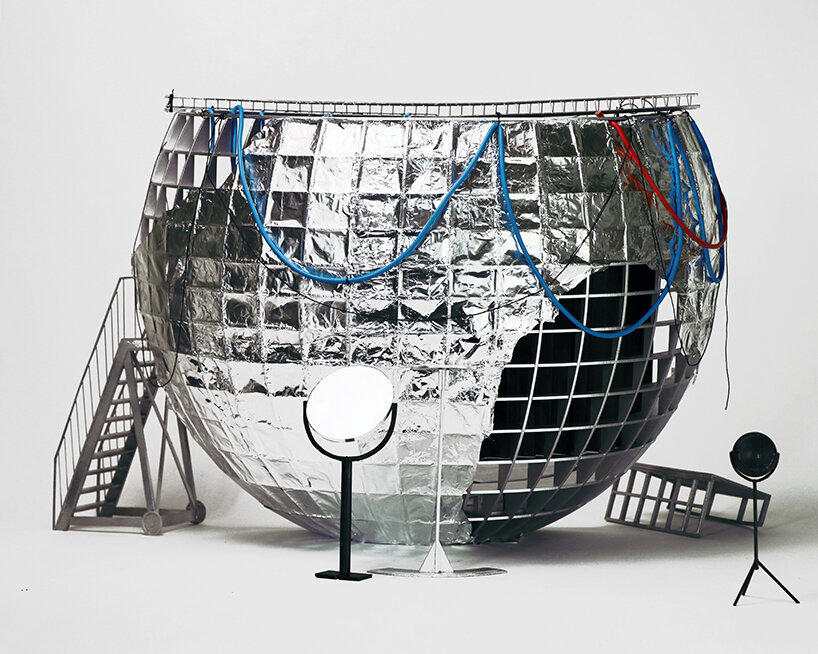
image courtesy of Muoto, Georgi Stanishev and Clémence La Sagna
Georgian Pavilion – January, February, March
The Georgian Pavilion, curated by the Tbilisi Architecture Biennial, will showcase ‘January, February, March’, an installation exploring the impact of water reservoirs on an artificially altered settlement in the Dusheti region of Georgia, reflecting on the effects of rapid political changes and climate change. The exhibit was designed by architects Gigi Shukakidze, Oto Nemsadze, and Tinatin Gurgenidze, and raises thought-provoking questions.
‘How temporary is our footprint on the environment? When we mention the flows of energy, migration, time, and the outflow of the landscape itself, what flows are we really speaking of? What are the costs of disrupting an order to create a new one? Can we take water as a determinant of order? To what extent can the spatial-political development of humans bring changes in nature and society and vice versa? What physical and conceptual forms fade or remain with such transformations? Are the natural creations – their memory, history, and artifacts signifying their past life – permanent? What will be the vestige of defining such places, and, above all – considering both global and local contexts – what is their future?’