The House Transformed, an exhibition curated by Mónica Ponce de León, opens at Van Alen Institute
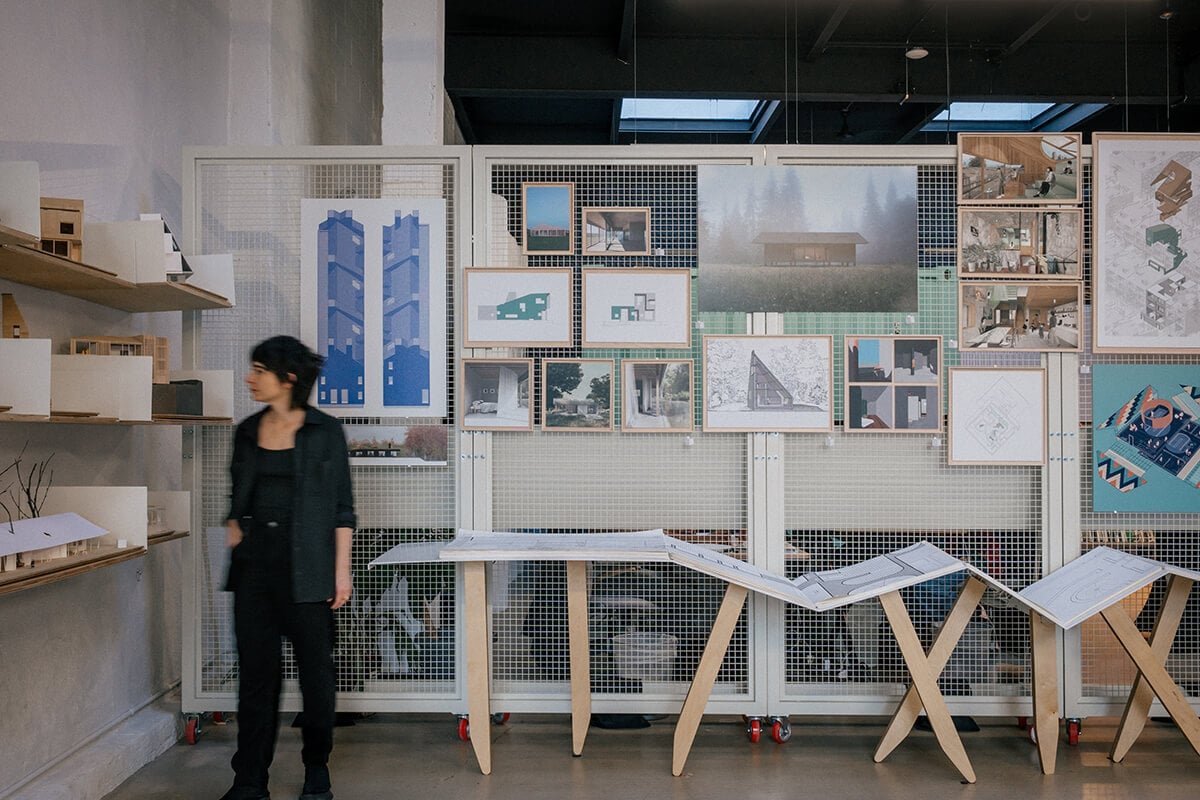
Models, drawings, and renderings of experimental residential projects by architects line shelves and hang on wall partitions in Van Alen Institute’s Urban Room, as part of the recently opened exhibition, The House Transformed. The representations respond to thematics like “collective living, multigenerational households, or living alone,” per the curatorial statement.
The show was curated by Mónica Ponce de León with Shoshana Torn and Massimo Giannone. It launched at the Brooklyn venue the evening of February 24, on the heels of a historic blizzard. Van Alen’s executive director Hayley Eber gave remarks at the opening alongside Ponce de León after visitors trickled in from the snowy street.
“Van Alen Institute has a long history as one of New York’s premier destinations for new ideas in architecture. Now, with The House Transformed, we’re excited to inaugurate our Gowanus space as a venue for thought-provoking design exhibitions,” Eber said in a statement.
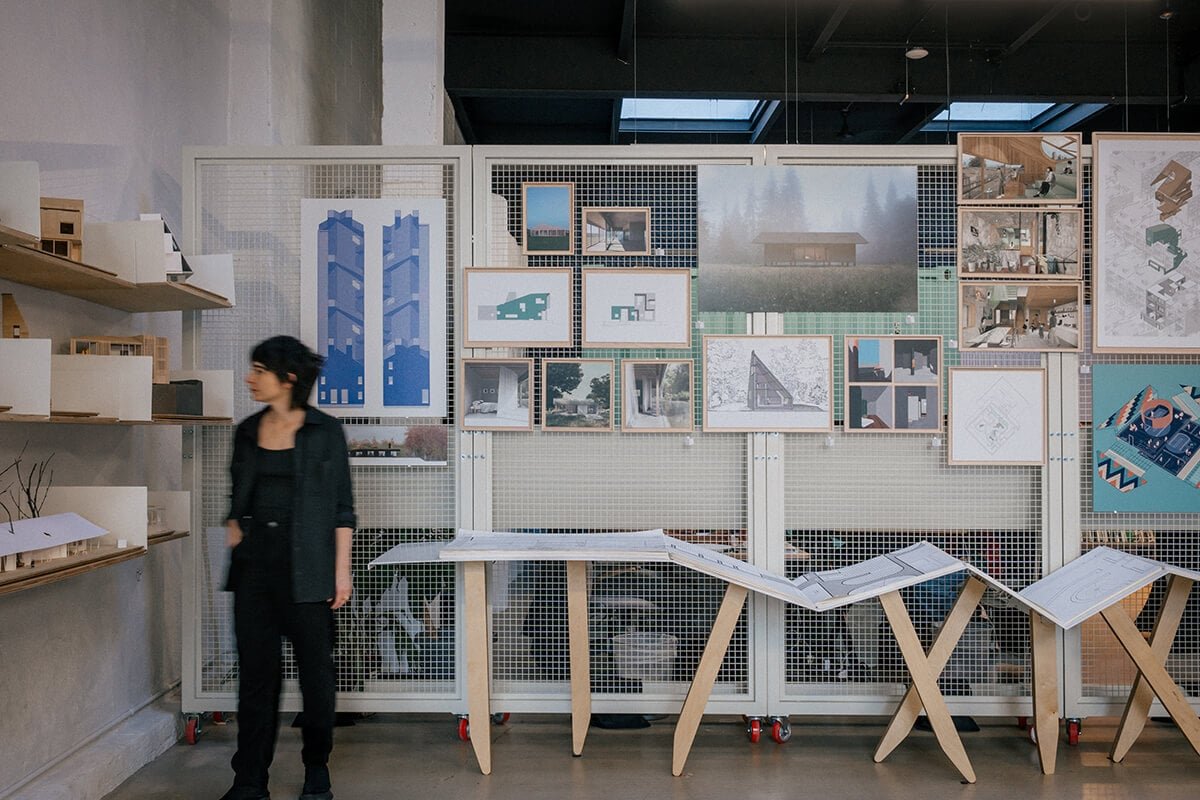 Models, drawings, and renderings are the exhibition’s focus. (Cameron Blaylock/Courtesy Van Alen Institute)
The House Transformed initially debuted at Princeton School of Architecture in September and was subsequently relocated to Brooklyn this winter, where it will remain through May 22. Participants include BALSA CROSETTO PIAZZI, adamo-faiden, Black Box Research Group / Atelier Office, French 2D, Studio Barnes, studio:indigenous, Stan Allen, Akima Brackeen, Steven Holl, MOS, Studio Sean Canty, and many others.
Some of the houses are for caregivers, others are propositions for aging in place. Beyond programming, the show considers means of construction, too, showcasing how prefabrication and flexible design practices can maximize living standards.
“Family has never been homogeneous, and it has never been simply ‘nuclear’,” Ponce de León affirmed. “Many of us live with our extended family; countless consider friends their family, while others want to live alone, or with roommates who are mostly strangers. Some of us would like to age gracefully; others want to play, and many want to work from home.”
“Love takes different forms, and it includes couples without children, single parents, and those in polyamorous relationships,” she continued. “Households come in many shapes, and yet, architecture has continued to insist on one-size-fits-all. Neutrality has proven to be exclusionary and has not served us well.”
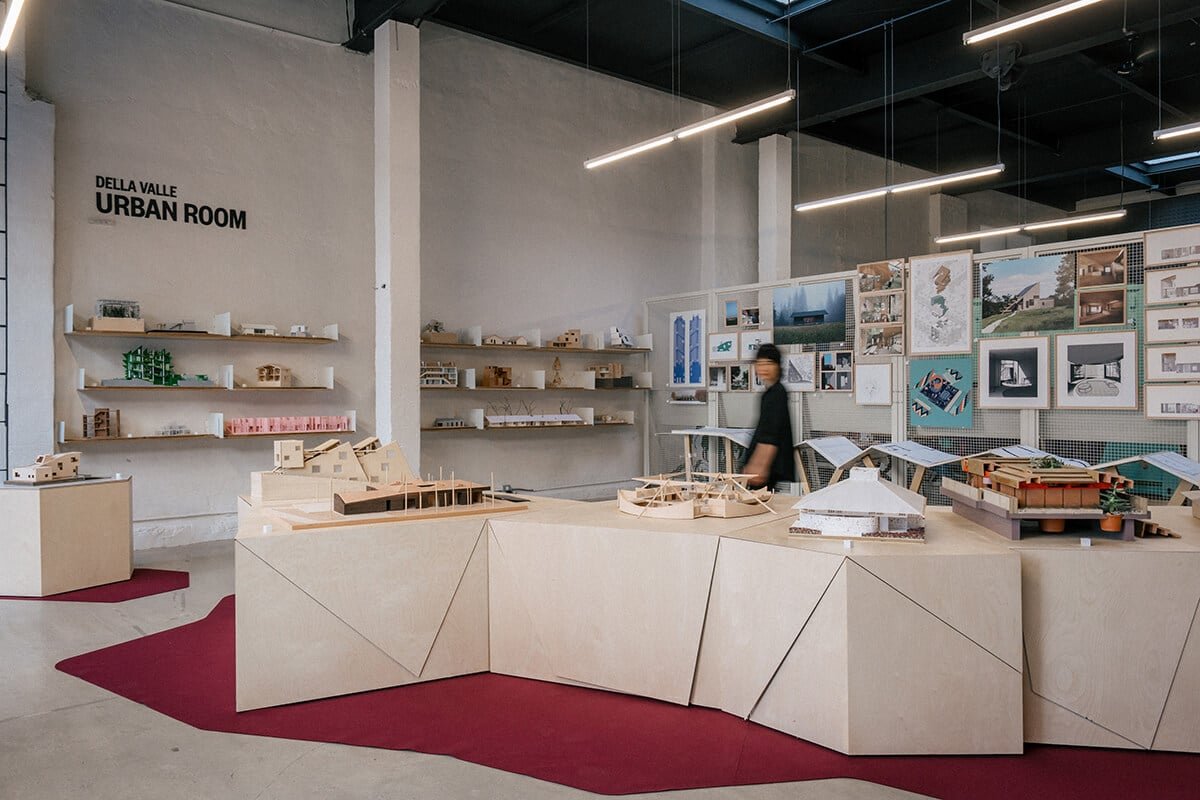 Fabrication was by Marie Baretsky, Sean Rucewicz, Olivia Ahmadi, Bill Tansley, and John Hunter. (Cameron Blaylock/Courtesy Van Alen Institute)
A bespoke, irregularly-shaped table topped with models centers the exhibition. Surrounding it are shelves displaying more models and a perforated wall partition nearly covered from top to bottom with drawings and renderings. Fabrication was by Marie Baretsky, Sean Rucewicz, Olivia Ahmadi, Bill Tansley, and John Hunter.
Graphic design was by Christina Huang, and exhibition design by MPdL Studio, Ponce de León’s office. Public programming was by Courtney Coffman and Emily Conklin, and Kira McDonald steered production.
Talks by participants will take place at Van Alen in the coming weeks.
Separately, Ponce de León recently concluded her deanship at Princeton, where she has since returned to the faculty.