Outside of Ho Chi Minh City, Machado Silvetti Designs a Ground-Up University Campus Focused on STEM
✕
Conceived as both an academic institution and a catalyst for national STEM development, the Vietnamese–German University campus about 30 miles outside of Ho Chi Minh City reflects the ambitions—and the challenges—of a rapidly transforming country. Funded through a World Bank grant and developed as a collaboration between the Vietnam Ministry of Education and Training and the German Hessen State Ministry of Science and Art, the public, state-owned university offers a dual Vietnamese–German degree, with a focus on science, engineering, and technology. After winning a 2014 international competition to design a ground-up campus for 12,000 students, Machado Silvetti’s task was not simply to create a master plan across 125 acres, but to give physical form to an emerging model of international academic partnership. Capitalizing on the expertise of German academic partners, the school aims to ready graduates for the rapid scientific and technological growth of Vietnam’s economy.
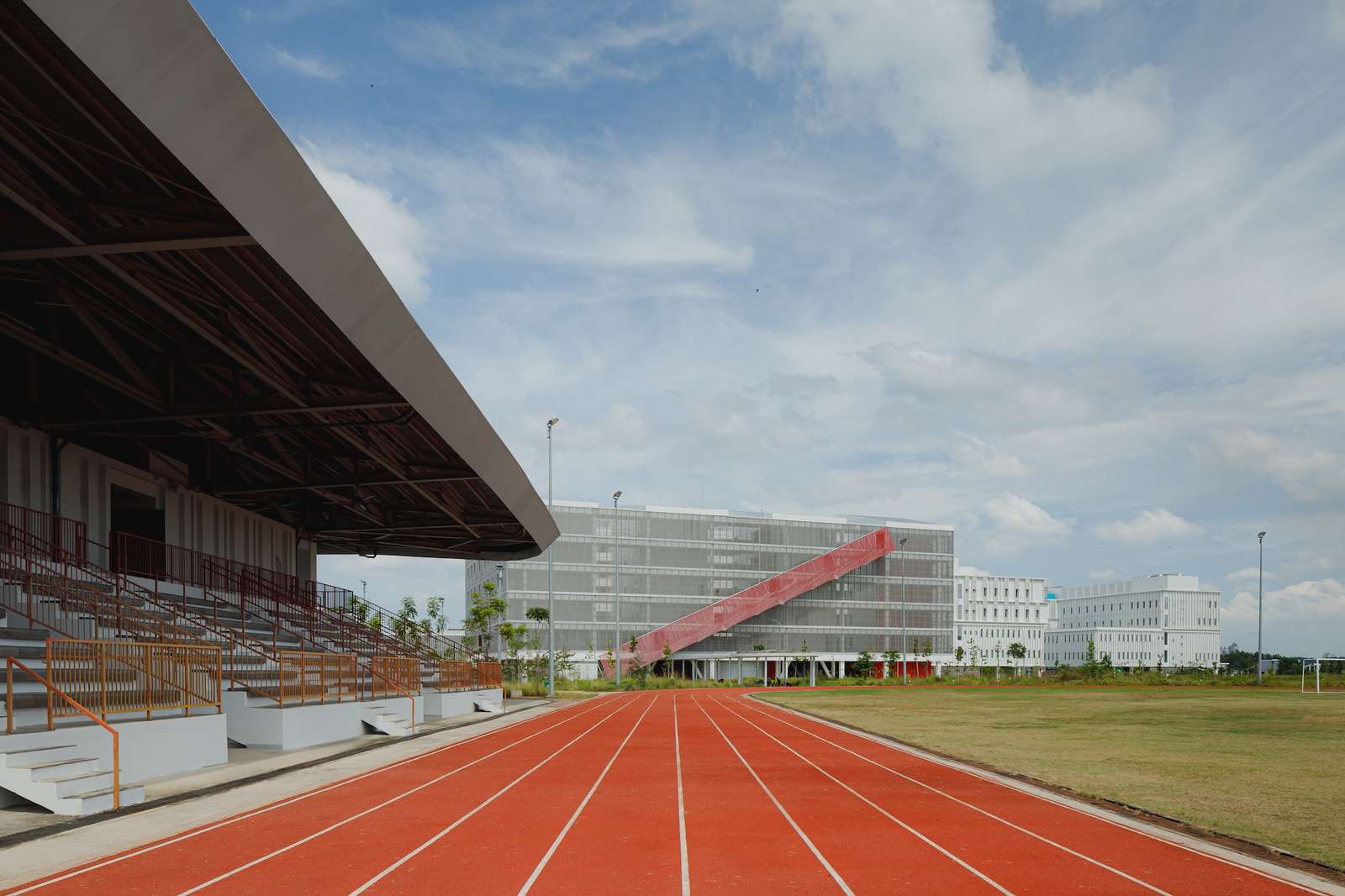
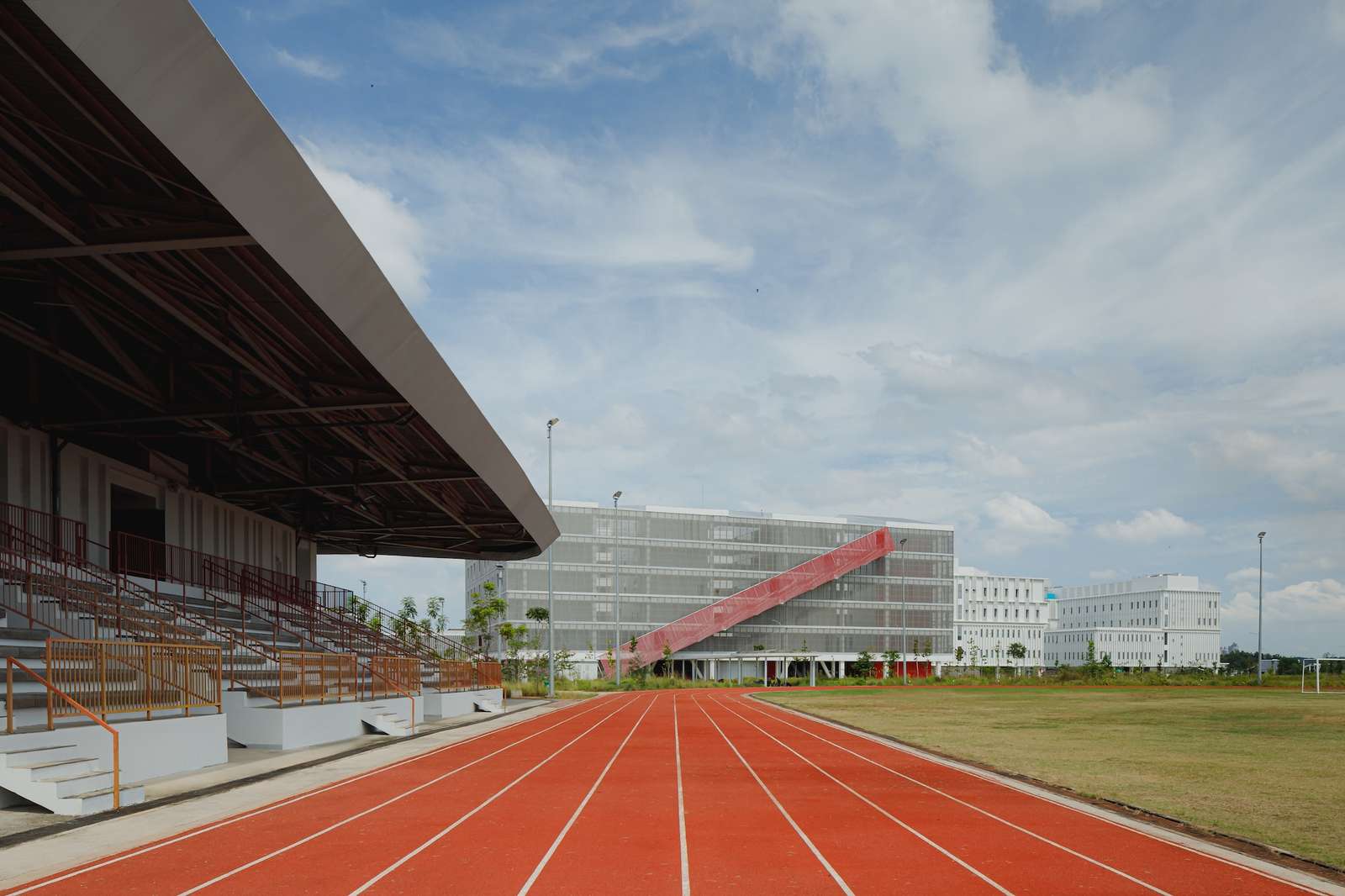
The university althletic complex with the main lecture hall building seen in the distance. Photo © StudioDAG
At the time of the competition, the rural landscape of Binh Duong Province offered little context for a university—surrounding land was an expanse of fields slated for development. Jeffry Burchard, partner at Machado Silvetti, explains, “We were creating an entirely new university campus in the middle of a placeless environment, well outside Ho Chi Minh City, which meant we needed to produce some kind of identity for the school at the campus scale.” Rather than replicate a traditional, inward-looking academic enclave, the architects sought to incorporate attributes of an urban environment through the density of buildings and proximity of different uses, “to produce the context that cities offer, which is lots of things nearby,” says Burchard.
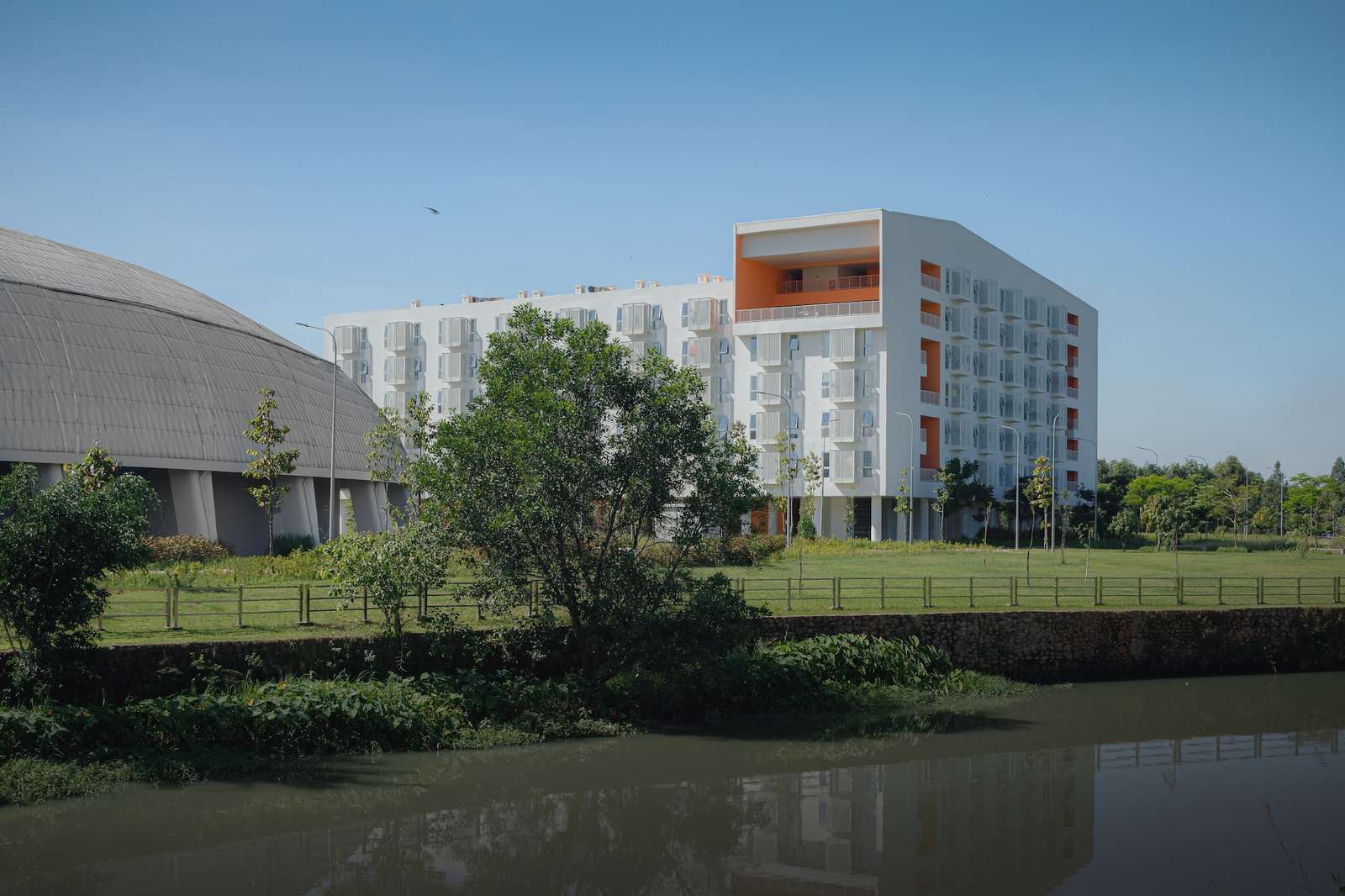
1
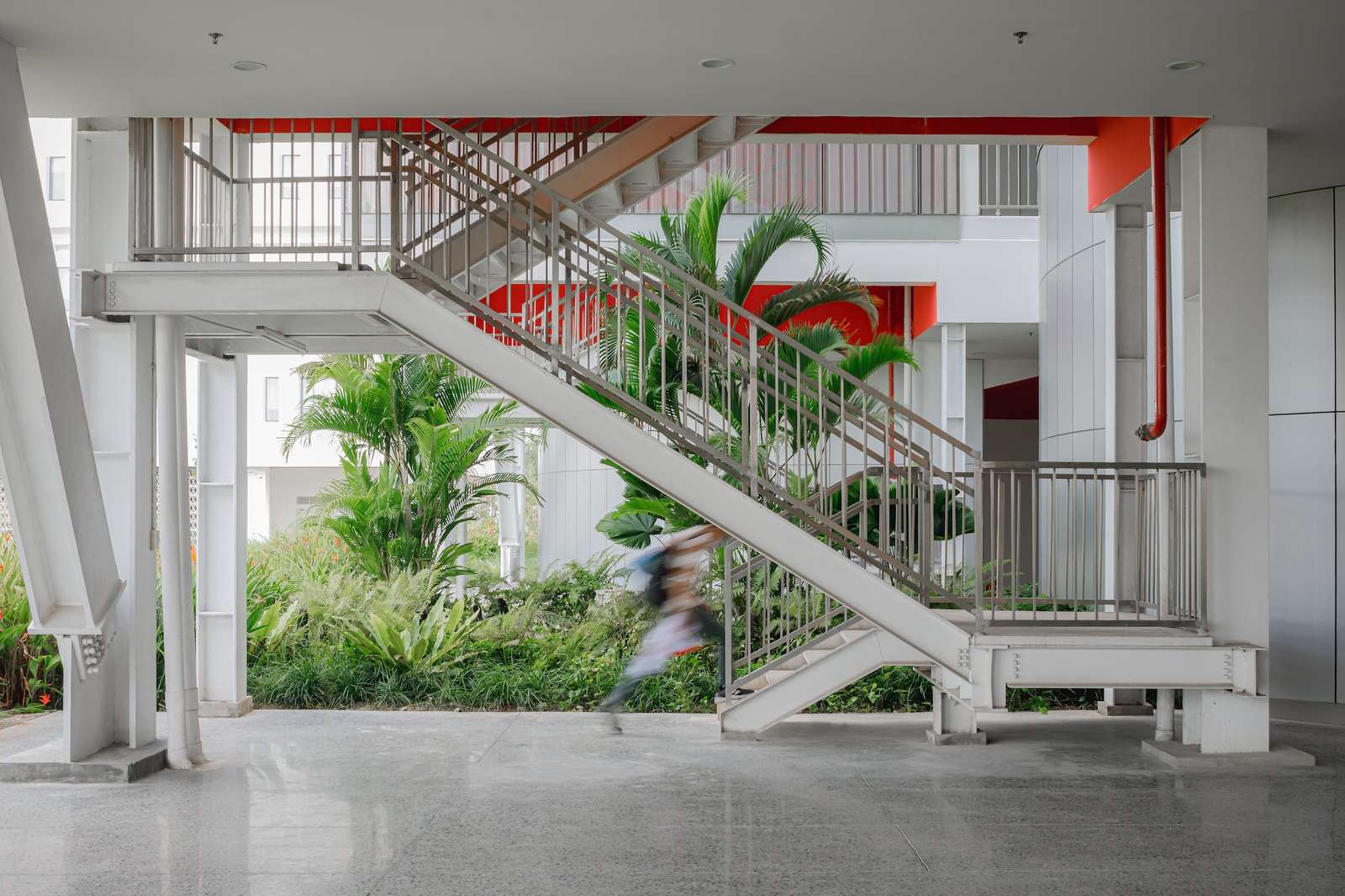
2
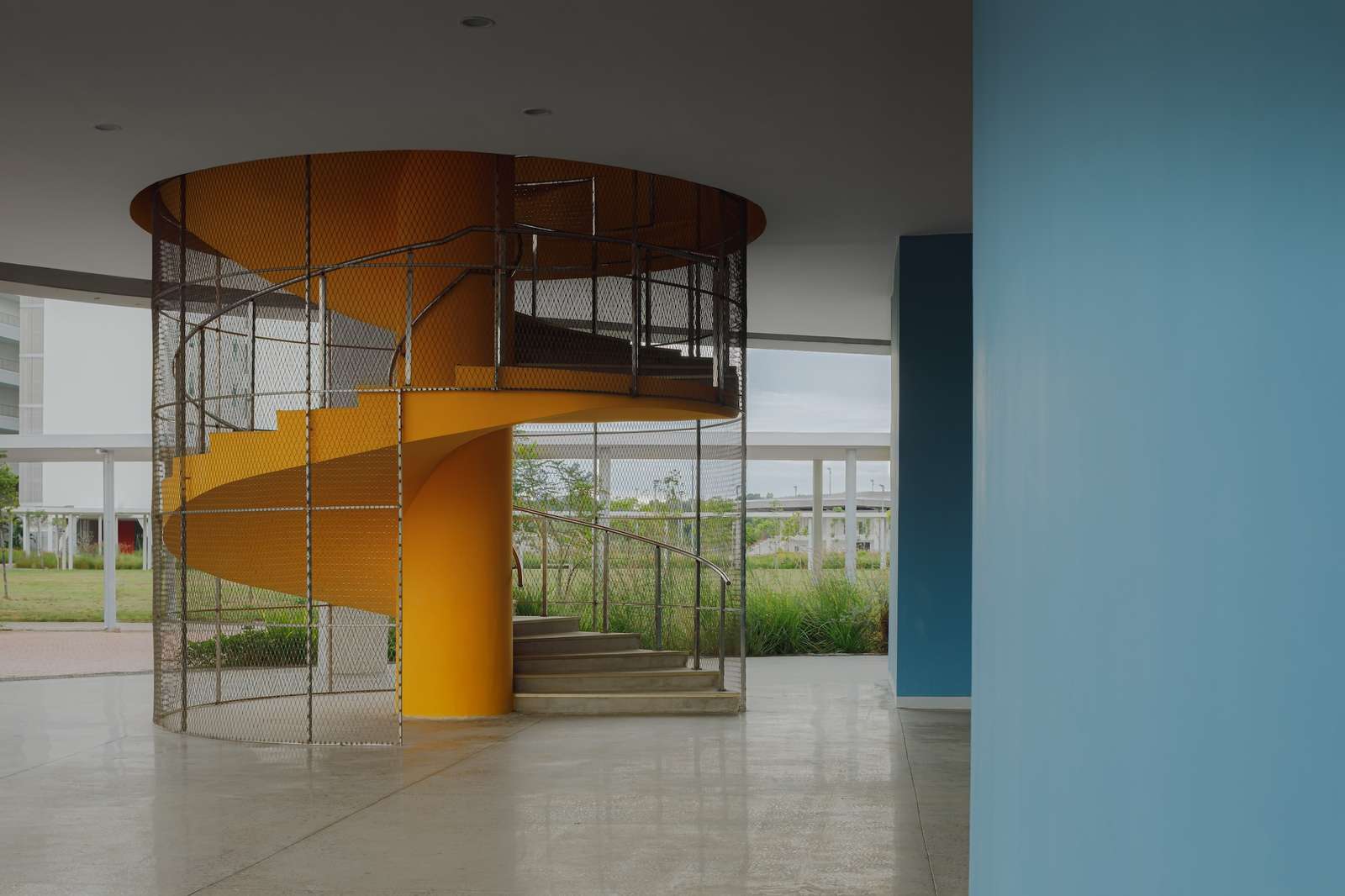
3
One of two main dorm buildings with the exterior of the ceremony hall seen in the foreground (1); ground-level entrances to the lecture hall (2) and ceremony hall (3). Photos © StudioDAG
Phase one of the master plan, built to accommodate 5,000 students and occupied in 2022 following pandemic-related delays, includes 35 buildings and establishes a core around which future phases can be constructed. Clustering the campus buildings allowed the architects to preserve large portions of the site as a permeable landscape. This move was critical in a region defined by heavy rainfall and complex water management needs, which they worked with Bath, England–based landscape architect Grant Associates to address. The result is a cohesive condition through which movement, climate, and social life are interwoven.
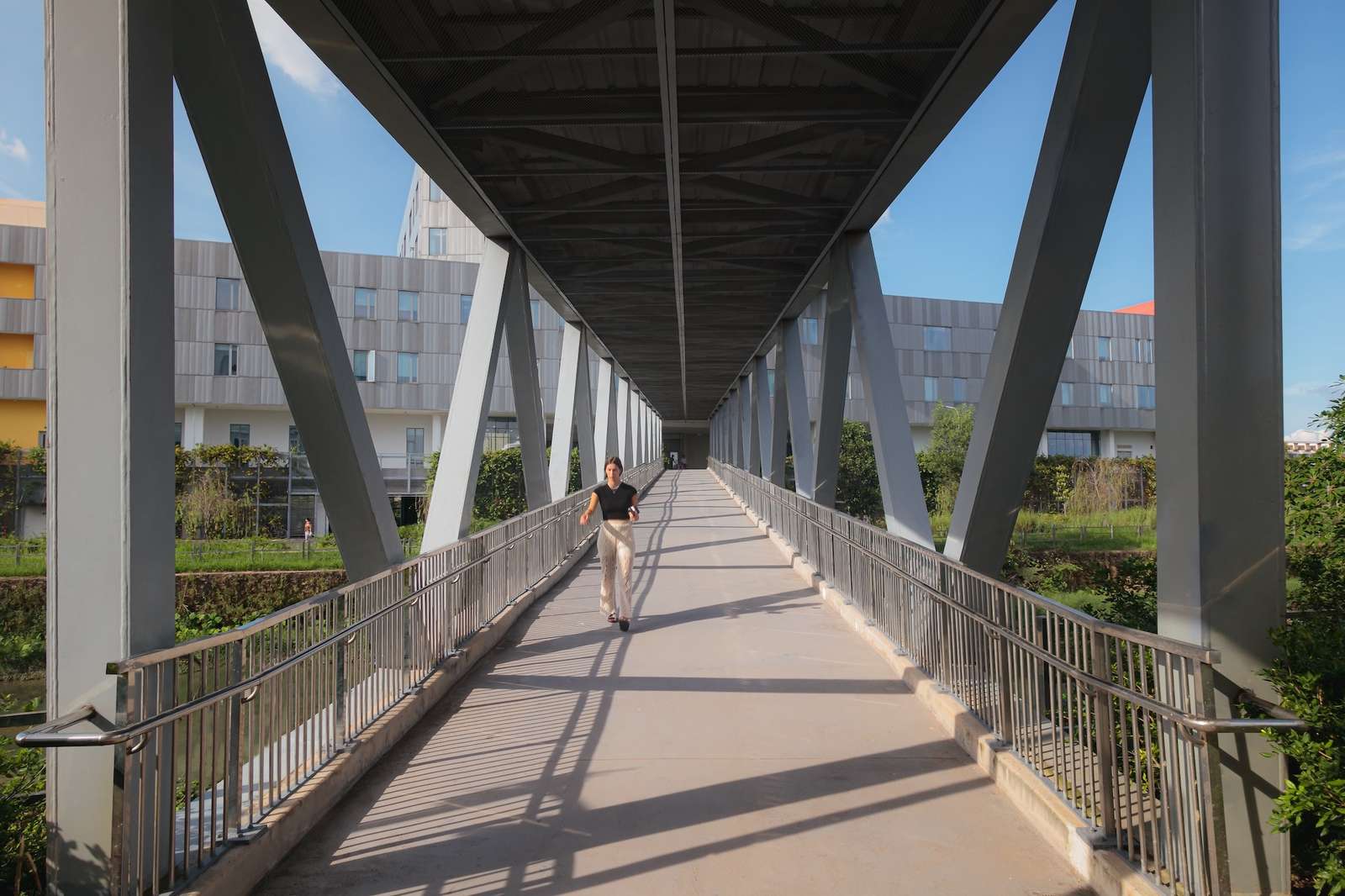
One of several bridges and covered walkways criss-crossing the campus. Photo © StudioDAG
That integration is most evident at grade. “We lifted essentially all of the buildings about 14 feet,” Burchard says, “which allows the ground level to become a continuous social space across the campus—places to study, get coffee, meet friends, all protected from rain and sun.” A system of canopies links buildings, allowing students to move across the campus under cover, while the raised plane also accommodates motorcycle parking, an acknowledgment of transportation norms in Vietnam.
Climate responsiveness shaped nearly every design decision. “It was an adjustment on our part to learn about the craftsmanship that’s available in Vietnam as well as the passive kind of building envelopes that they could have because of the climate,” remembers Machado Silvetti partner Stephanie Randazzo Dwyer about the project, which the firm ran as a design–build contract with local architect TwoG Architecture. Circulation corridors, the main dining hall, and most common areas are shaded and naturally ventilated, with air conditioning reserved for laboratories, densely occupied classrooms, and dormitory bedrooms.
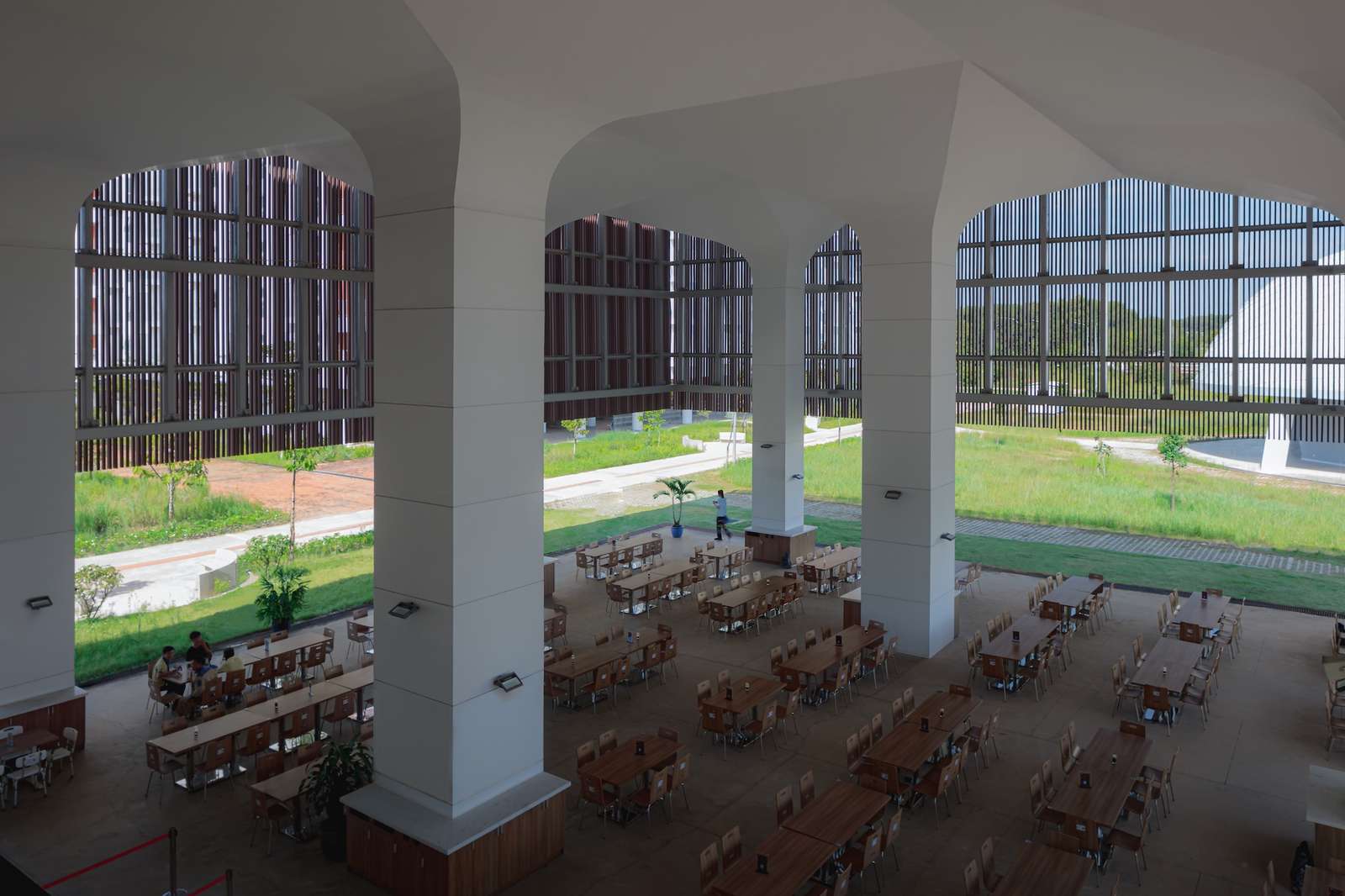
The naturally ventilated food court. Photo © StudioDAG
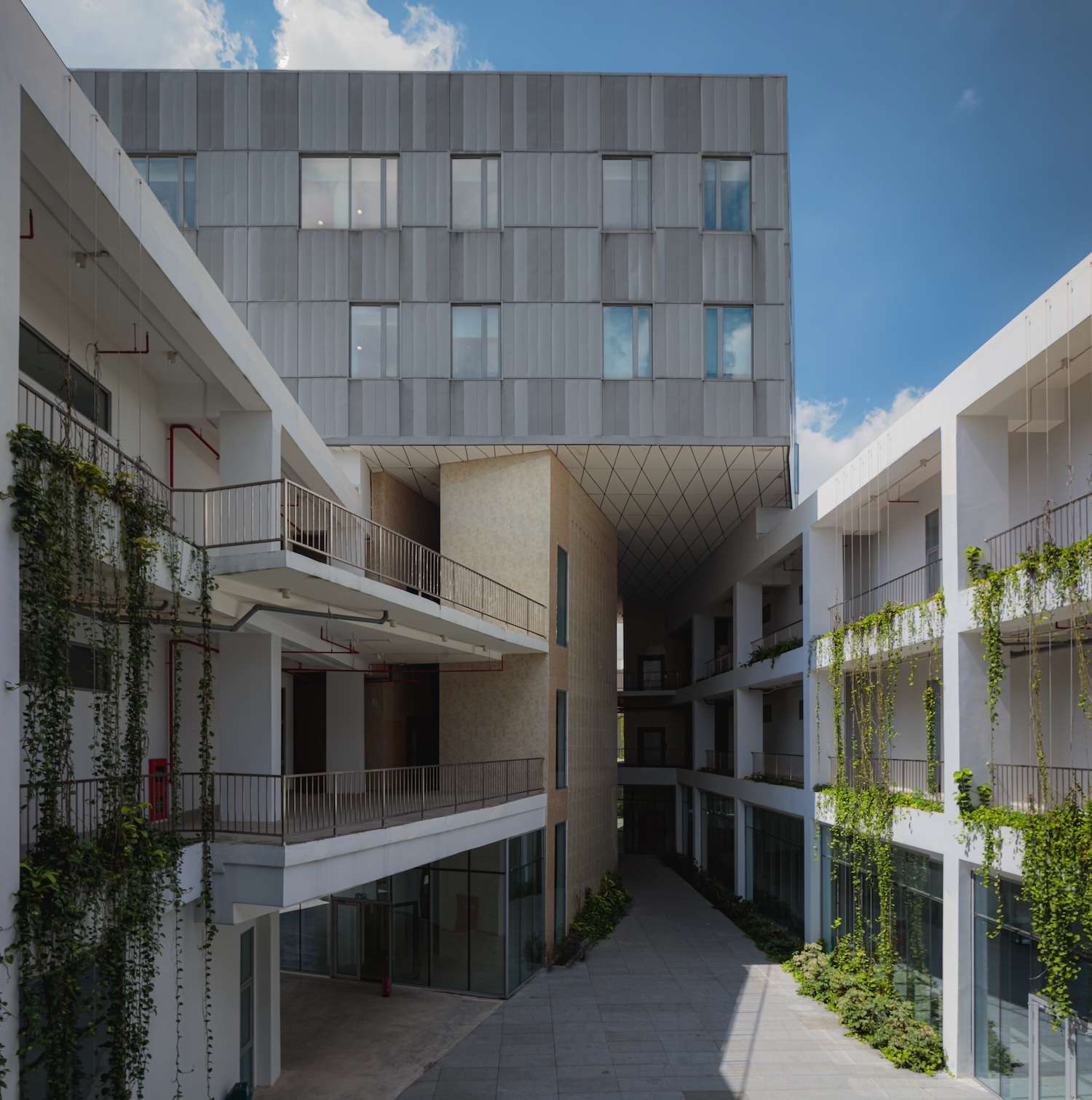
Administration building exterior. Photo © StudioDAG
World Bank funding imposed strict construction budgets, prompting material selections defined by durability, availability, and ease of maintenance. Concrete, plaster, and domestically manufactured metal elements recur across the campus, deployed in ways to give individual buildings distinct identities. The library’s precast exoskeleton lends it a civic character as well as shading and texture, while a cluster of laboratories and research facilities have deep louver shading systems. A custom X-shaped concrete block serves as a repeating textural and structural unit throughout exterior spaces. It is used for straight and curved full-height walls, for instance, or for half-height partitions.
The architects eschewed the monumental front doors of many traditional institutions. Most buildings are entered from below, through shaded courtyards and central voids, before opening outward to light-filled program spaces along their perimeters. “The campus experience comes before the building experience,” says Burchard.
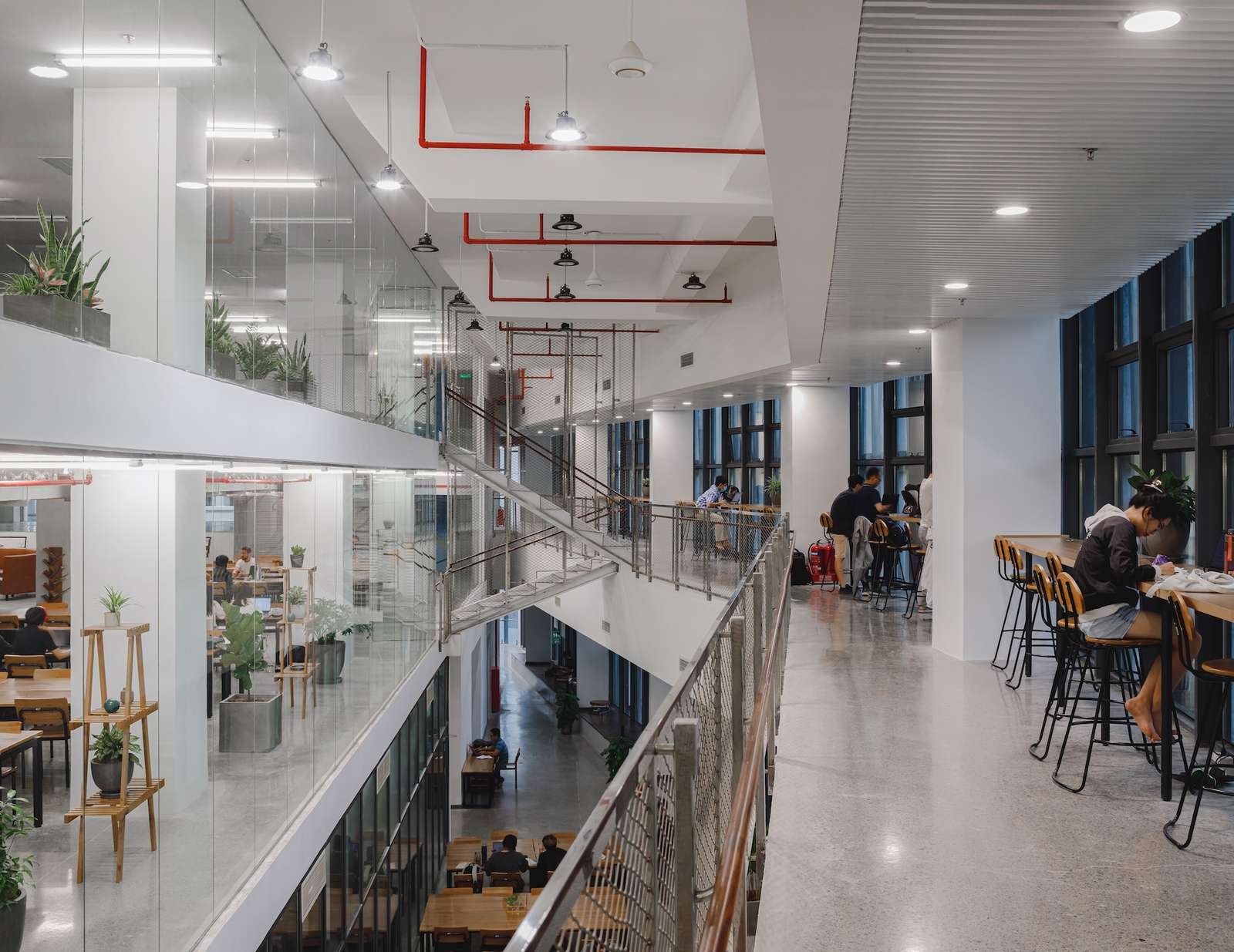
4
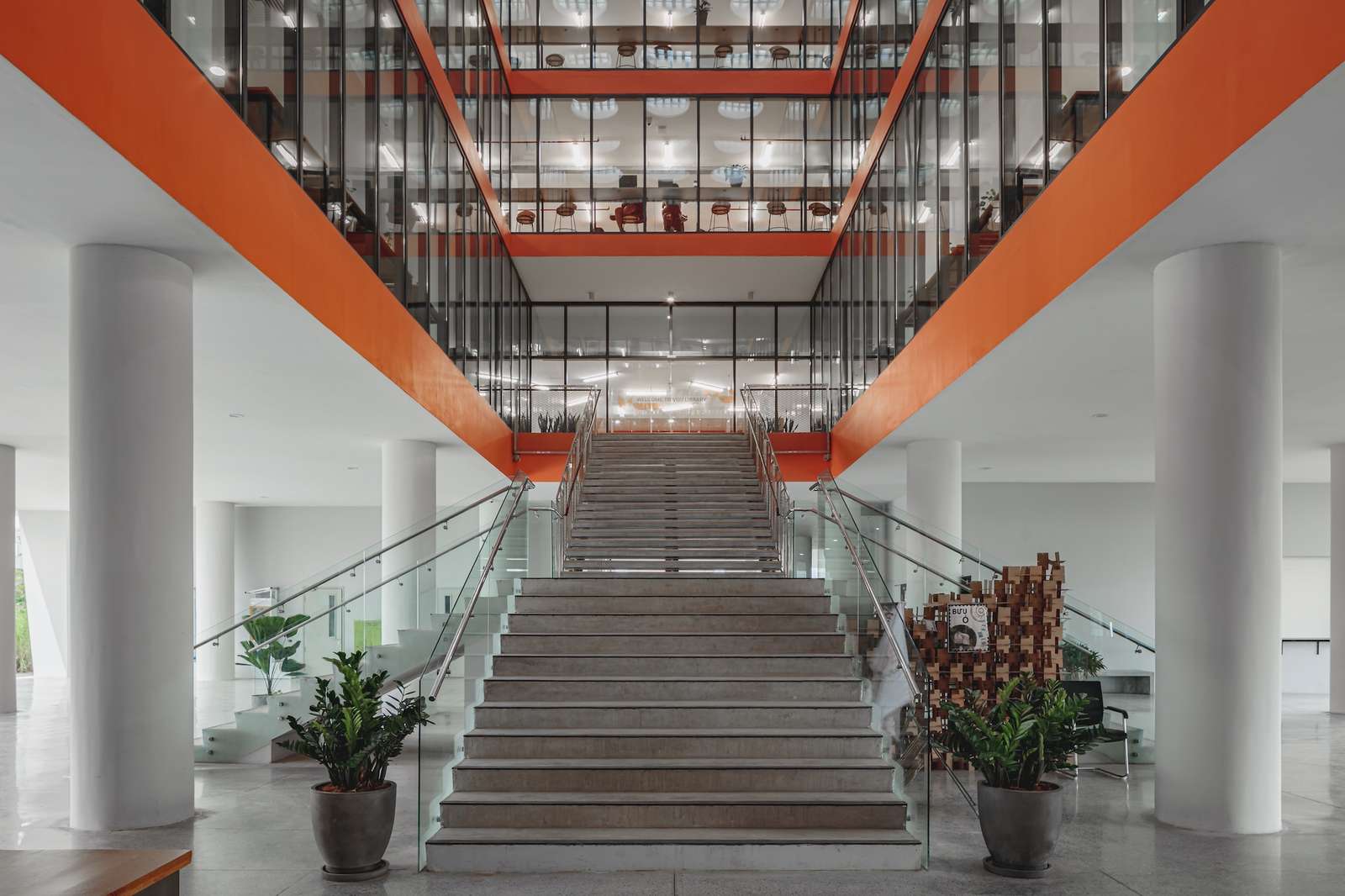
5
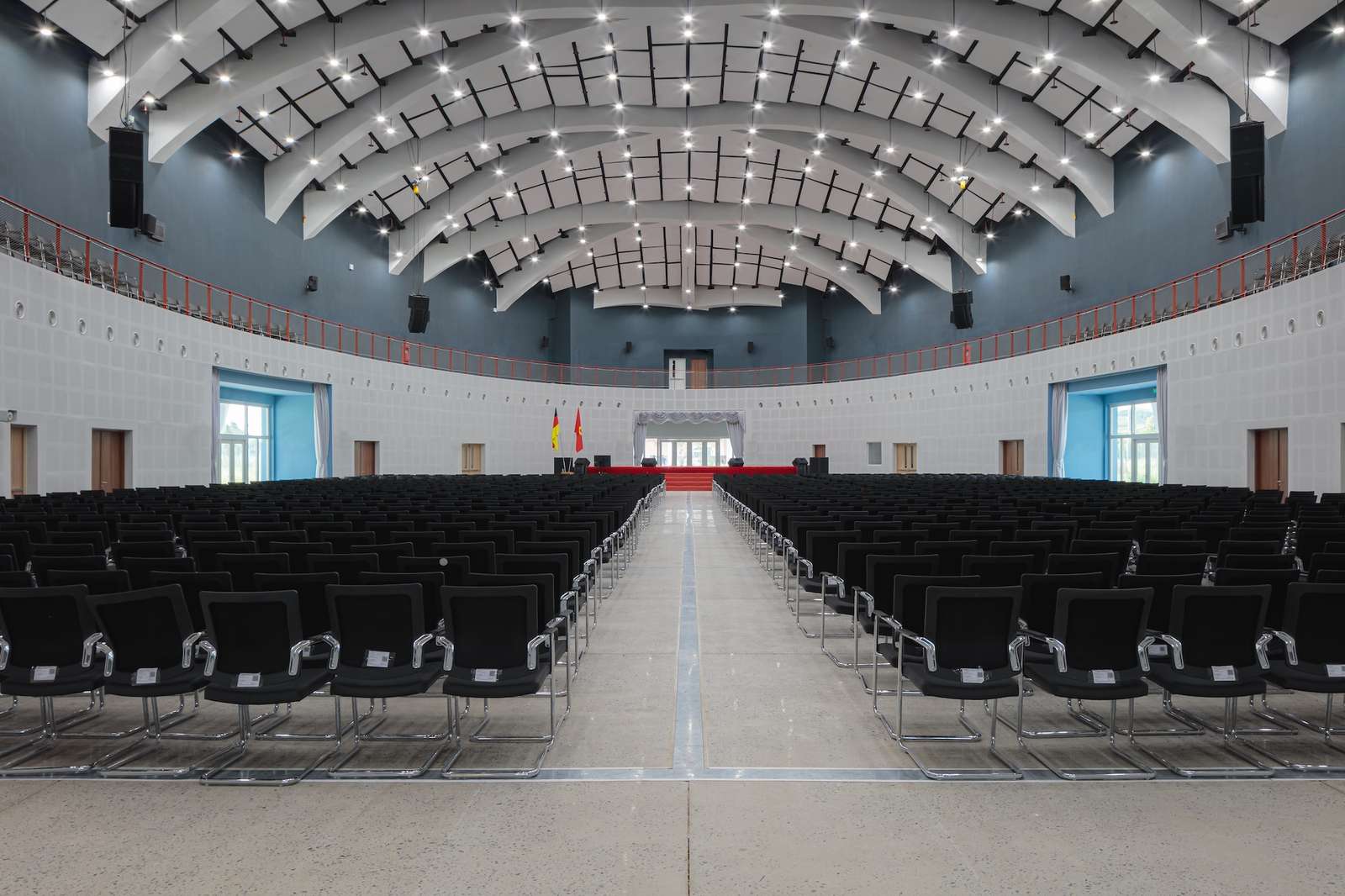
6
Interior views of the library (4,5) and ceremony hall (6). Photos © StudioDAG
The hope is that Machado Silvetti’s architecture supports social interactions as well as a sense of academic distinction, allowing the fledgling institution to thrive. The university demonstrates that this type of from-scratch educational infrastructure can be both economical and generous, rigorously planned and adaptable. Back in the United States, Boston-based Machado Silvetti has undergone its own transition, with the retirement last year of its named partners, Rodolfo Machado and Jorge Silvetti, and the transfer of leadership to Burchard and Dwyer. Like the firm, the campus offers a model for universities to operate not as static institutions, but as living environments shaped by culture, climate, and collective effort.
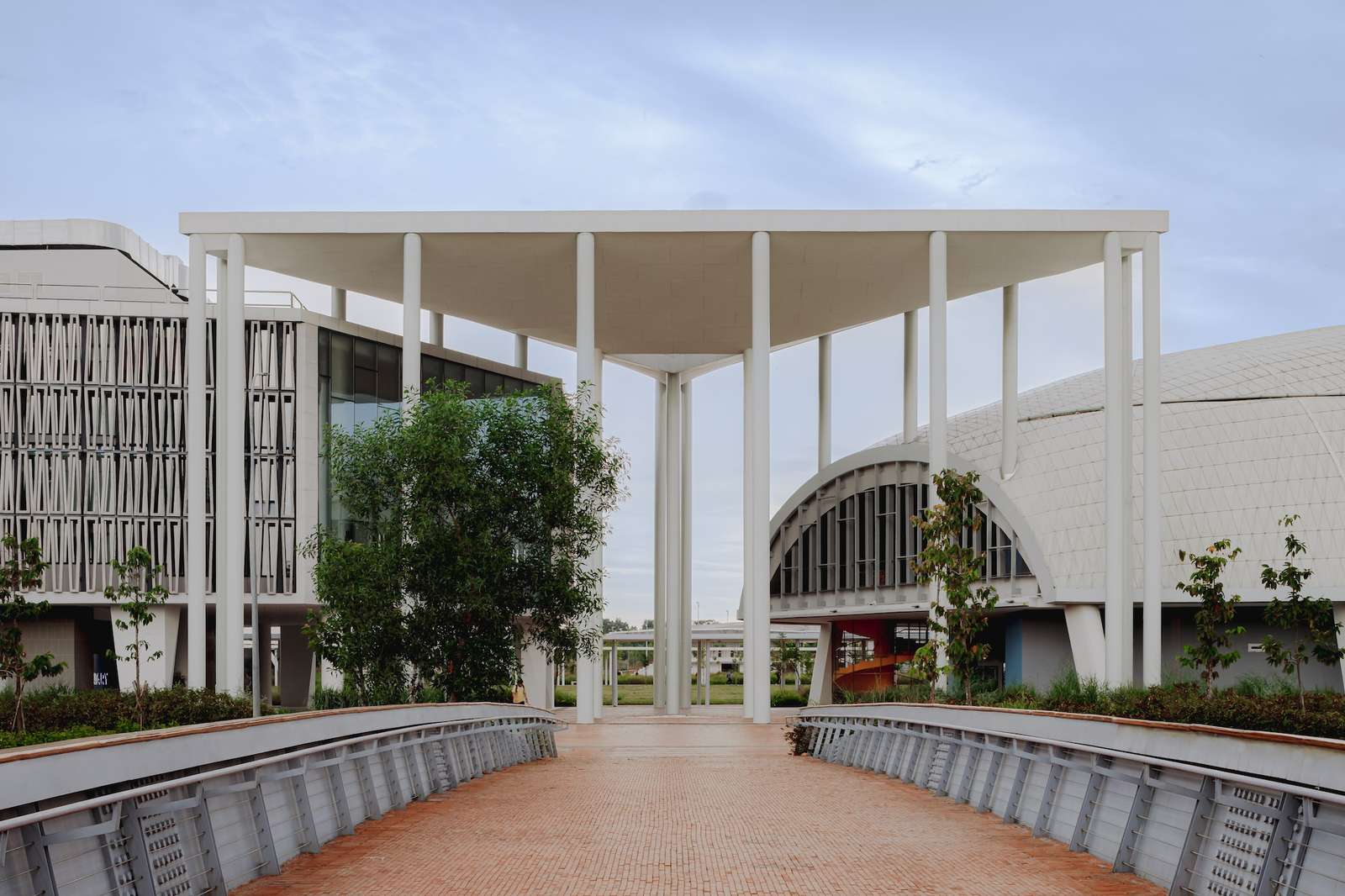
Approach to the library (right) and ceremony hall (left). Photo © StudioDAG
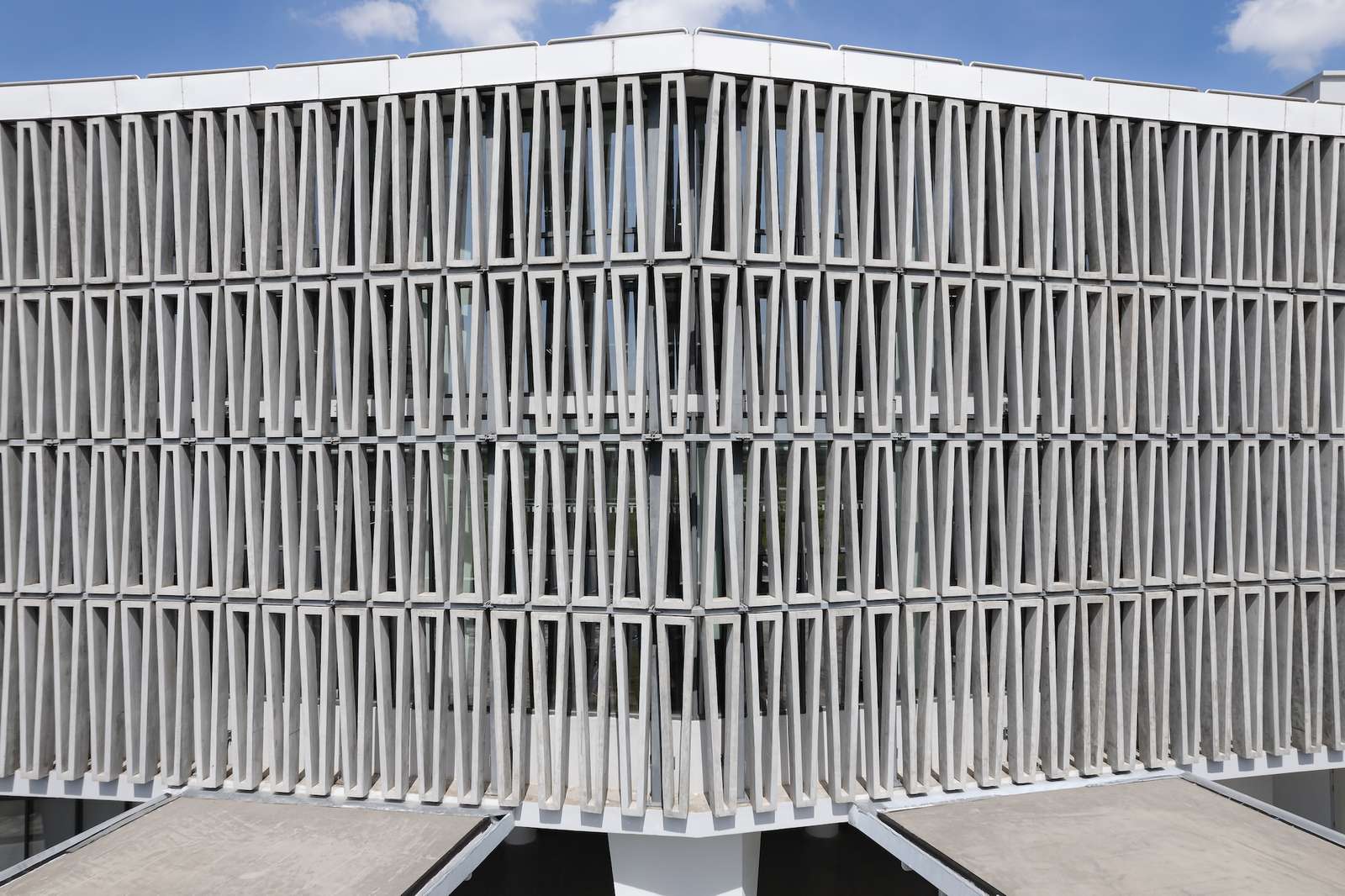
8
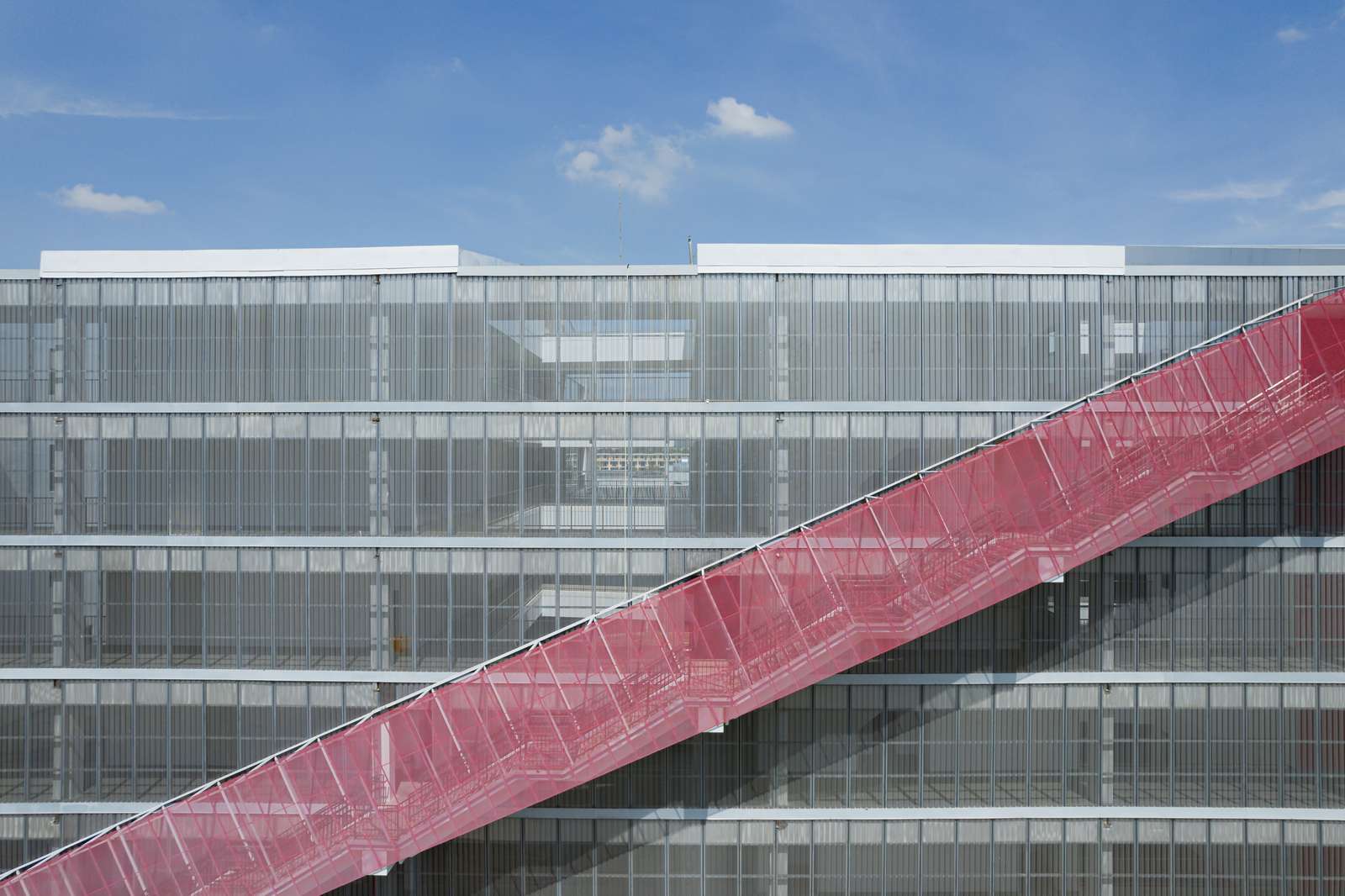
8
Facade detail of the library (8) and lecture hall (9). Photos © StudioDAG
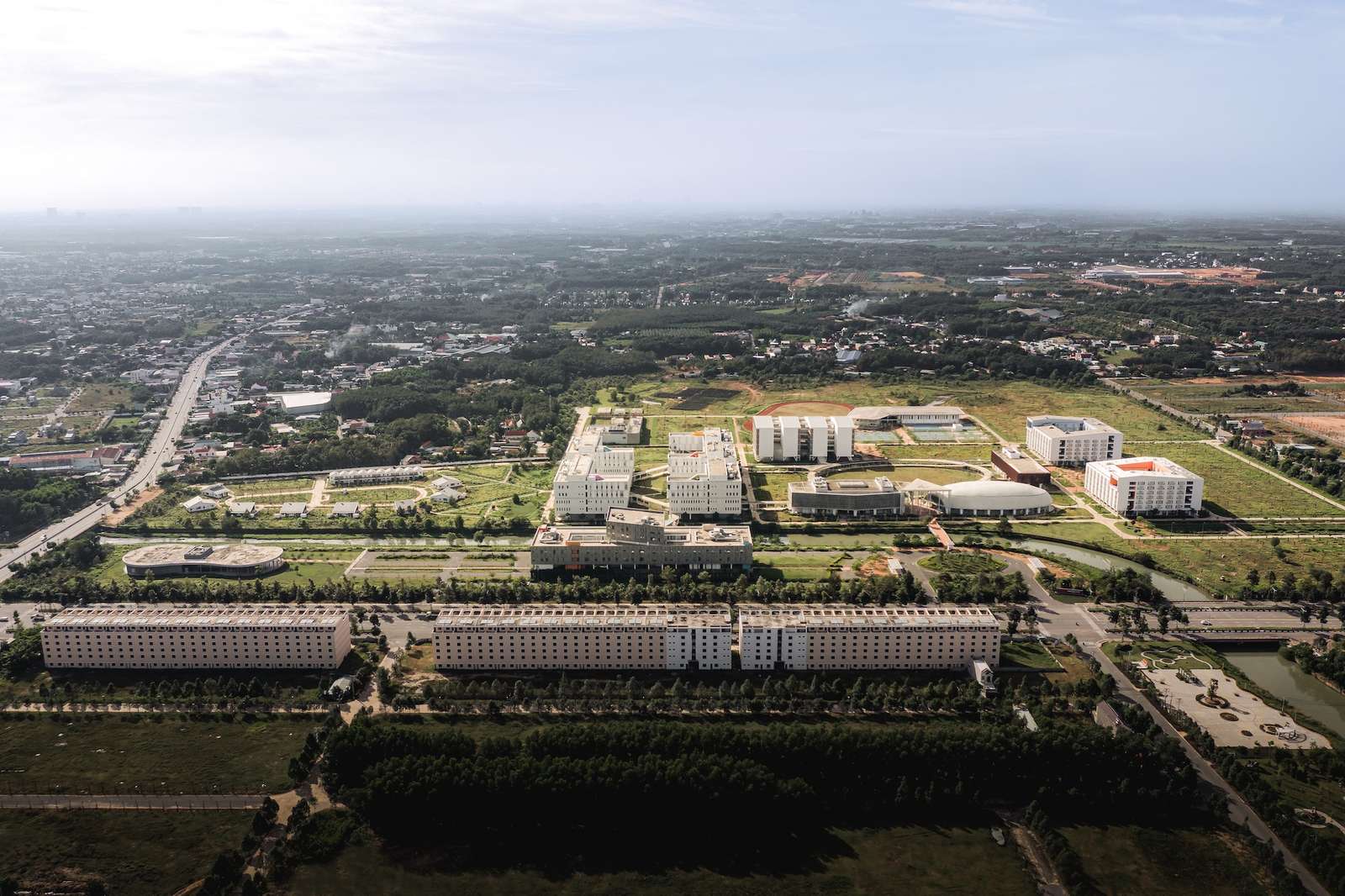
Aerial view of the university campus. Photo © StudioDAG