LPA Designs a California School That Lets Nature Take Center Stage
✕
Educational architecture is usually understood as a container for learning, but less common is architecture that also does the teaching. In San Bernardino, a multicultural, economically disadvantaged city in California’s Inland Empire, a new kindergarten building braids together pedagogical and sustainability principles for its young learners with both whimsy and rigor.
After the passage of a 2021 state law requiring many school districts to provide pre-kindergarten, San Bernardino “had an aspiration to create a 2K-preschool that could be much more than the typical modular buildings that you’d see on campuses,” says Ozzie Tapia, design director of education practice at LPA Design Studios, the firm tapped for the project.
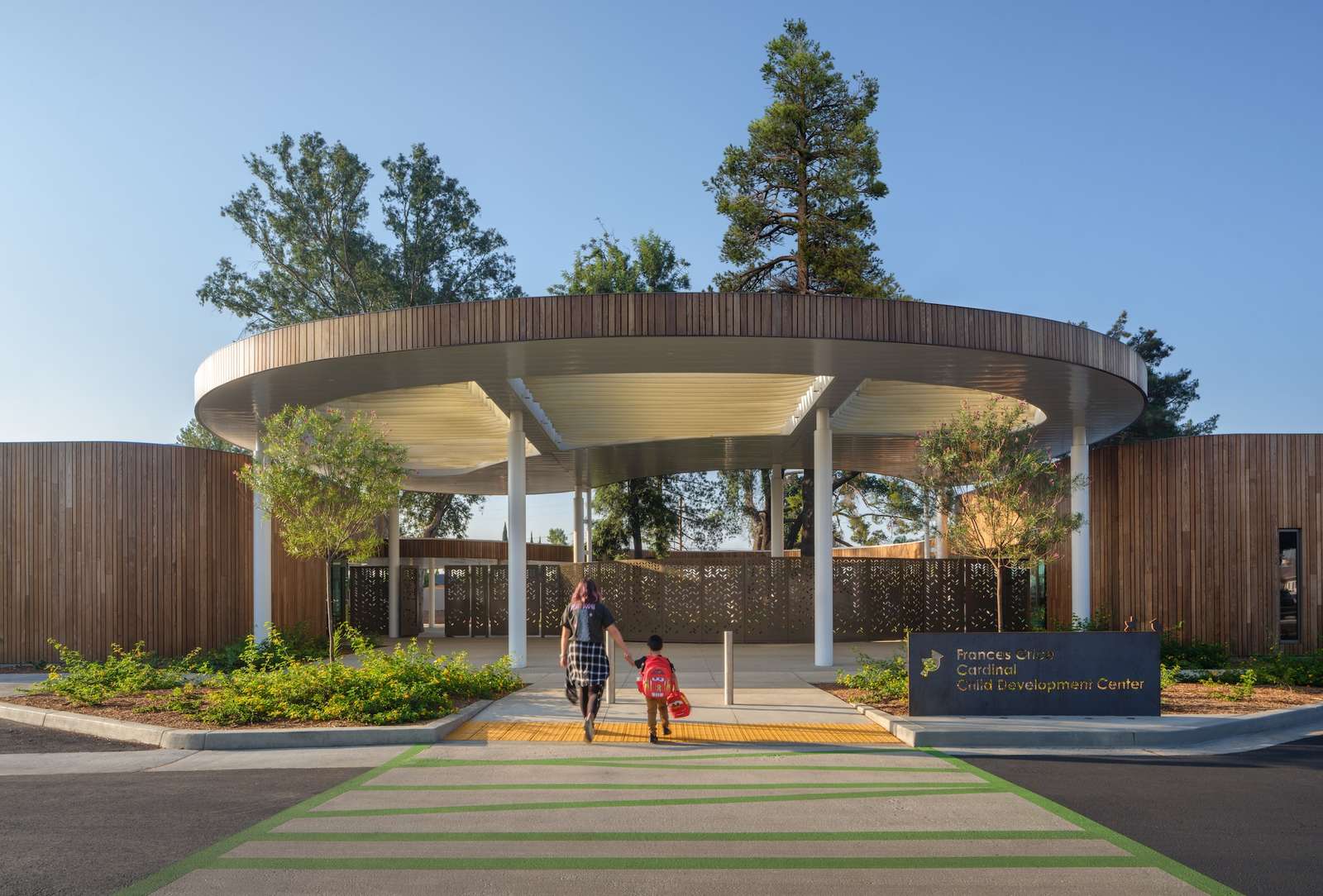
Photo © Jason O’ Rear
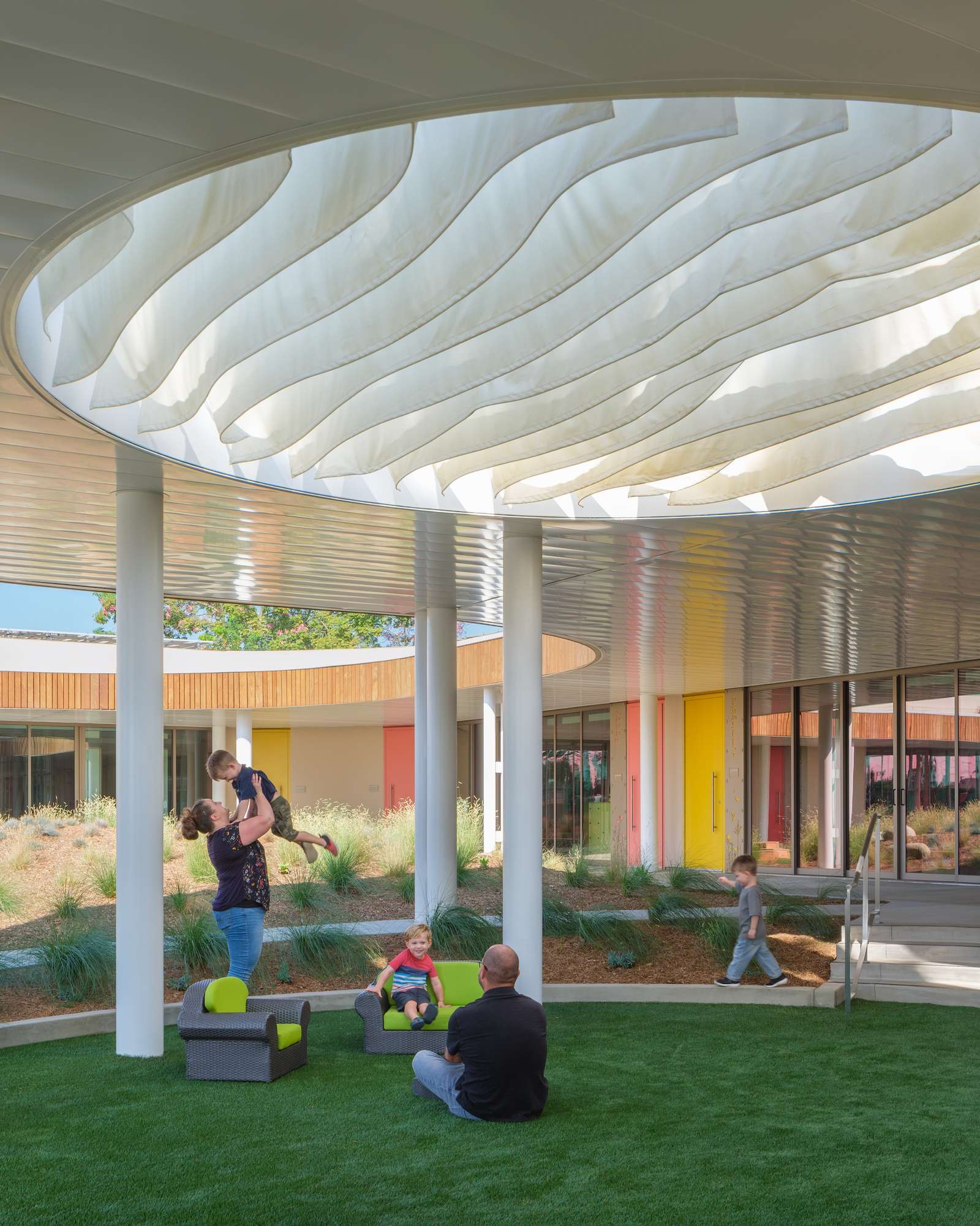
Photo © Jason O’ Rear
The 15,300-square-foot Cardinal Child Development Center is appended to the city’s public high school, located on what was once agricultural land dotted with mature eucalyptus, cedar, and pine trees that Tapia calls the “gift of the site.” After determining the trees had longevity, the project evolved into one of arboreal preservation that could contribute to a nature-based learning program for the students. “We created a diagram of ‘no-fly zones’ that the building had to work around,” Tapia adds.
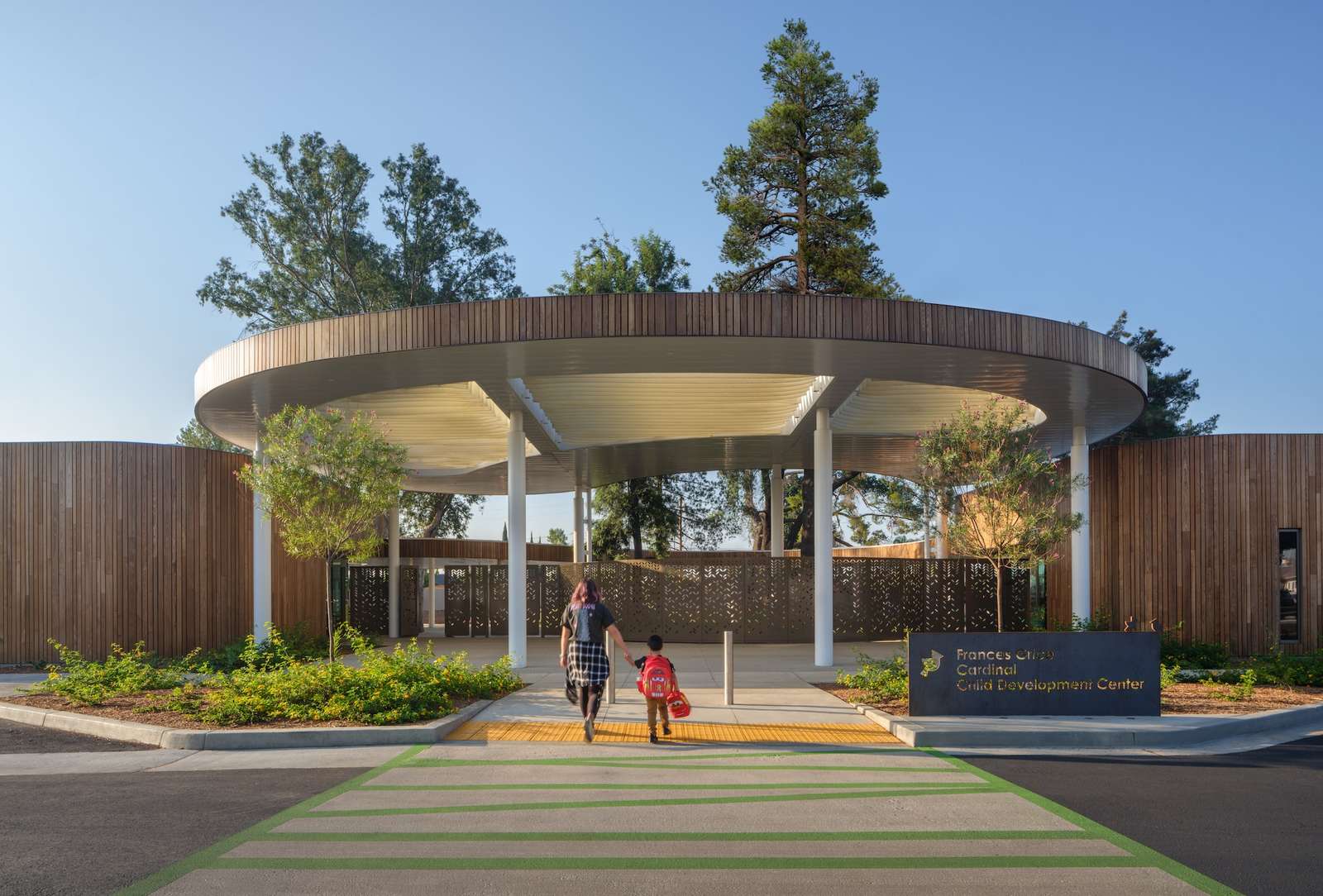
The result is a clever accommodation of environmental constraints. Webbing out from the U-shaped building that houses the classrooms and community spaces is a steel walkway canopy wrapped in a wood rainscreen that undulates to avoid or encompass the existing tree trunks. In doing so, it creates a partially covered courtyard hosting a range of interactive spaces for kids to play, relax, eat,and learn. Here, the project’s signature marbling of sustainability and pedagogical principles is on bright display: a pollinator garden, an outdoor-dining patio, and a reflective pond planted with local flora echoing regional landscape features like grasslands and the rare superbloom. Punched through the winding canopy is a circular, sun-filtering oculus, where students can comfortably gather.
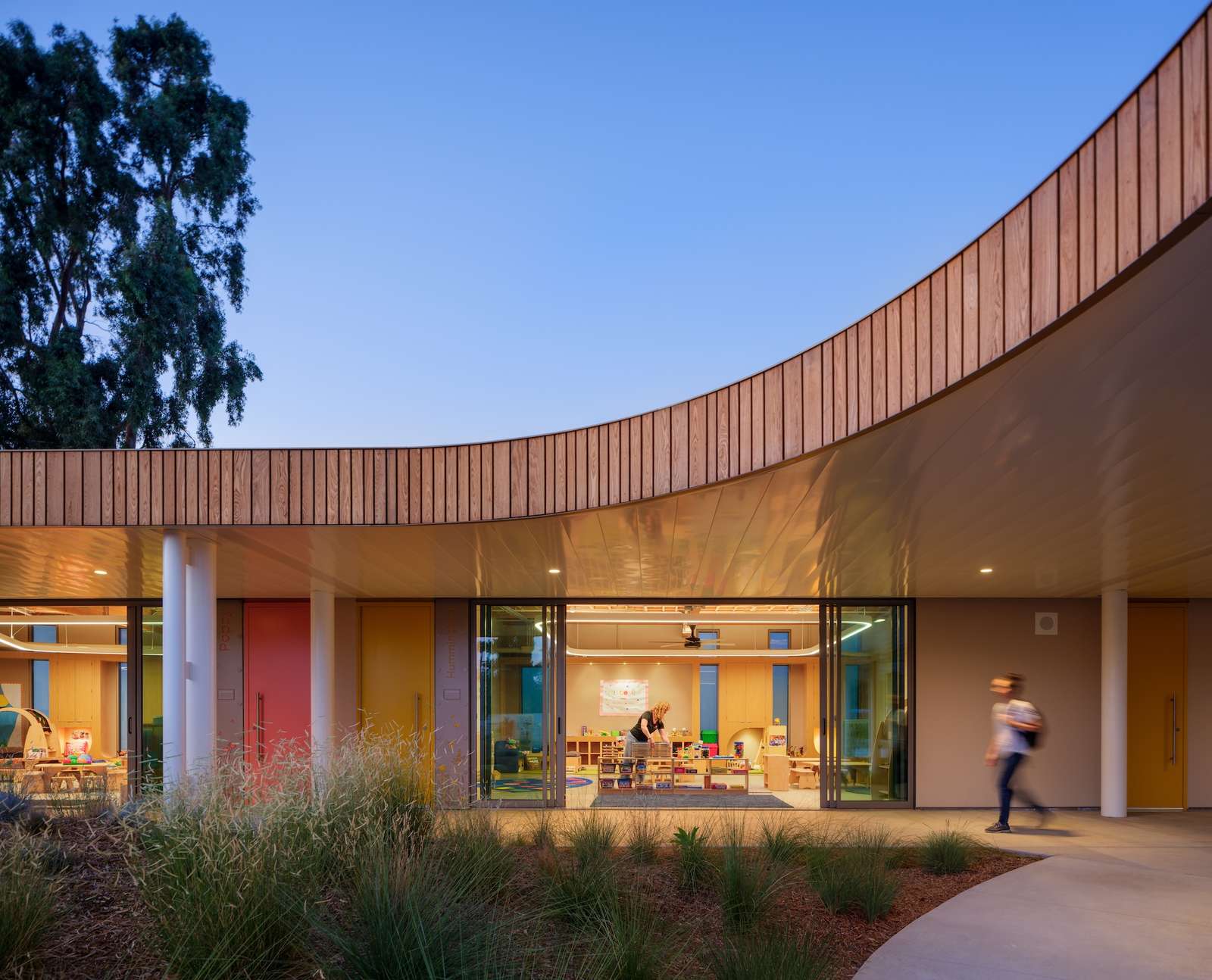
Photo © Jason O’ Rear
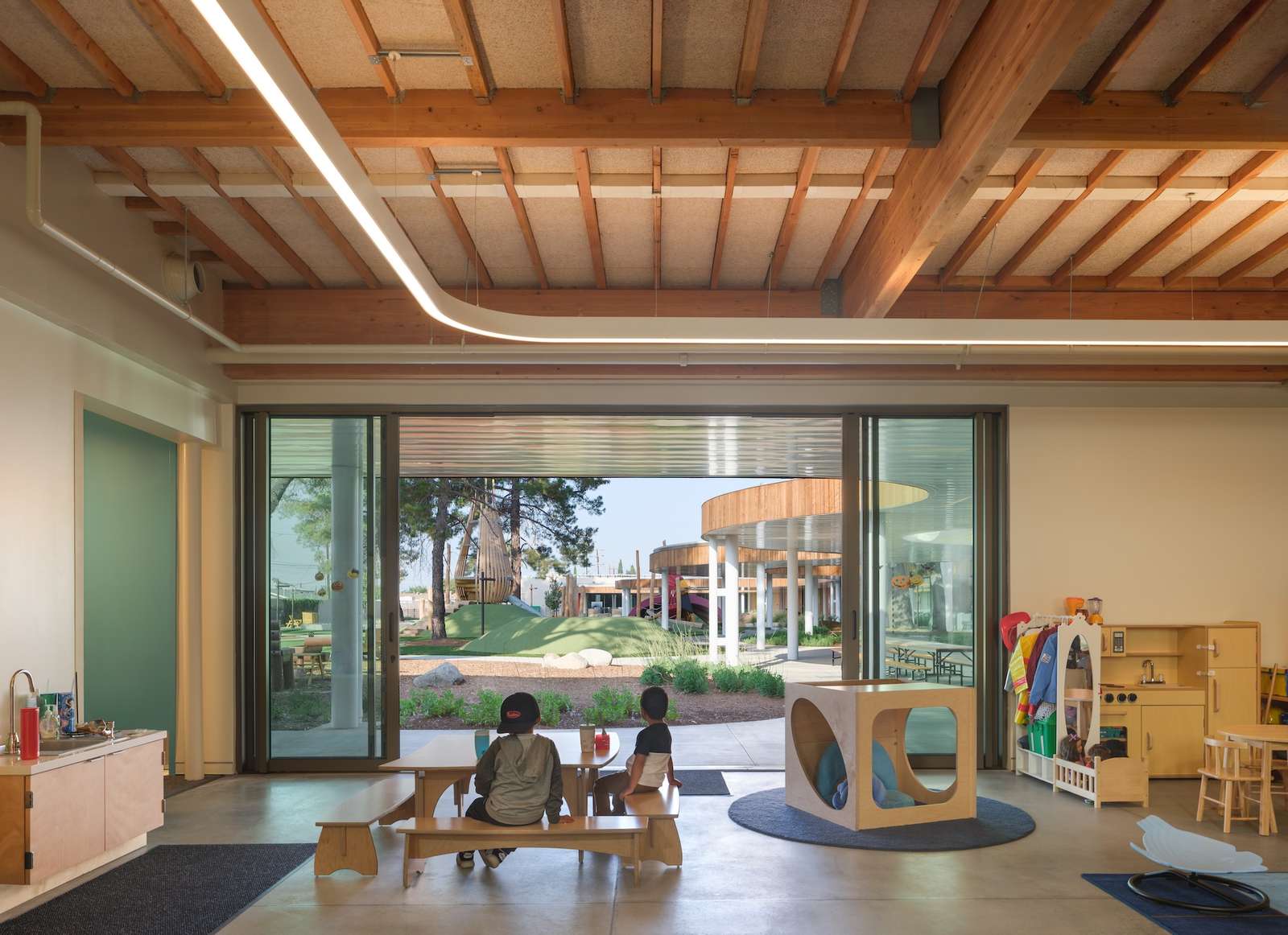
Photo © Jason O’ Rear
Though the outdoor spaces and landscapes comprise the majority of Cardinal’s overall footprint, the interiors also continue the theme of tactile and biophilic spaces for young learners. Throughout, the goal was to create spaces “attuned to the scale of these students,” that could “support independence for them to be in a space they can control,” Tapia explains. Interactive walls in the classrooms hold bookcases, storage, and varied nooks for sitting, reading, and even climbing. Glulam beams and wood framing “express and expose” natural building materials while obviating the need for costly and synthetic finishes. With clear sightlines from each classroom, students can glimpse wood’s lifecycle, from garden to tree to timber to building material.
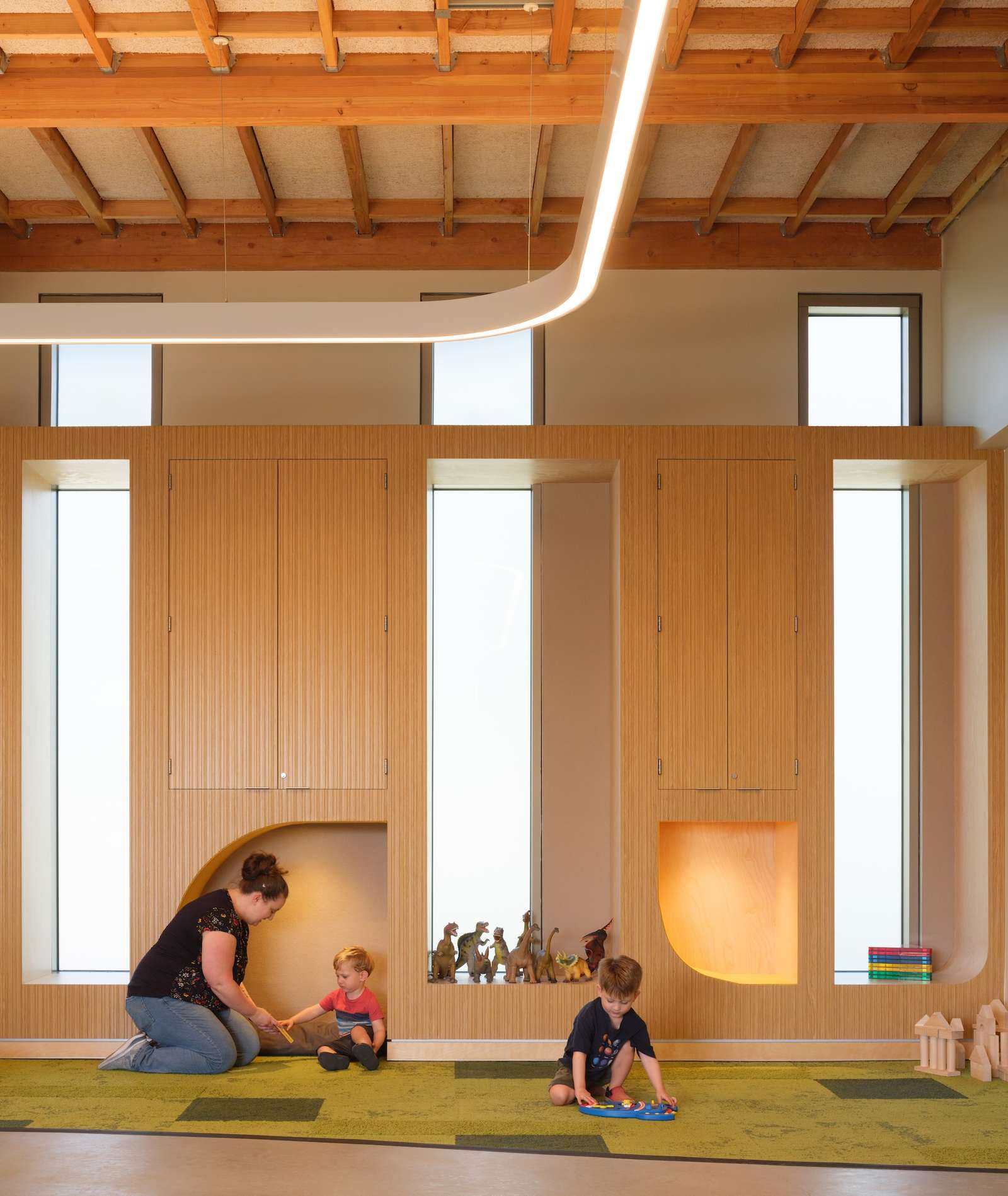
Photo © Jason O’ Rear
Beyond the emphasis on a naturalistic material palette, other features allow the project to be as circular and sustainable as possible: a rainwater system treats and retains runoff in visible bioswales, sliding doors make use of cooling prevailing winds, and photovoltaic panels cover the roof canopy, enabling the project to offset 100 percent of its energy use.
The American Institute of Architects bestowed LPA its 2025 Architecture Firm Award, singling out the practice’s track record of integrating sustainability principles throughout its educational, workplace, and civic projects. Cardinal feels like a distillation of the firm’s approach, made especially visible given the project’s smaller-scale and inherently didactic program. By exposing the organic processes that helped constitute the structure and using the architecture to advance a nature-based, sensorial curriculum, Tapia says, Cardinal casts “building as a tool of learning.”
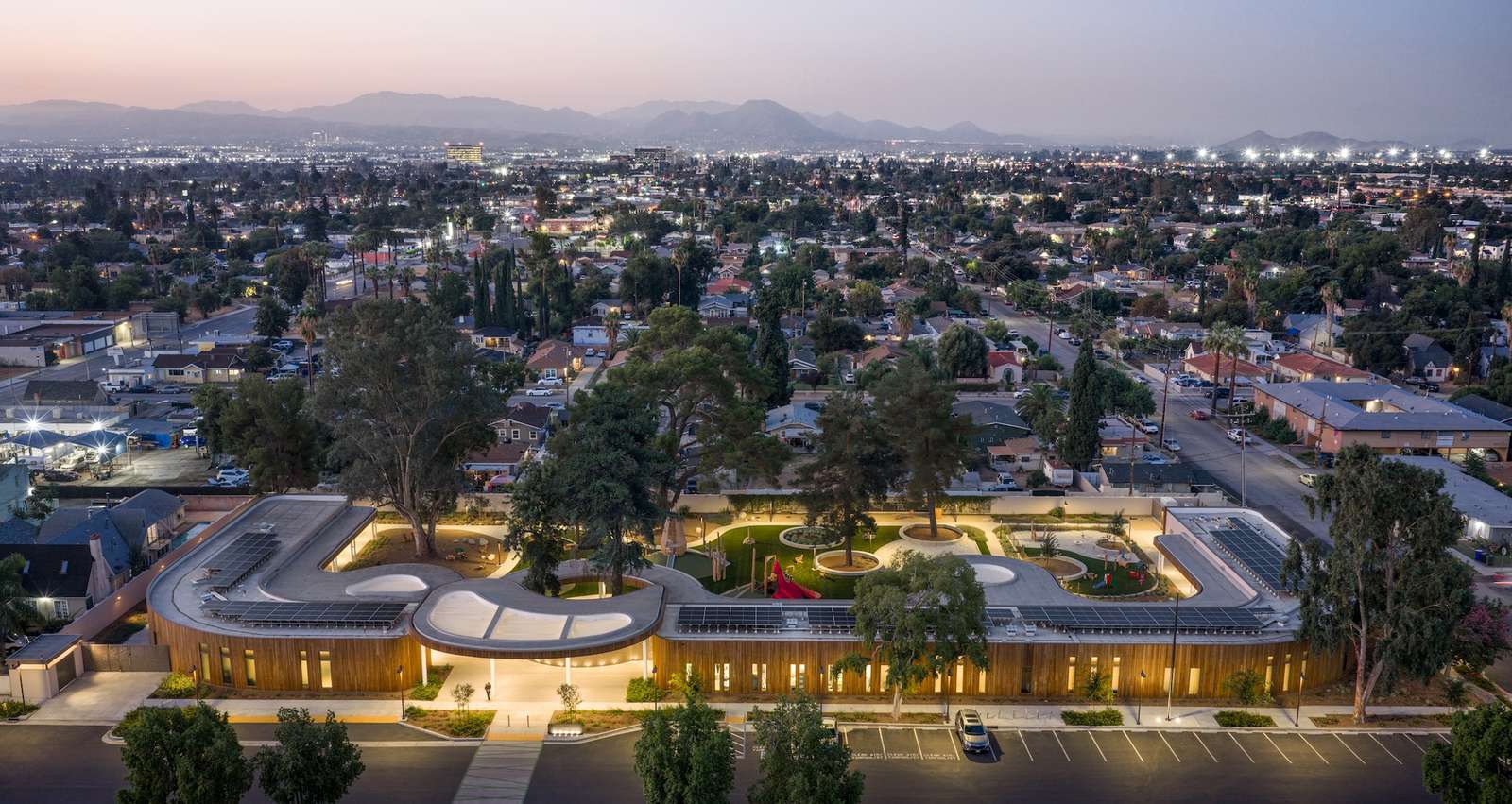
Photo © Jason O’ Rear