
Jacobschang Draws Inspiration from Its Clients’ Linguistic Expertise for a House in Culver City
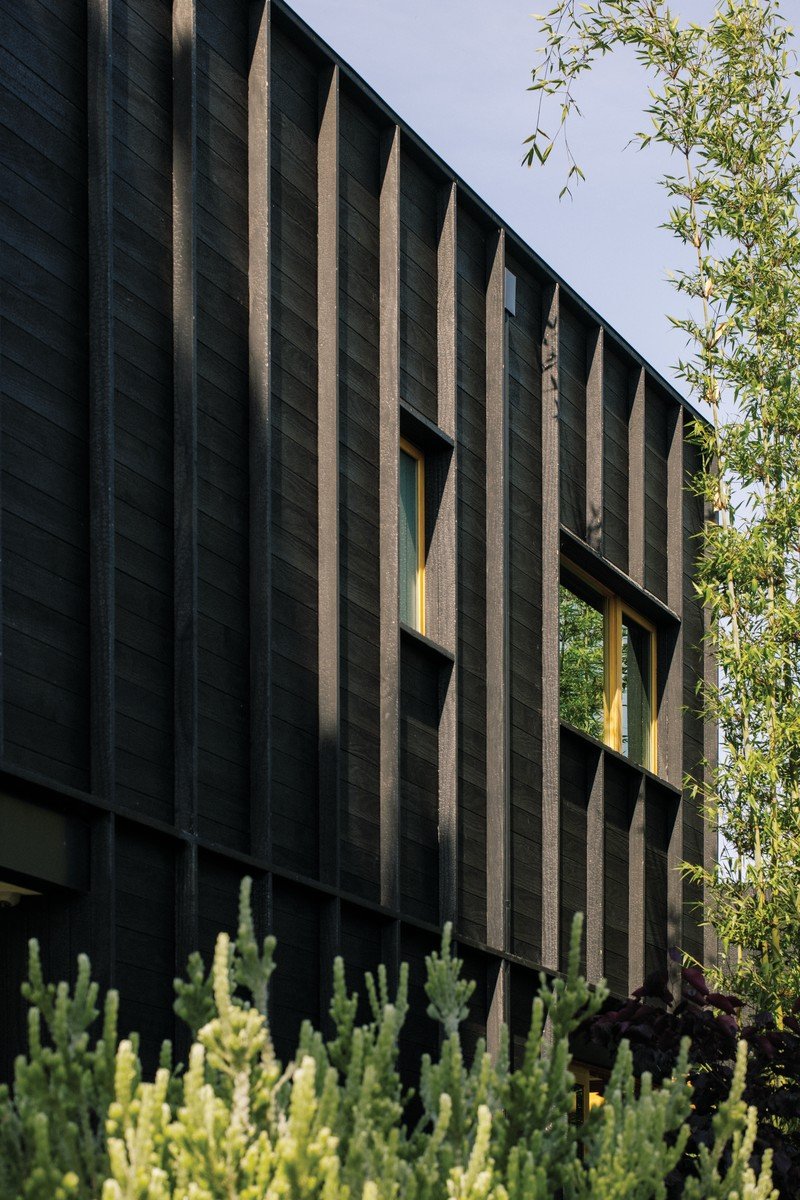
Amid faux-Mediterranean casitas, Craftsman cottages, and nondescript bungalows, the Translators’ House in Culver City, California, quietly evokes a certain poetry. Stepping stones meander to its entrance across a front yard—a tiny “meadow” of tall, wild-looking grasses. And its modern, rectilinear facade expresses both the absence and presence of wood—with a large plane of concrete, textured horizontally by the ghostly imprints of lumber formwork, playing against the raised vertical grain of black Japanese charred timber, or yakisugi, cladding.
Here in the flats of Culver City—a low-rise, largely single-family residential area, about 9 miles west of Downtown Los Angeles—Jacobschang Architecture (JCA) has transformed a partially Japanese narrative into a Southern California idiom.
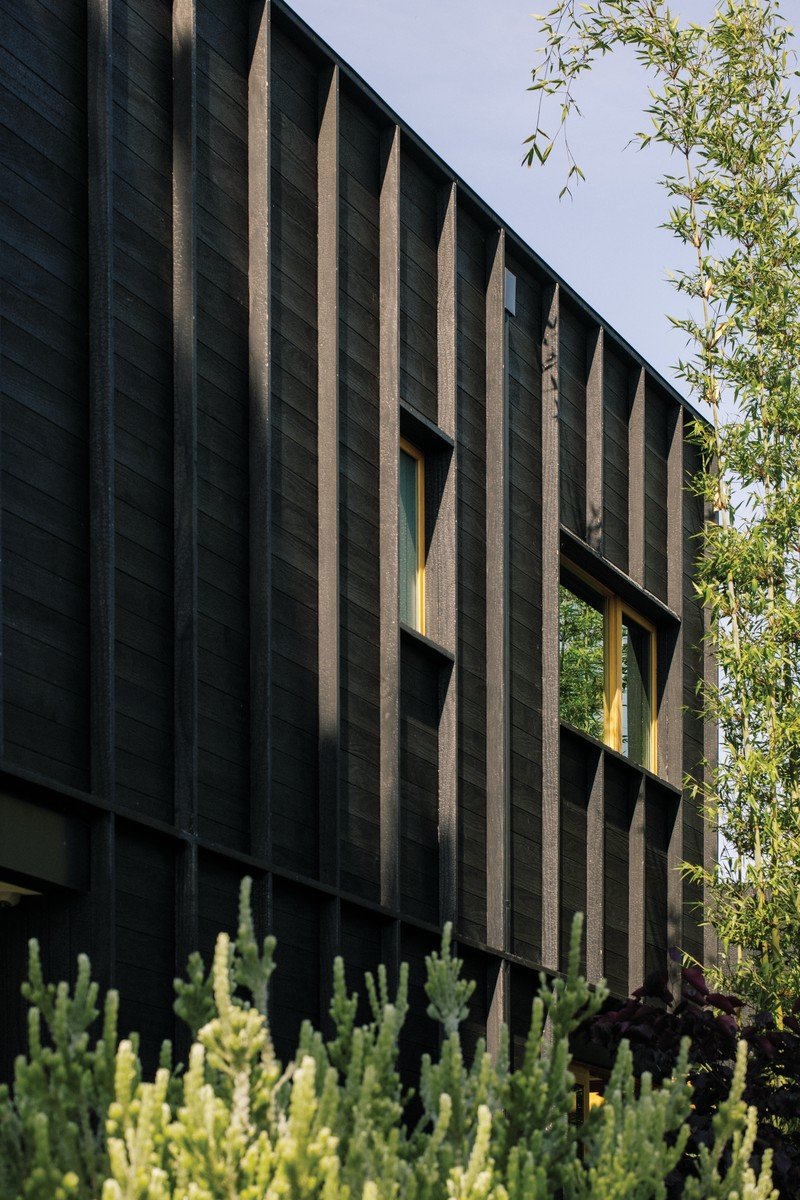
The house is clad in yakisugi. Photo © Michael Wells, click to enlarge.
The homeowners, a New York–born husband and Tokyo-born wife, are both scholars of Japanese literature. “And I’ve always been interested in architecture,” says the husband. “But we didn’t want to inhabit an ‘architectural concept’—we wanted a livable family home, whose design would be both interesting and warm.”
When they saw JCA’s Hedge House online, they knew they’d found their match. “The indoor-outdoor flow and use of wood really resonated with us,” the husband recalls. And perhaps he and his wife sensed JCA principal Mike Jacobs’s affinity for the design culture of Japan, where he’d taken his Columbia University architecture students multiple times.
The couple asked for a two-story house that would feel open to the street yet still provide privacy. Essential to them was an interior space of arrival and transition—a low entry area, at grade, where, as in a Japanese genkan, or vestibule, everyone would remove and store their shoes before stepping up into the rest of the house. The owners also needed spaces for their two sons (now 9 and 11) and occasional guests, a home office, and a library. Plus, they wanted at least two different dining areas, a full basement (unusual in Southern California)—and views of greenery from every window.
“The challenge,” says Jacobs, “was striking that balance between openness and privacy—with an expanded sense of landscape—on a relatively tight urban lot.” The parcels here are side by side and back to back, rectangular and level, typically (as in this case) about 5,400 square feet, but only 45 feet across, including a driveway and carport or garage.
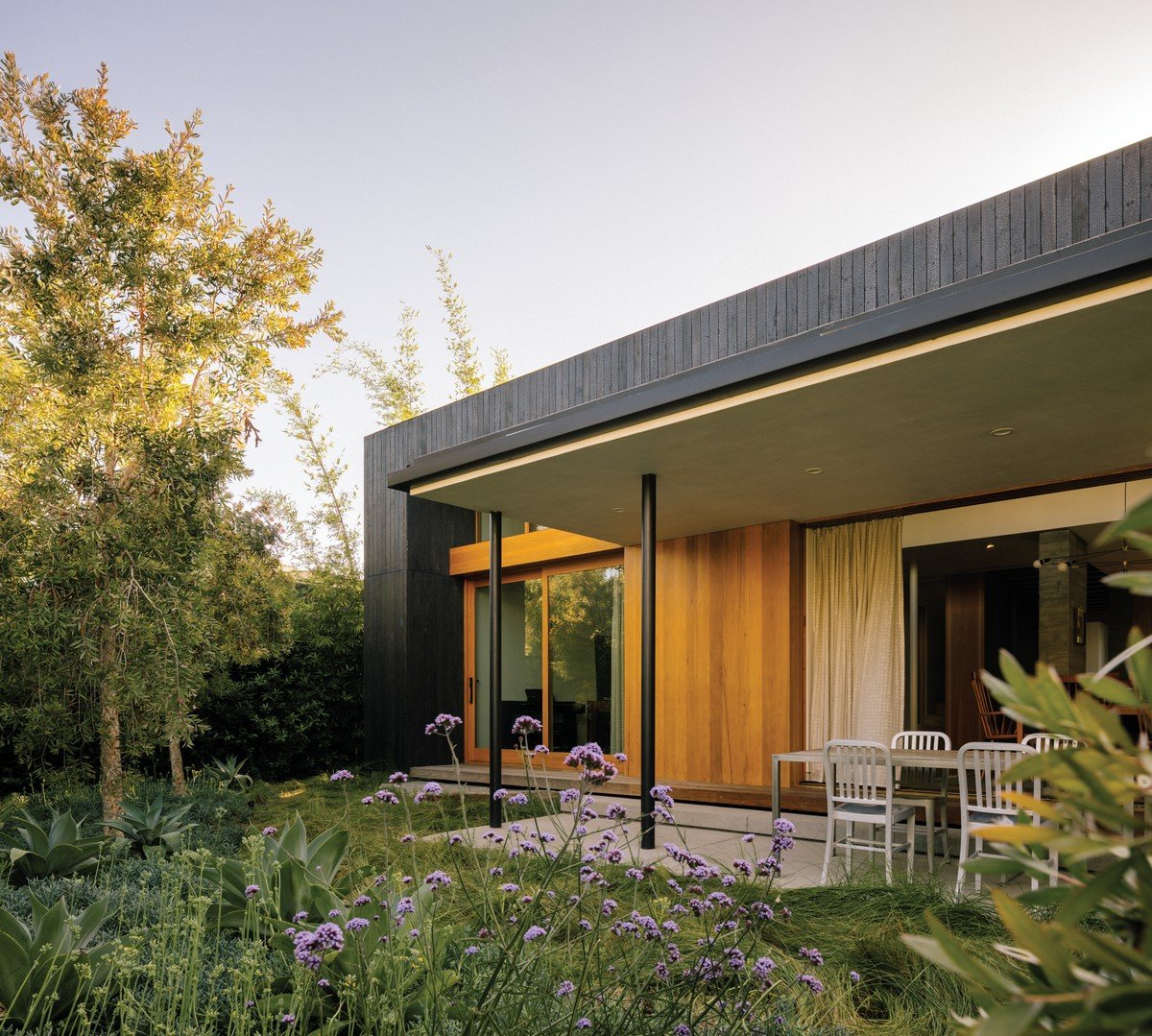
A patio flanks the living/dining room. Photo © Michael Wells
In response, the architects created a 3,885-square-foot house, punctuated by a north and south courtyard, tall screens of foliage, and low plantings across its setbacks. Flat-roofed and blocky, with large expanses of glass and a slightly cantilevered upper floor, this building is not, at first glance, radically different from other modern two-story houses of recent vintage in Culver City, but the dark yakisugi immediately sets it apart, as does the tactile material palette throughout, the ways light and shadow are captured or expressed, and the dialogue between interior and landscape.
From the street to the west, the stepping stone path bends around to a front door on the house’s south face. Just outside it, floor-to-ceiling fenestration of the adjacent projecting library space seems to invite penetrating views inside, even giving glimpses of foliage nearly 100 feet back, in the rear yard. Yet it’s hard to actually make out much of the interior, as layers of glass-enclosed volumes—the library and the living room beyond it, with a courtyard in between—play transparency against reflection. And with the sun’s movement, this elusive veiling effect constantly shifts, at once revealing and obscuring.
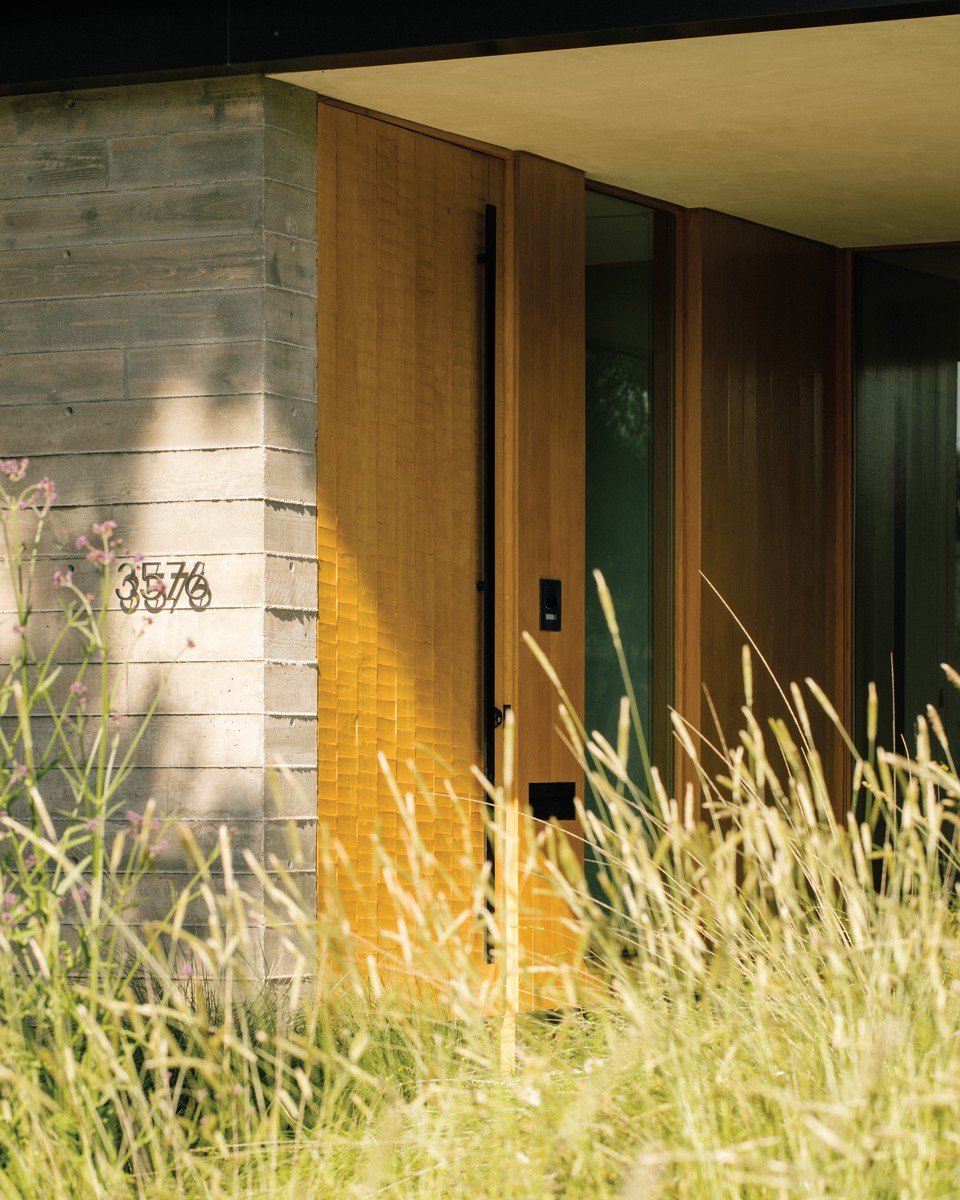
The front door is crafted of solid, scalloped chestnut. Photo © Michael Wells
The front door—solid chestnut with a wavy scalloped surface—hints at the level of craft and texture within. Despite this portal’s modern, or perhaps timeless, quality, its wood was hand-tooled in Japan using an ancient technique that is now a dying art. Just as the couple has helped preserve endangered literary and linguistic forms, they commissioned the door from one of the last surviving masters of naguri-shiage, that vanishing artisanal skill.
At this threshold, the irregular flat bluestones across the grasses give way to large, rectangular, concrete stepping stones, continuing inside across a “pool” of rough gravel, reminiscent of Japanese gardens, whose raked pebbles also metaphorically evoke water. A platform, surfaced in wide-plank white oak, borders two sides of this space, providing low seating for removing shoes (which can be tucked neatly beneath the platform’s overhang).
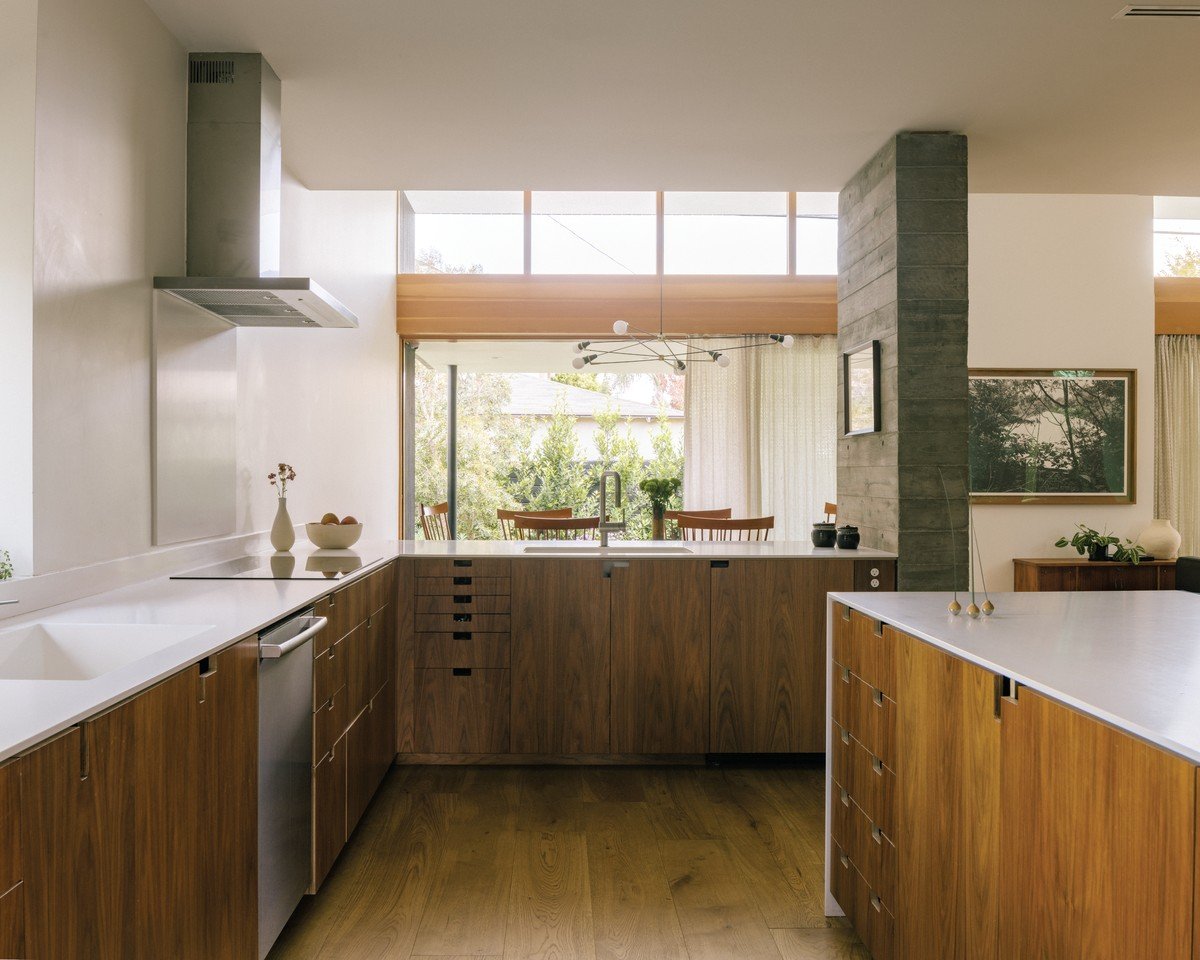
The kitchen features walnut veneered cabinetry. Photo © Michael Wells
A long L-shaped wall of board-formed concrete—the ground floor’s organizational spine and the structure partially visible on the facade—leads down a passageway toward the main living spaces. There, the highly textured concrete plays against a facing wall of smooth charcoal gray cabinetry with simple tall flush doors, punctuated only by cut-out fingerholds instead of handles. Underfoot, the white oak flooring continues, while, overhead, dark timber ceiling joists alternate with inset panels of coffee-colored cork. This gallery’s relative dimness is broken by occasional openings in the deep walls that allow shafts of sunlight to register on the dark surfaces. At the same time, the low light contrasts compellingly with the bright rear garden coming into view straight ahead.
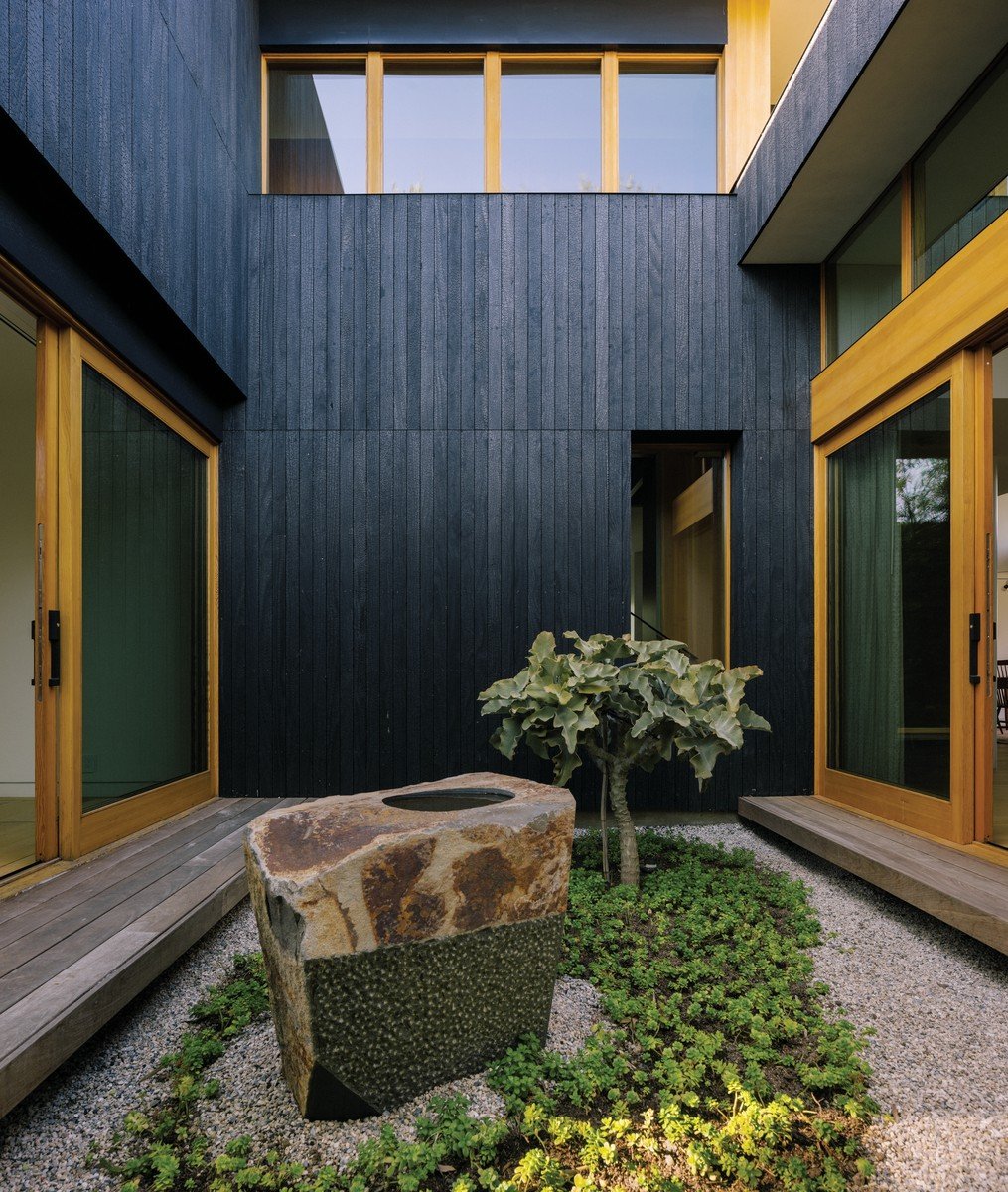
A Japanese basalt boulder sits in one of the landscaped courtyards. Photo © Michael Wells
But before reaching the main living areas and backyard beyond, the passageway opens to the library, to the south. Through large wood-framed sliding-glass doors, this room looks onto a small courtyard, inhabited by the stillness of a Japanese basalt boulder—a rugged stone that collects rainwater on top. A long backdrop of live bamboo screens out views of the neighboring house, only a few feet away over the shared property line. At this end of the library, there is a traditional Japanese-style low dining table over a well that comfortably accommodates legs—but, with a modern twist, this furniture disappears when a motor brings down a wood cap for the well, sinking it flush with the floor so that it merges. Surrounding metal-framed floor panels open on hinges to store cushions. While the modular proportions here allude to tatami mats, the couple (and their architect) “did not want to literally recreate a tatami room,” says the wife. “Our intention was never to transplant a Japanese house to Southern California—we weren’t interested in replication or fake Zen.” Instead, the approach was to integrate elements of Japanese culture—or merely references to them—in ways akin to literary translations, in which two languages intersect.
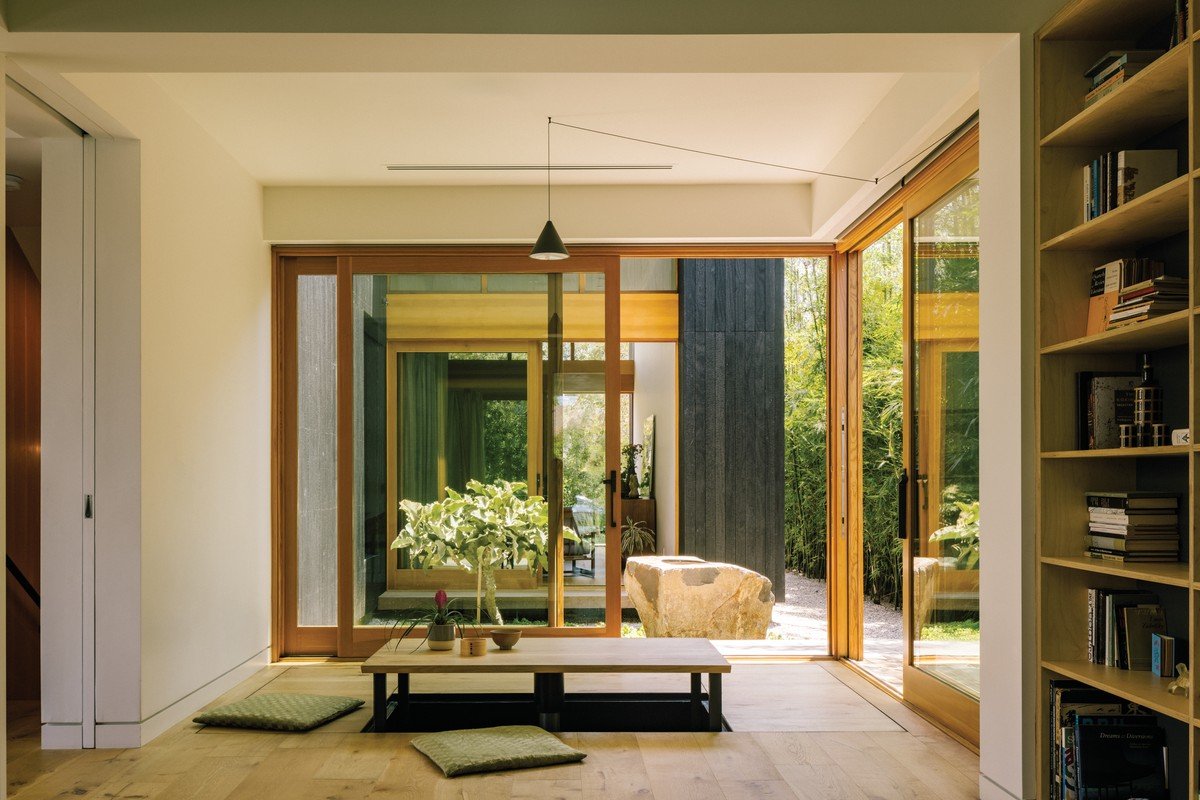
Sliding glass doors blur the boundaries between indoor and outdoor spaces. Photo © Michael Wells
The concrete spine ends in airy, luminous communal spaces that flow together: a clean-lined kitchen, Western-style dining area, and high-ceilinged living room. Sliding doors—custom-framed in Douglas fir, as in the library and throughout the house—open these spaces to the yard.
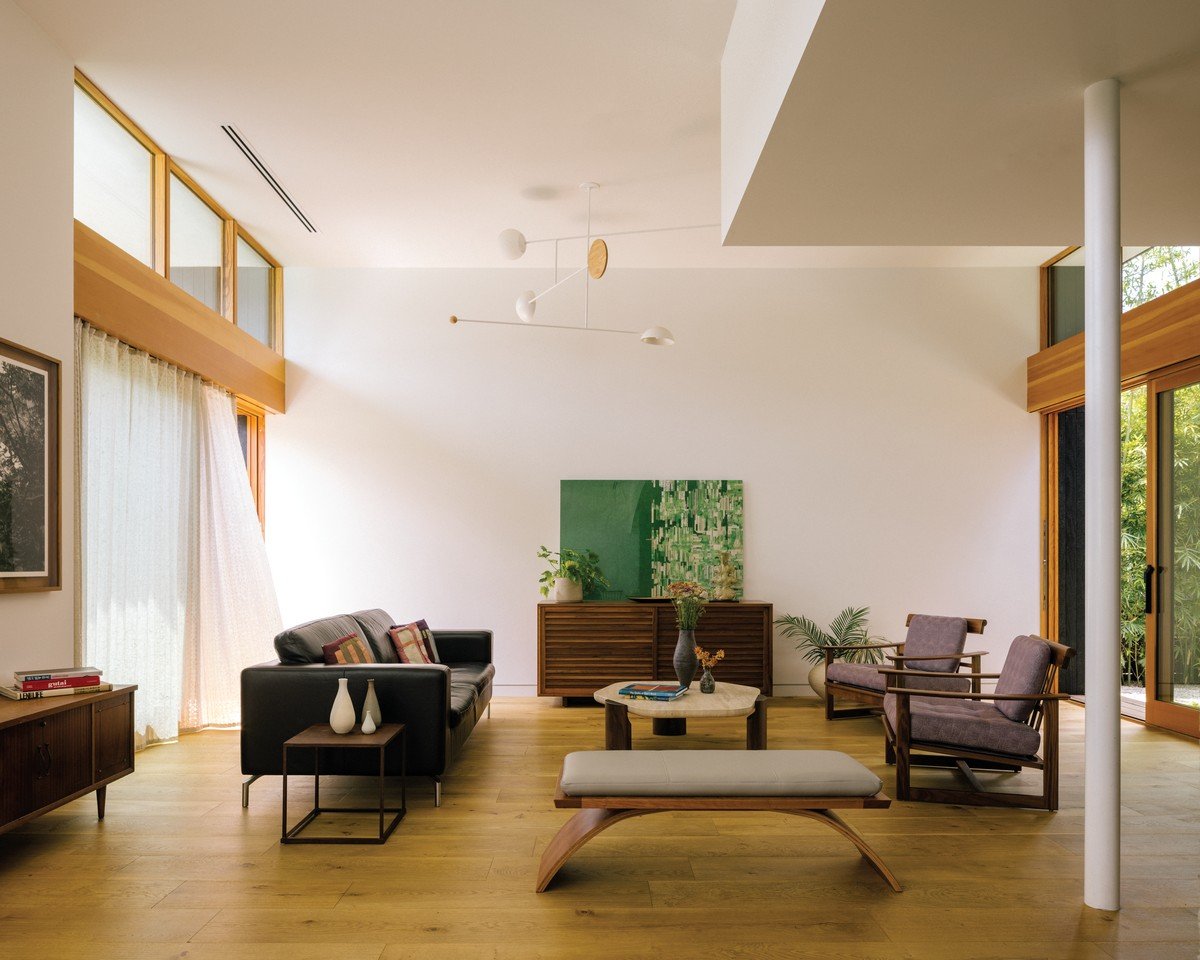
The living room has multiple exposures. Photo © Michael Wells
Just as the cast-concrete wall unifies the main level, an uninterrupted plane of lyrically figured Douglas fir borders the house’s stacked staircases, reinforcing vertical continuity among the three floors. Upstairs, four bedrooms and two bathrooms—overlooking planted ledges or setbacks—open from a shared central space. In counterpoint to the predominant earth tones, these bathrooms integrate brightly colored tilework whose bold, playful patterns resonate with the cultures of both modern Japan and Los Angeles (much as the house’s indoor-outdoor character is simultaneously rooted in Japan and Southern California).
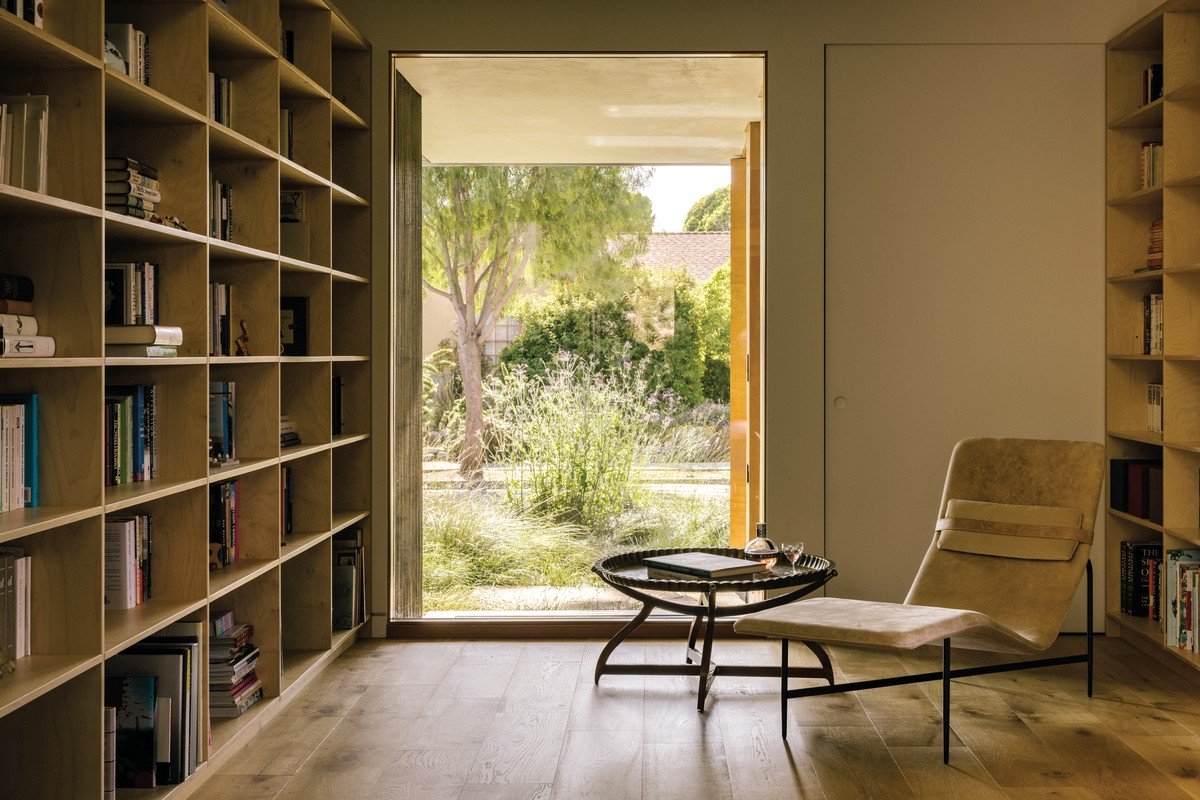
The home includes a library. Photo © Michael Wells
The basement, illuminated by a large south-facing light scoop, contains a spacious home office, small gym, and screening room. This level is lined in sleek concrete, with the rhythm of tie-rod holes across its slip-cast walls.
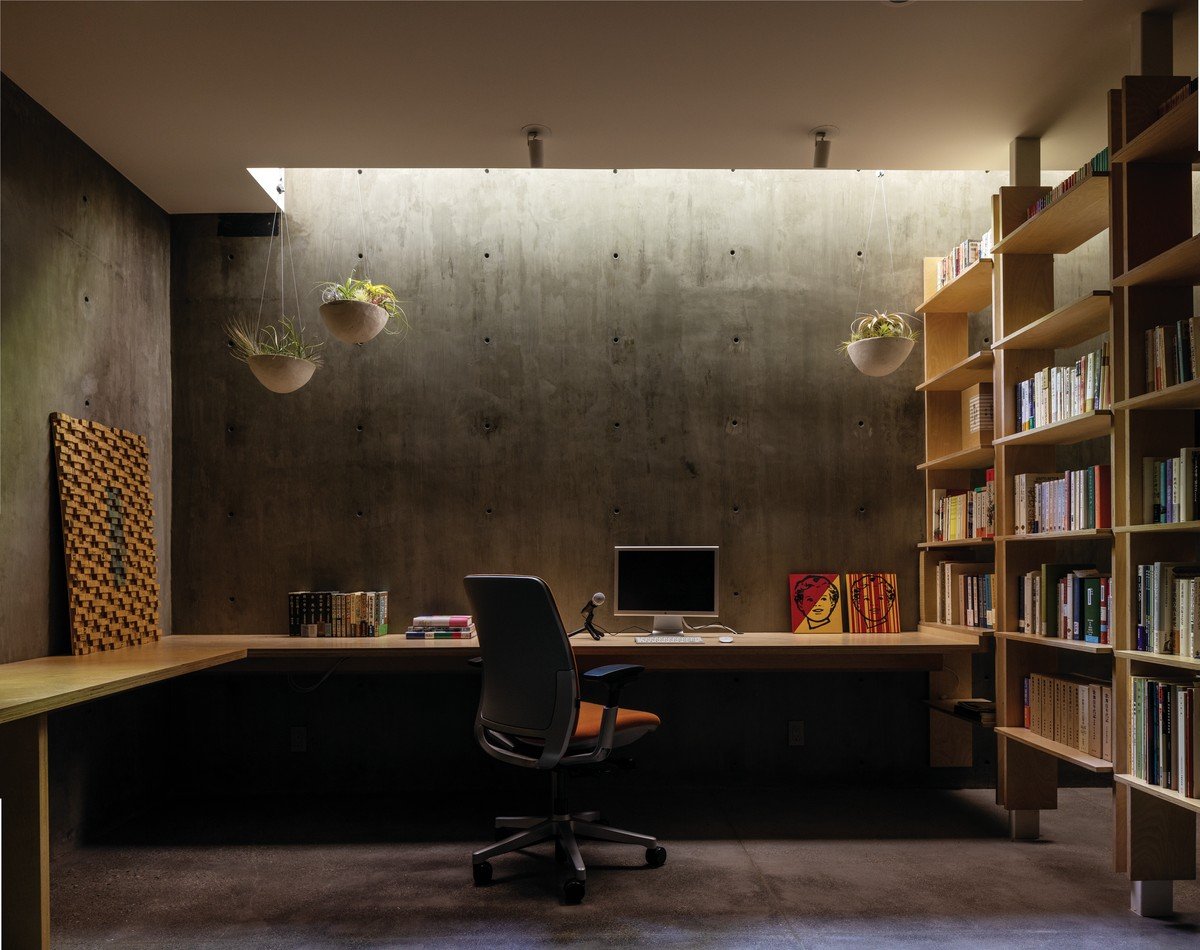
A home office, illuminated by a light scoop, is located in the basement. Photo © Michael Wells
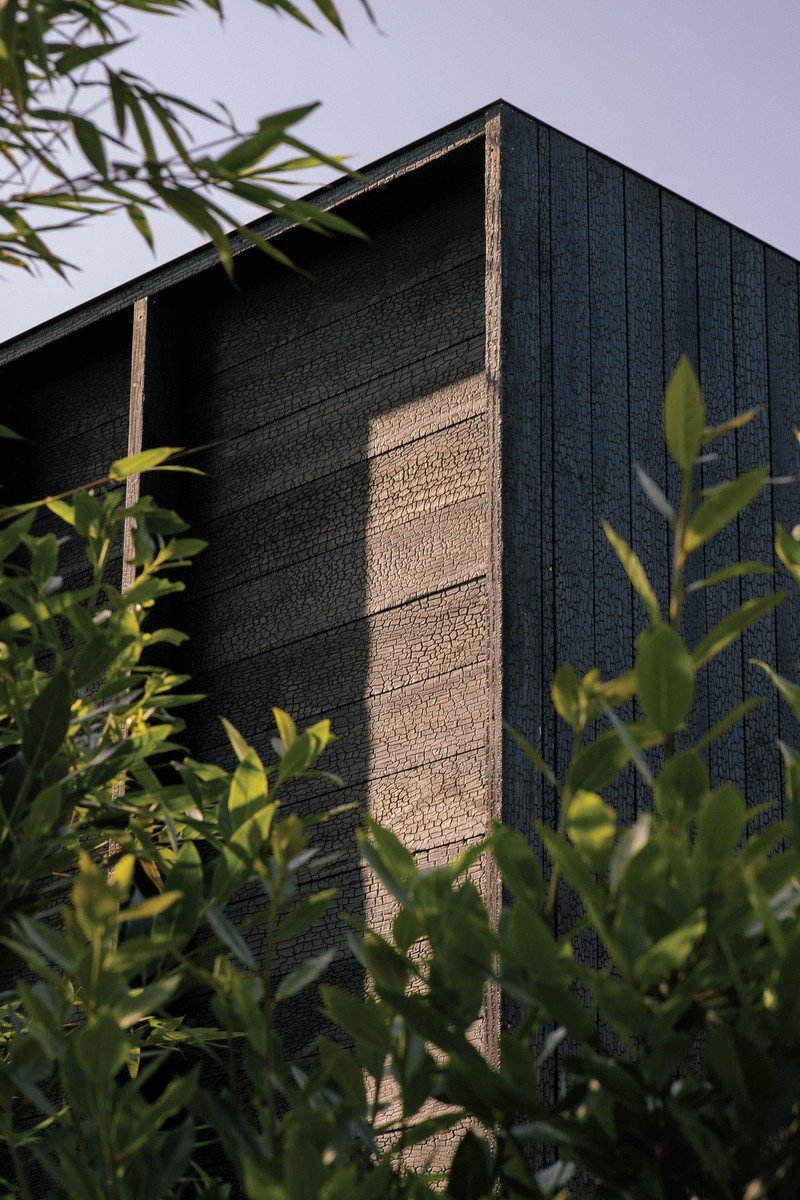
The charred cladding is moisture and fire resistant. Photo © Michael Wells
Throughout, the richly varied indoor and outdoor spaces—designed with Campion Walker Landscapes—create serene oases without losing connections, above grade, to the street. Still, the owners weren’t sure how their neighbors would react to the dark cladding, which, even with the advantages of resistance to fire, moisture, and insect damage, is not common here. But this sheathing is hardly monochromatic or pitch-black, especially as it weathers, producing gradations of black and gray, further animated by light and shadow across the long south elevation’s projecting vertical battens. And if the owners ever wondered about possible reactions, they can feel reassured by one source of local feedback: the next-door neighbors have now redone their own house, and it’s clad in yakisugi too.
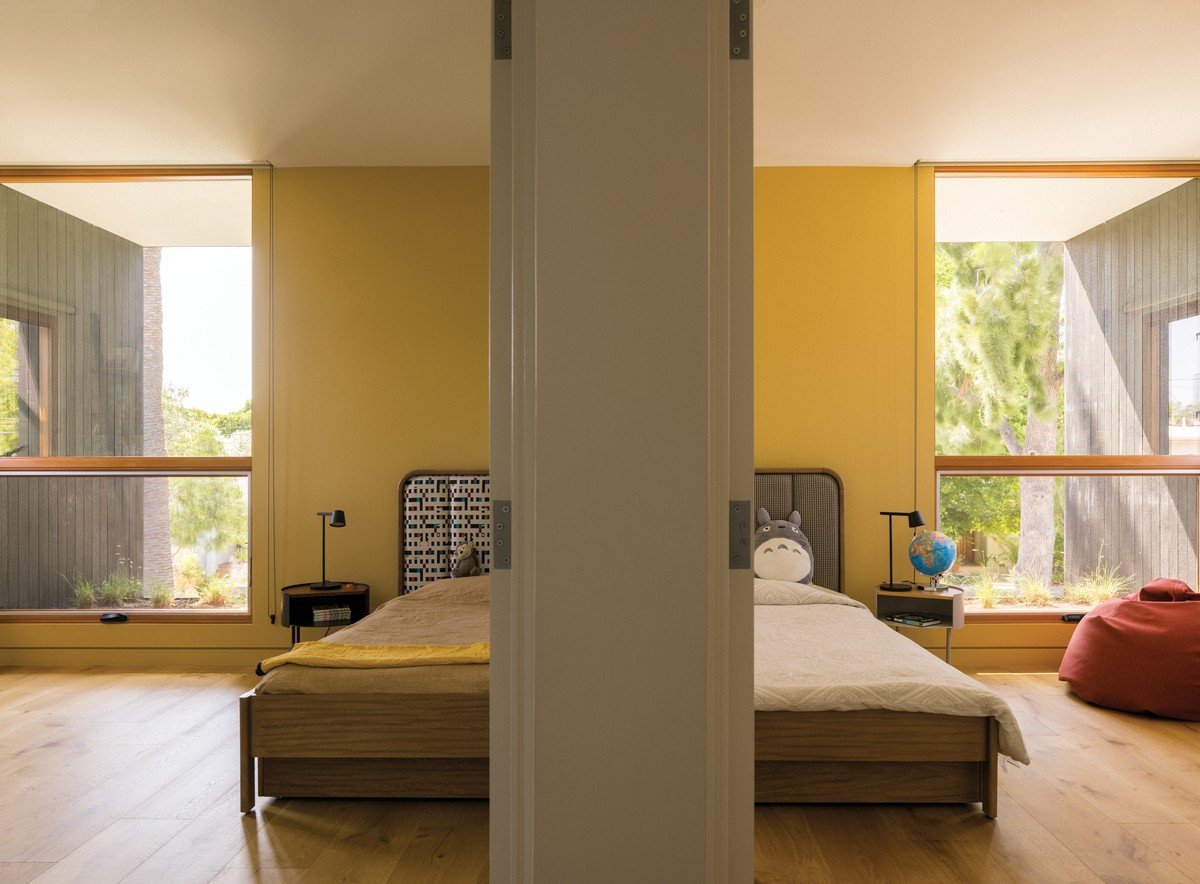
Bedrooms are found on the top floor. Photo © Michael Wells
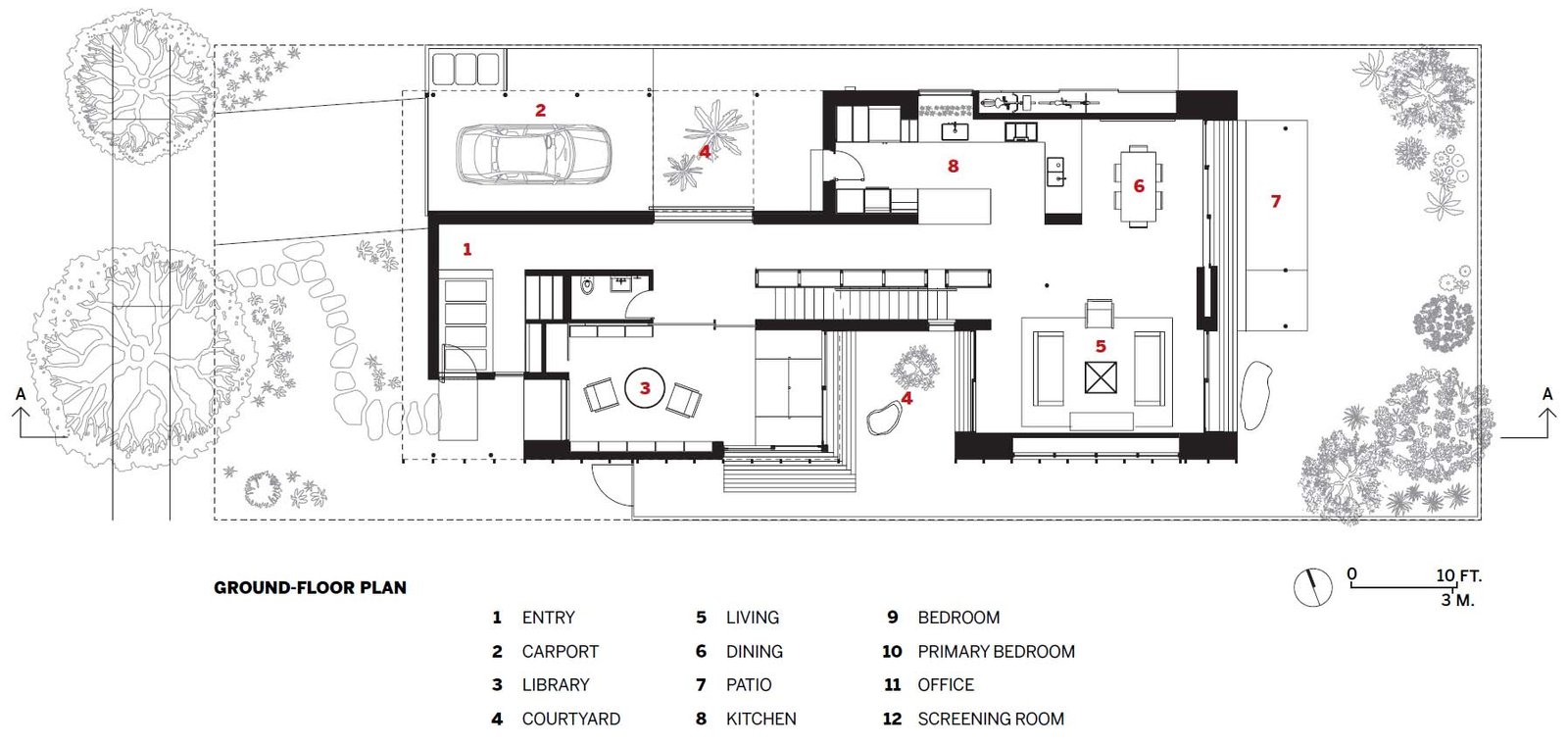
Image courtesy Jacobschang Architecture, click to enlarge.
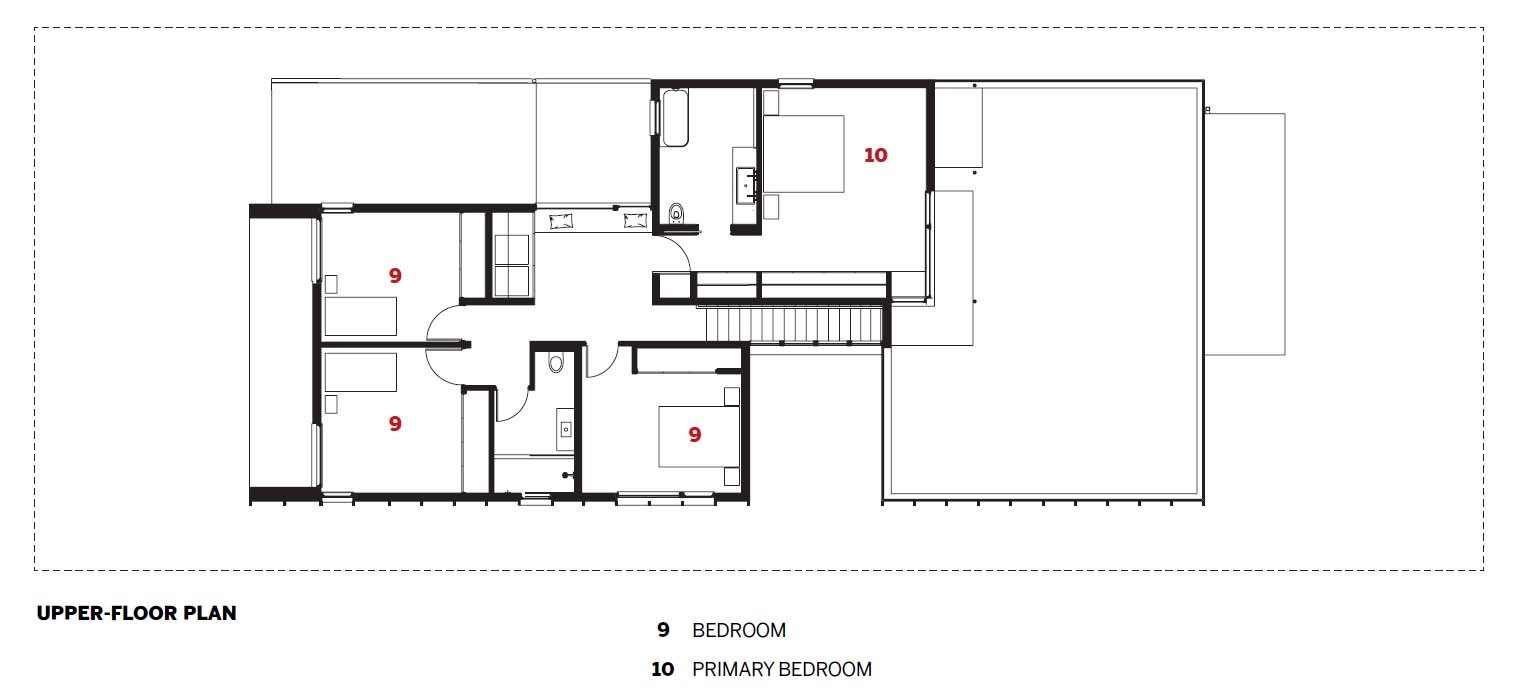
Image courtesy Jacobschang Architecture, click to enlarge.
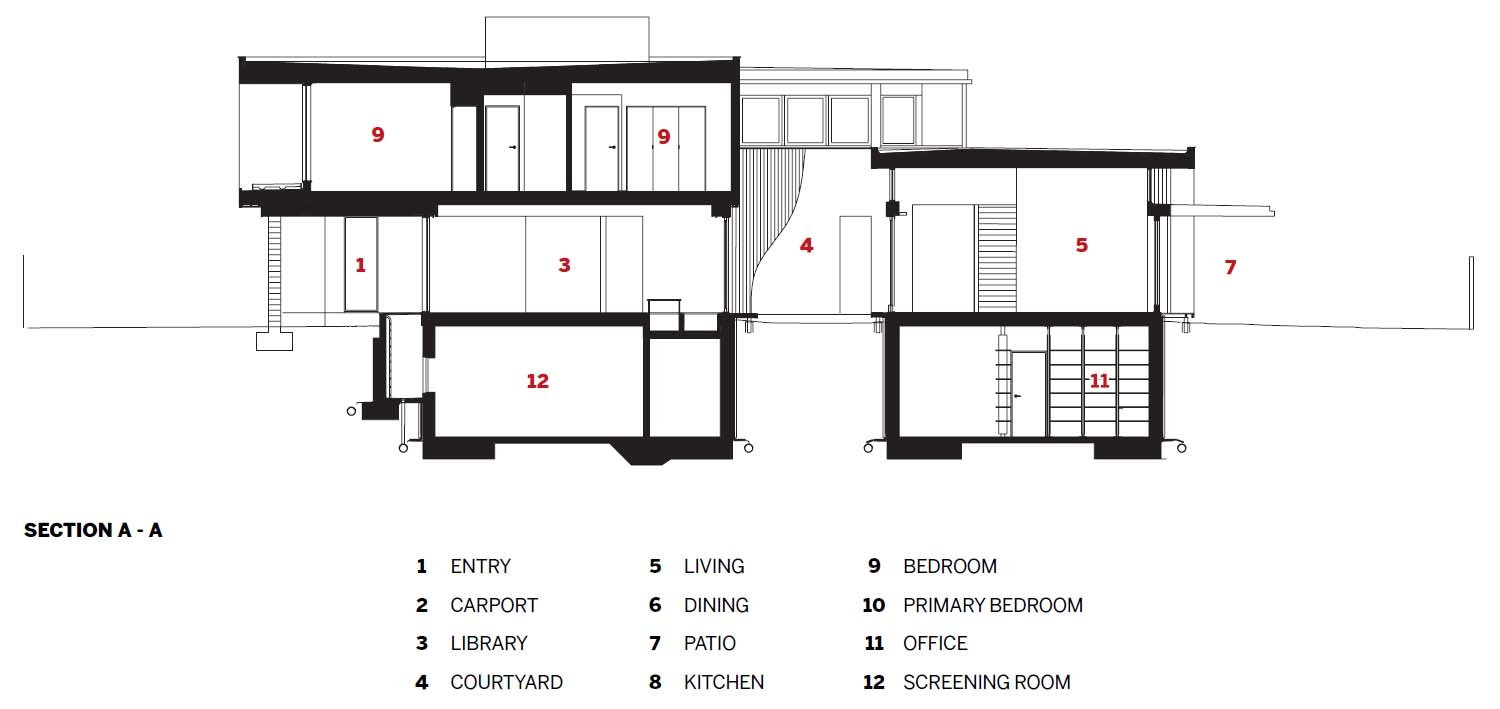
Image courtesy Jacobschang Architecture, click to enlarge.
Credits
Architect:
Jacobschang Architecture — Mike Jacobs, principal in charge; Guillaume Lapointe, project architect
Interior Designer:
Design LOCA
Structural Engineer:
Thang Le & Associates
Landscape:
Campion Walker Landscapes (design); Mama Mountain Landscaping (installation)
General Contractor:
Chadwick & Doggett General Contracting
Client:
Withheld
Size:
3,885 square feet
Cost:
$1.5 million
Completion Date:
June 2024
Sources
Exterior Cladding:
Accoya, Delta Millworks (timber); VaproShield (moisture barrier)
Windows:
Loewen
Skylights:
Velux
Hardware:
Schlage (locksets)
Paints and Stains:
Benjamin Moore
Plumbing:
Corian, Duravit (sinks); Toto (toilets); Kohler (showers and faucets)