iván bravo weaves original brick fragments into casa tam renovation in chile
Iván bravo extends original layouts for casa tam
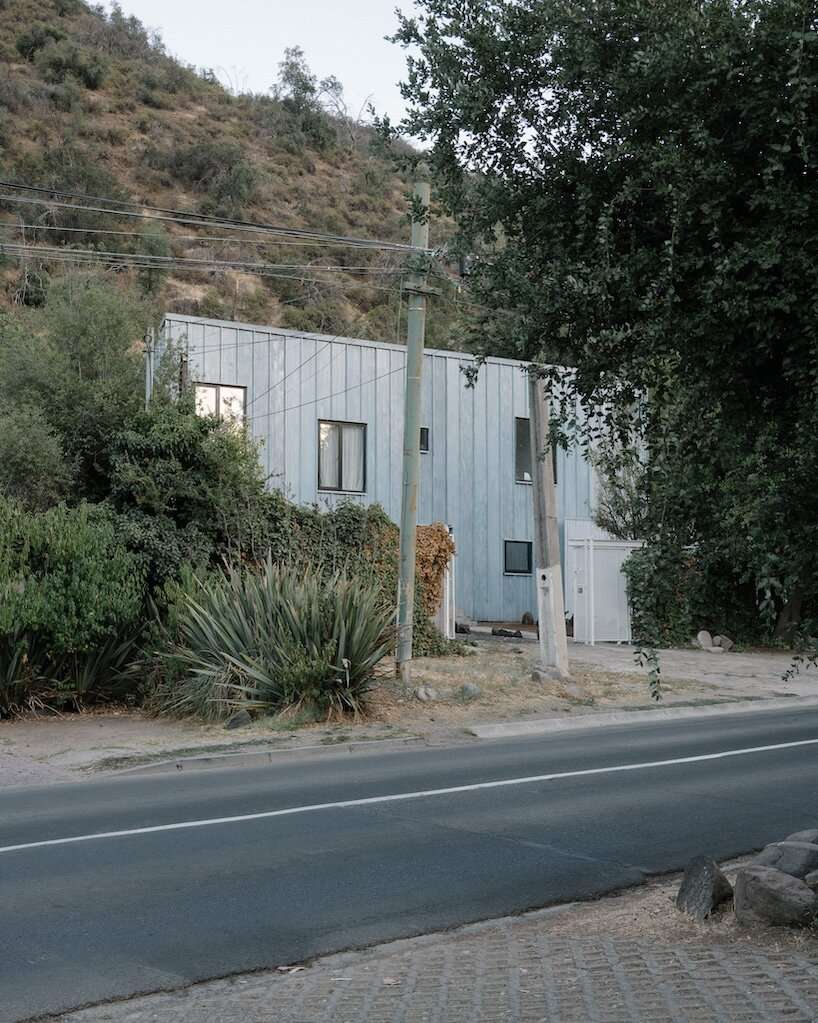
Casa Tam is a comprehensive renovation by Iván Bravo that rewrites a house on the foothills of the Andes, on the outskirts of Santiago, Chile. The project transforms a residence that has already been expanded twice into a new spatial continuity that sits somewhere between new construction and architectural palimpsest. Rather than erase its past, the renovation works with fragments of the original layouts, extending them and weaving them together with axes from later interventions to form a layered domestic landscape that openly carries its own history. The house presents an urban face to the street, lifting its front facade as a deliberate gesture while turning away from the mountains behind. Its roof follows the natural slope of the land, descending almost to the ground and compressing the rear elevation into a thin, semi-buried strip that connects the house directly to the garden. This move anchors the building to its site while quietly reshaping its relationship to the surrounding landscape.
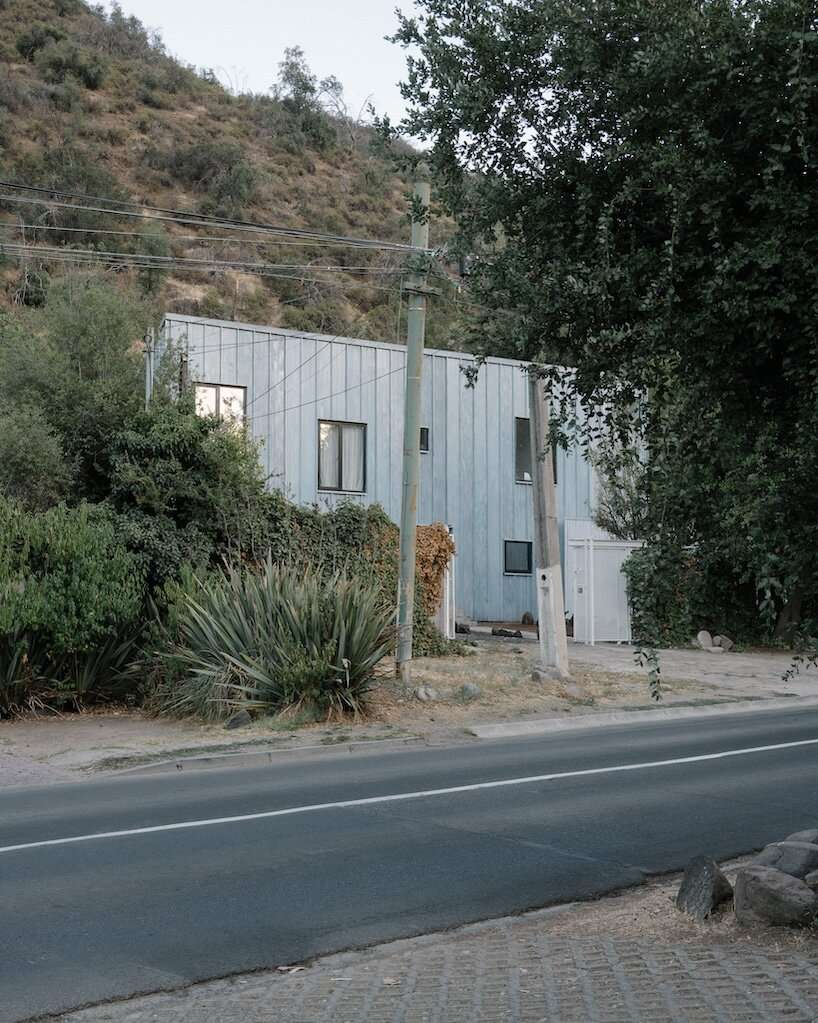 the house lifts its front facade as a deliberate gesture | all images by BARO
chilean house keeps function-based interior plan
Inside, the architect‘s plan splits in two. The open, double-height space facing the interior garden holds the living and dining room alongside the main bedroom, creating a shared domestic core. Toward the street, the more utilitarian functions — the kitchen and the owner’s ceramics workshop — form a compact service wing. Above, two children’s bedrooms are connected by a shared central studio, reinforcing the idea of communal space through vertical layering.
On the lower level, new reinforced concrete elements stitch together the different construction systems accumulated over time, acting as a structural mediator between eras. The upper floor, by contrast, is built as a lightweight structure to respect the limitations of the original foundations, which were designed to carry only a single story. This careful balance between weight and lightness allows the house to grow without overwhelming its past.
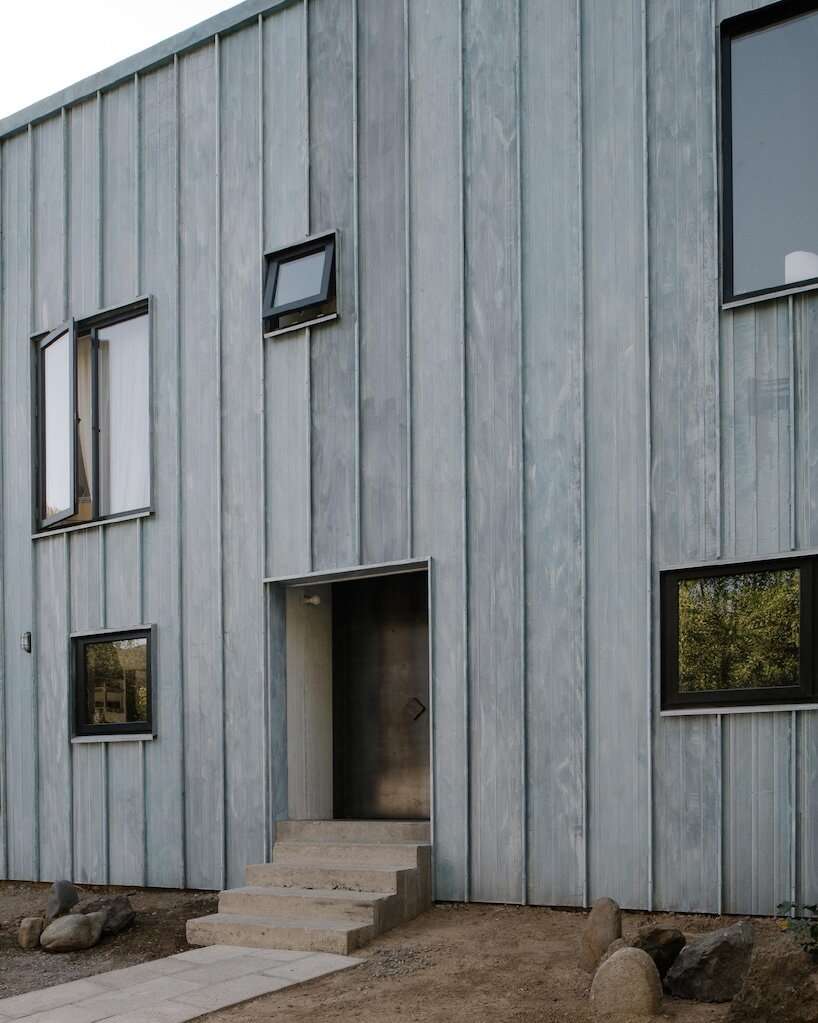 the entire volume is wrapped in a standing seam metal skin, giving the house a monolithic presence
spatial fragments make up layered domestic landscape
Material transitions remain intentionally visible throughout the interior. Shifts between old and new surfaces are unified only by a coat of white paint, while openings carved through walls expose their original thickness and texture, revealing the house’s previous lives. Outside, however, the entire volume is wrapped in a standing seam metal skin, giving the house a monolithic, almost abstract presence that conceals the complexity within.
The only entirely new addition appears in front of the main facade: a kiln room for the ceramics workshop. Clad in wood and painted white, it stands slightly apart from the house, marking the latest chapter in this ongoing process of rewriting. More than an extension, it becomes a quiet signature: a plastic and programmatic trace of the house’s most recent transformation.
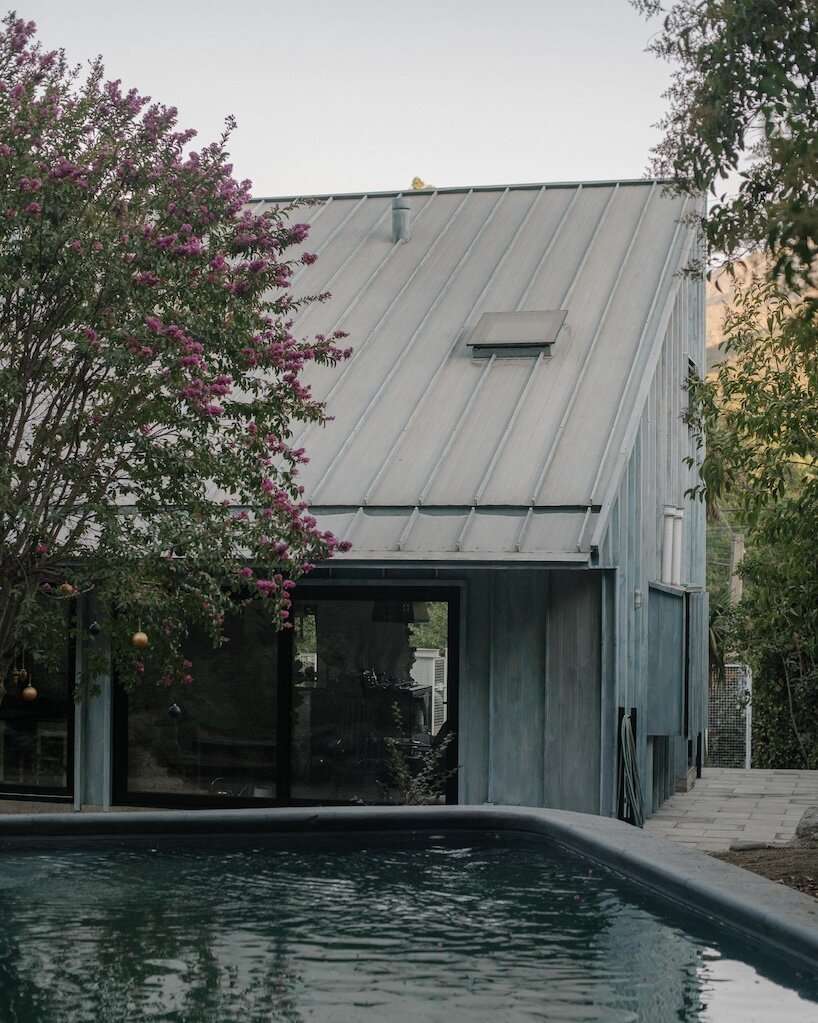 the roofline follows the natural slope of the land
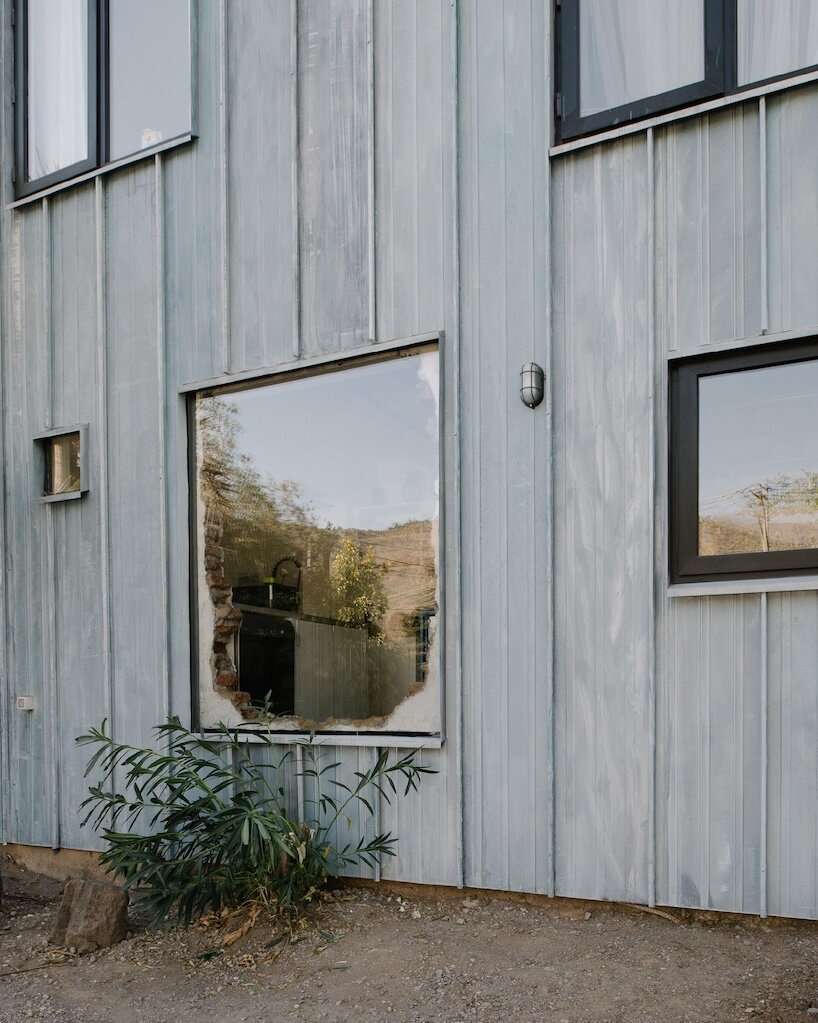 the layered domestic landscape openly carries its own history