fabel arkitektur perches its hoghult house atop a scenic hill in sweden
a pair of cabins on a hill
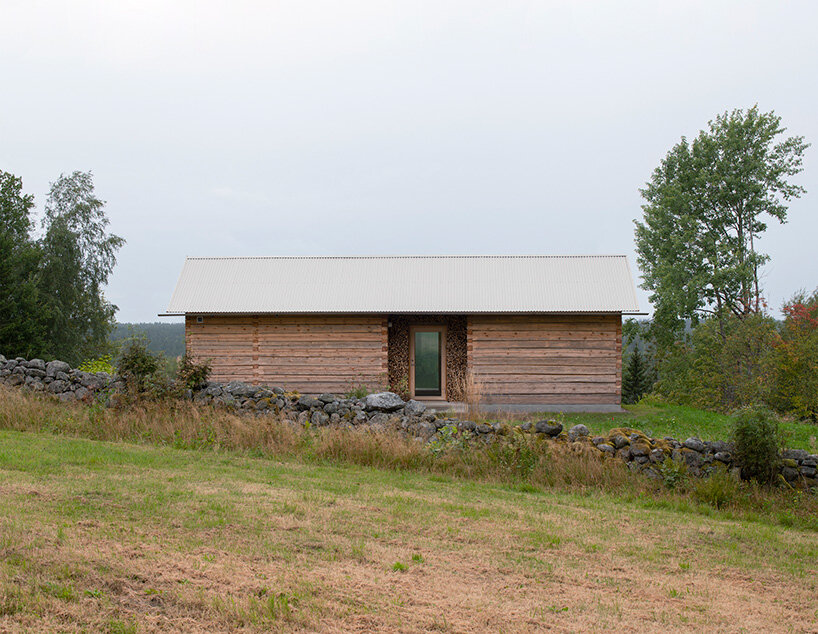
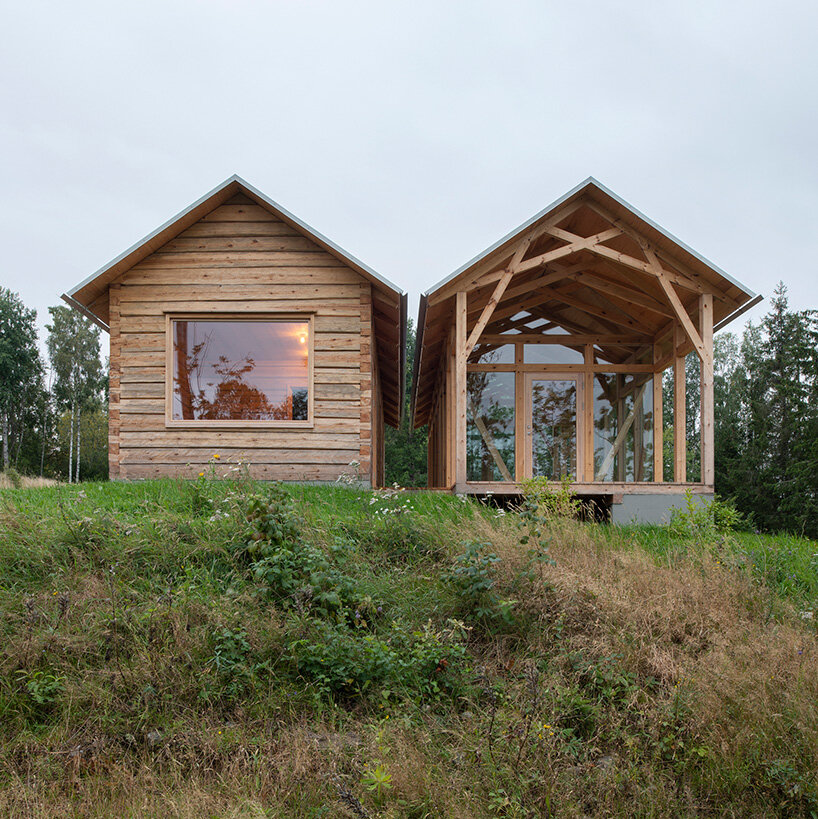
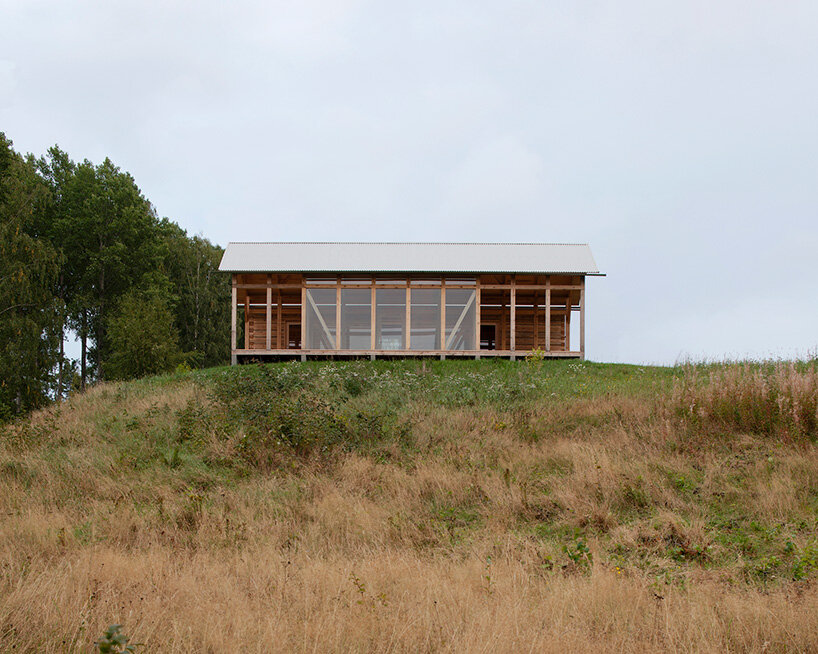
Swedish studio Fabel Arkitektur has perched its Höghult house atop a sloping landscape of Karlsborg. The architecture takes shape as a pair of timber cabins which punctuate the summit of the steep hill surrounded by farmland and distant views across a forest and lake beyond.
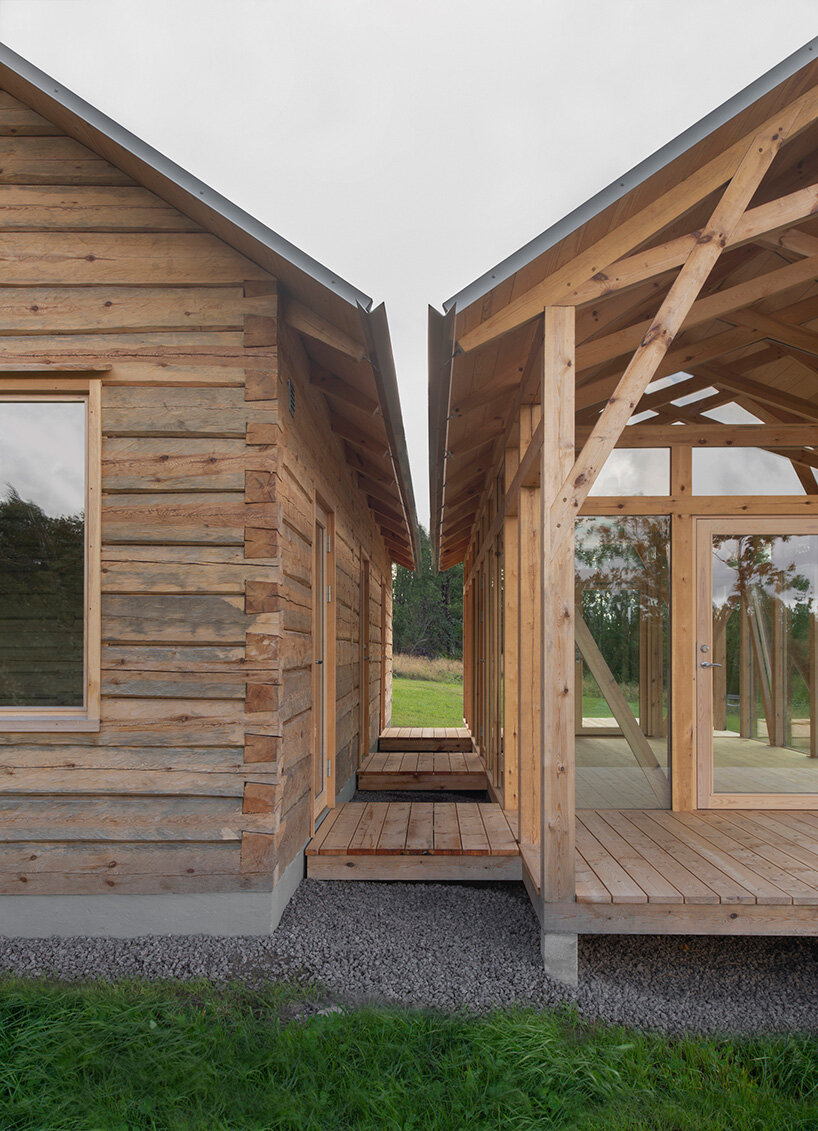
While the two structures are of equal size, one is defined by its introspective, closed off design and the other is built with an open timber framing to allow in sunlight and to gaze outward toward the natural surroundings. The more enclosed cabin houses a sauna, shower, and bedroom while the open cabin hosts a large open living area leading to a patio.
 images © Mikael Olsson | @mikaelolsson_
Fabel arkitektur celebrates the endless landscape
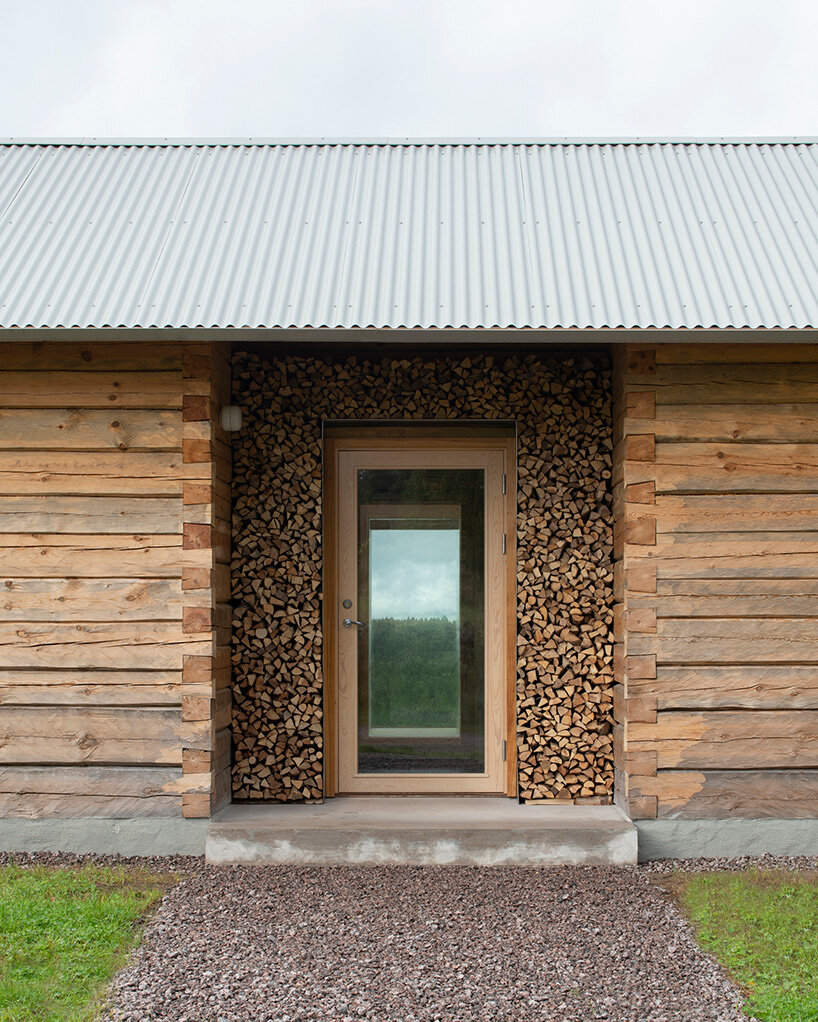
In the early design stages of its Hoghult house, the team at Fabel Arkitektur sought an architecture that was both restrained and magnificent at the same time, celebrating the landscape. The architects write: ‘Simplicity and clarity have been keywords throughout the process. Both parts of the building are made entirely from wood, with old timber techniques that use no nails or screws.’
While the entire structure is built of timber, the team intended for all other materials to be pure, honest, and easy to interpret. For instance, the shower is finished with ‘tadelakt’ — a waterproof lime stone-plaster surface — while the protective barrier between the fireplace and the timber wall provides a dark and shining contrast to the wooden logs.
The design of the hoghult house
Fabel Arkitektur’s Hoghult house is built with traditional techniques that are interpreted in a new way. It might look simple but is surprisingly advanced in the details, the glass in the timber framing part for example is mounted in a completely new way invented together by the carpenter.
The design team explains: ‘The construction cannot be done by any carpenter, it requires a lot of experience and special knowledge but at the same time it is very simple and possible to maintain if parts of the wood are damaged over time it is very easy to exchange that part to a similar one. Or why not move the entire building in two hundred years?’