
a 70-year-old guava tree becomes the central axis of ‘casa patio del guayabo’ in mexico
‘casa patio del guayabo’ privileges tranquility and grand views
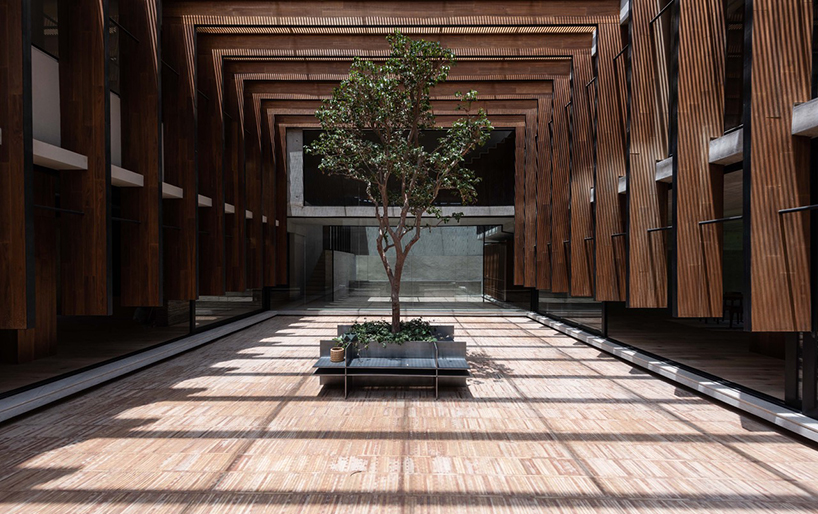
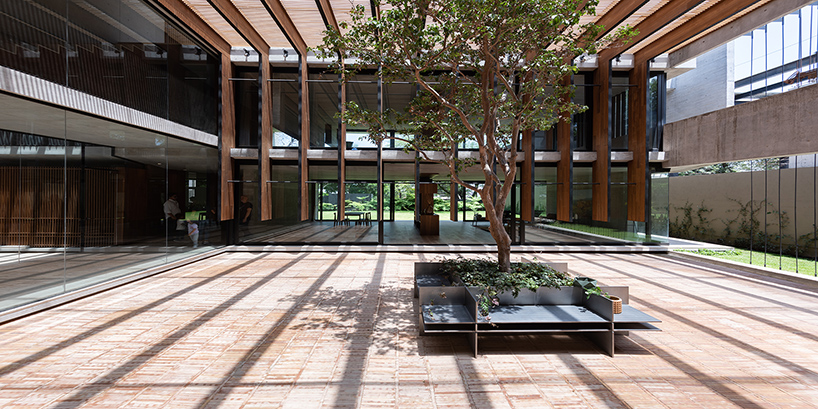
a 70-year-old guava tree becomes the central axis of ‘casa patio del guayabo’ in mexico. designed by ricardo yslas gamez arquitectos, the final volume is composed of floating walls and generous openings, generating fluid living spaces that privilege tranquility and transparency. the design team sought to form openness throughout the entire ground level, thus allowing the contemplation of the breadth of the site. floor-to-ceiling openings and glazed surfaces fade away the boundaries of inside and outside, creating a seamless cohesion between the spaces.  all images by jaime navarro
visual relationship between different parts of the house
during the designing process, the main purpose of the architects was to highlight the old tree — moved from morelia to mexico city transplanted in a pot — becoming the protagonist of the site. contractually, the architectural program is divided into two volumes joined by a glass bridge that crosses two strategically-designed patios. these outdoor spaces allow the regulation of the temperature inside through cross-ventilation, taking advantage of the area’s climatic conditions throughout the year. in this project, the structure works as finishes, which also allow generating their own microclimates in the connected patios. the main patio functions as the core of the house, shielding the guava tree. this space opens up to the living room, dining room, and game room, all the while maintaining a direct connection with the complementary gardens. the clay floor made in puebla creates an intimate atmosphere together with the 70-year-old guayabo.
the secondary patio was conceived as an extension of the living area with direct contact to the kitchen and view towards the main patio. there, one faces the two volumes that house the rest of the program, as well as a large floating wall that embraces the house. the upper levels of both volumes accommodate the private areas, where the configuration of the main bedroom made up of large slabs and floating concrete elements stands out.